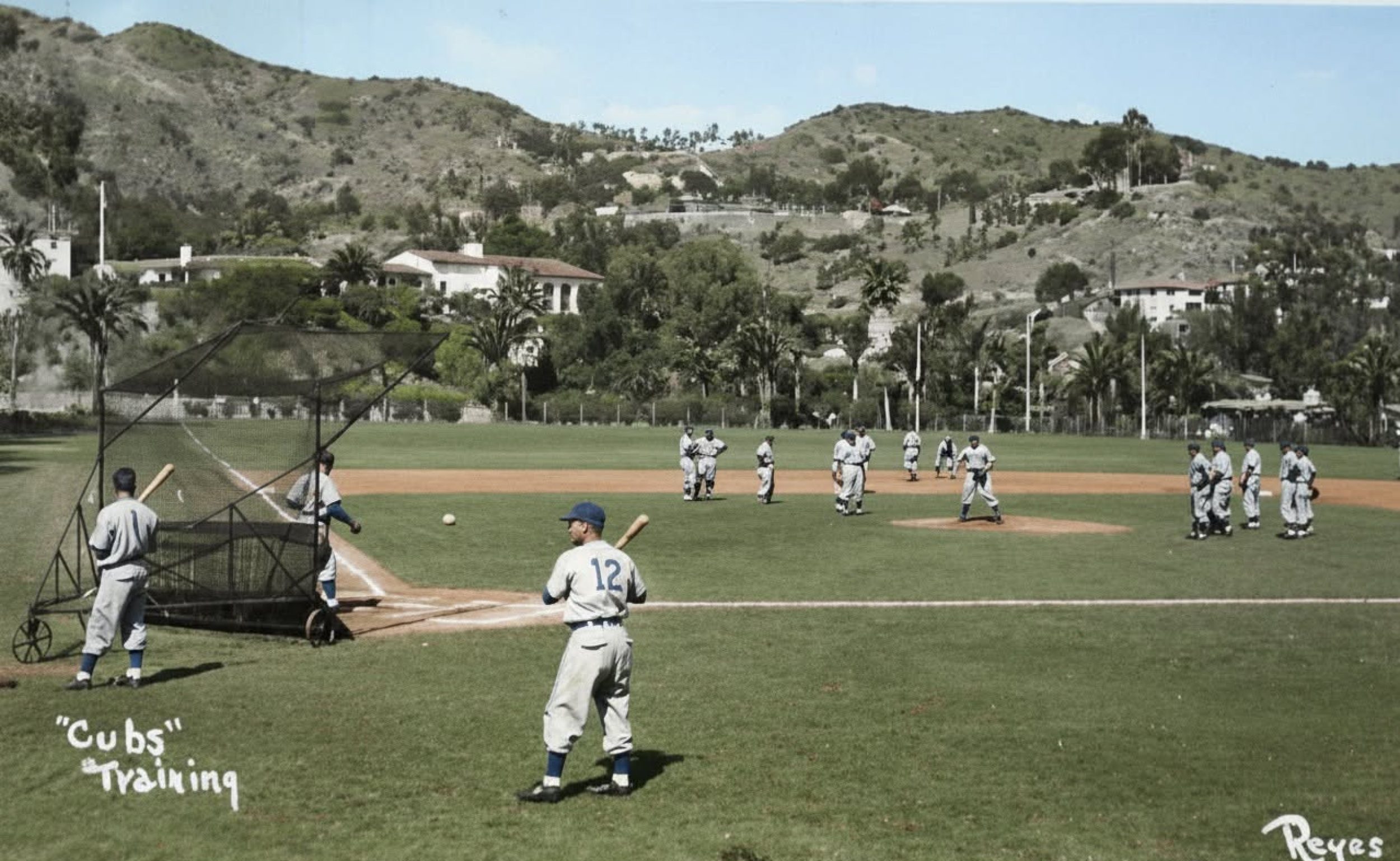
Panoramic Photo Above:
Cubs Spring Training on Catalina Island
Baseball History Comes Alive Now Ranked As a Top Five Website by Feedspot Among All Baseball History Websites and Blogs!

(Check out Feedspot's list of the Top 35 Baseball History websites and blogs)
Visit the Baseball History Comes Alive Home Page
Subscribe to Baseball History Comes Alive
Free Bonus for Subscribing:
Gary’s Handy Dandy World Series Reference Guide
I’ve always said it’s much harder for middle infielders to make the Hall of Fame, as they characteristically lack the power numbers that ensure automatic selection. They’re primarily measured by their equally-as-important defensive skills. Such was the case for Dave ‘Beauty’ Bancroft, always considered a controversial selectee. And so today Ron Christensen does a deep dive into his career, making a strong and convincing case for his HOF inclusion. –GL
Another Edition of: Baseball’s Forgotten Stars!
Dave Bancroft: A Shortstop of “Beauty!”
“I think he’s the greatest shortstop that ever played the position!” –Gavvy Cravath, speaking of teammate Dave Bancroft
Shakespeare’s opening Soliloquy in Act III of Hamlet begins with one of the most famous lines in theater history: “To be, or not to be, that is the question.” Though Shakespeare’s words are posed to Prince Hamlet in contemplation of the nature of life and death, it seems equally apropos to the question of whether Dave Bancroft, known throughout his baseball career as ‘Beauty,’ belongs in the Hall of Fame. Never shy about offering my opinion (see my earlier essay on ‘Lou Gehrig and the 1934 MVP Race’), I vote YES! So let’s take a closer look at this Hall of Famer and forgotten National League star of baseball’s yesterday.
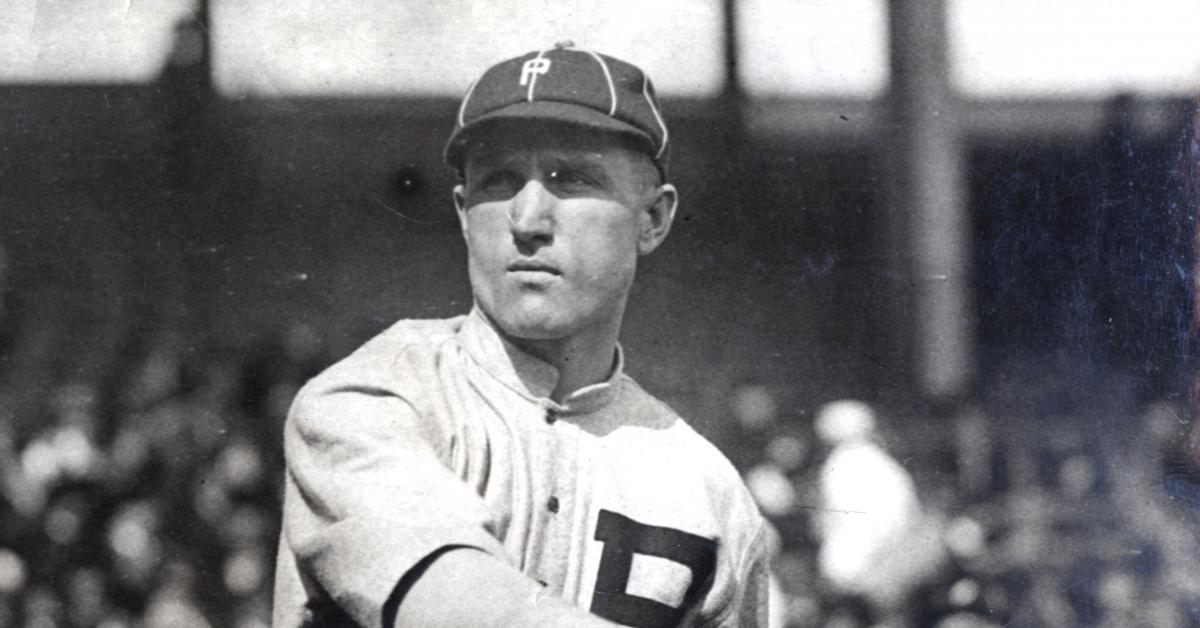
Dave Bancroft was a shortstop, and by all accounts he was a good one. Graceful and fluid and blessed with unteachable instincts, Bancroft displayed excellent range to either side, sure hands and an accurate throwing arm. He made his major league debut in 1915 with the Philadelphia Phillies, and Phillies manager Pat Moran believed that Bancroft was the catalyst that sparked the Phillies to the 1915 pennant after a sixth place finish the year before.
Bancroft would spend just over five seasons with the Phillies, earning a stellar reputation as a standout defender. The Pittsburg Press compared him favorably to one of their own, stating “he’s developing into a second Honus Wagner!”
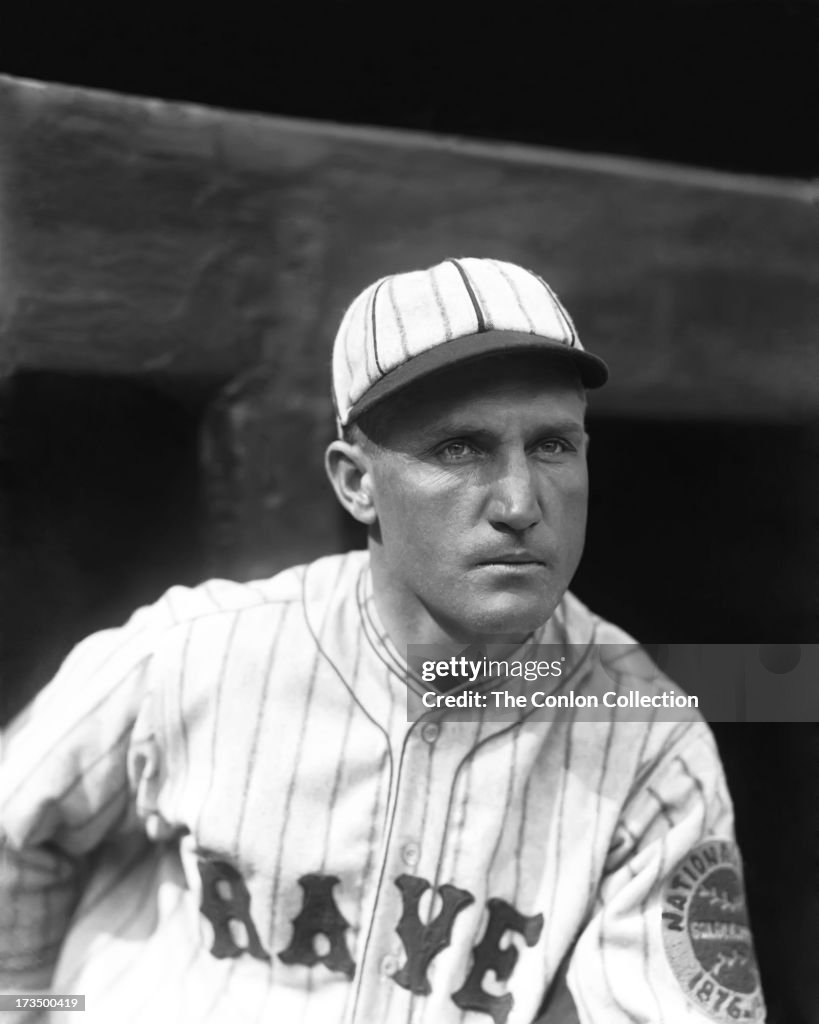
John McGraw of the New York Giants liked what he saw in Bancroft. A student of the game with a veritable Ph.D. in baseball fundamentals, Bancroft was McGraw’s type of player. In a blockbuster move, McGraw convinced Giants owner Charles Stoneham to trade shortstop Art Fletcher plus $100,000.00 to the Phillies in exchange for Bancroft. The plus $100,000.00 part was so incredulous to Phillies owner William Baker that he traveled to New York the following day to meet personally with Stoneham, bringing along a National League attorney to ensure Stoneham wouldn’t back out of the deal. In a show of the headiness McGraw so loved, when Bancroft first reported to the Giants, catcher Frank Snyder approached him to teach him the Giants signs, to which Bancroft responded “Why, have they changed?”
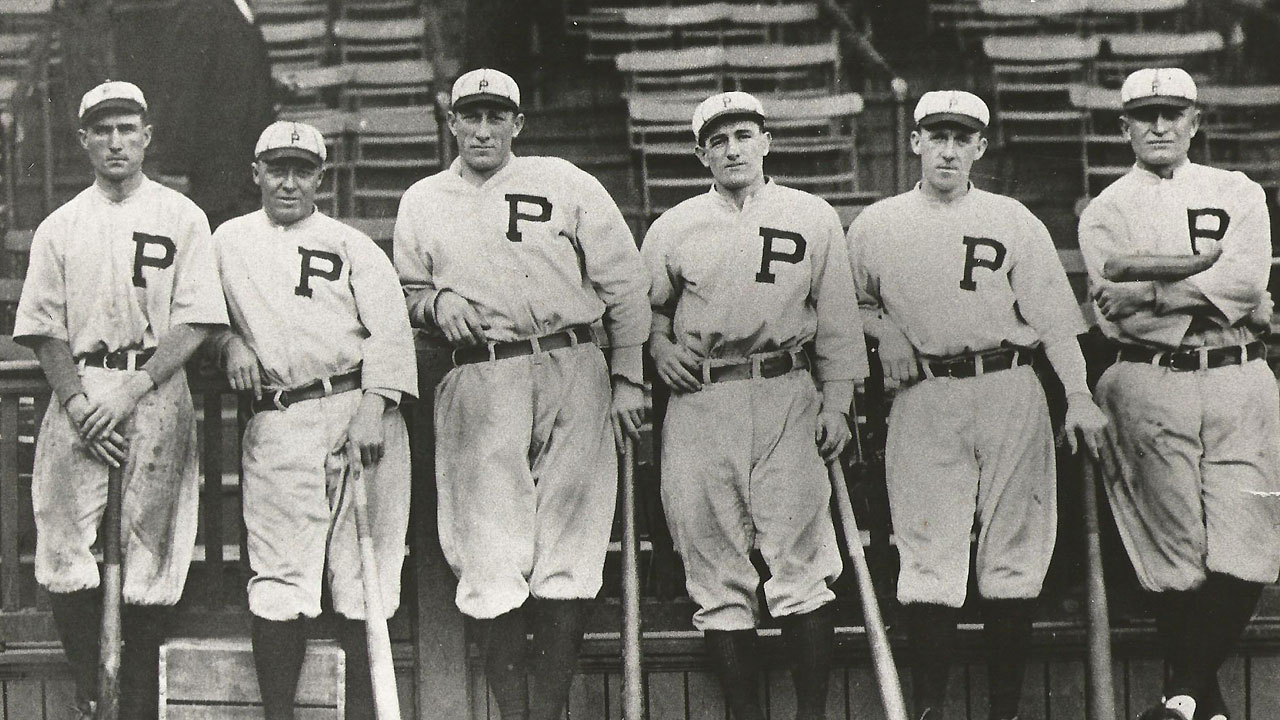
Less than three weeks after the trade was finalized, Bancroft went 6-for-6 in an 18-3 pummeling of his former Phillies team in Philadelphia. Bancroft hit .299 in 1920 and over .300 his next three seasons with the Giants; but McGraw believed it was Bancroft’s fielding that helped lead to Giants victories. He once told the New York Tribune, “I could knock a hundred balls at him at various angles and he would be found in front of every one of them and with his hands so well placed as to scoop it up.”
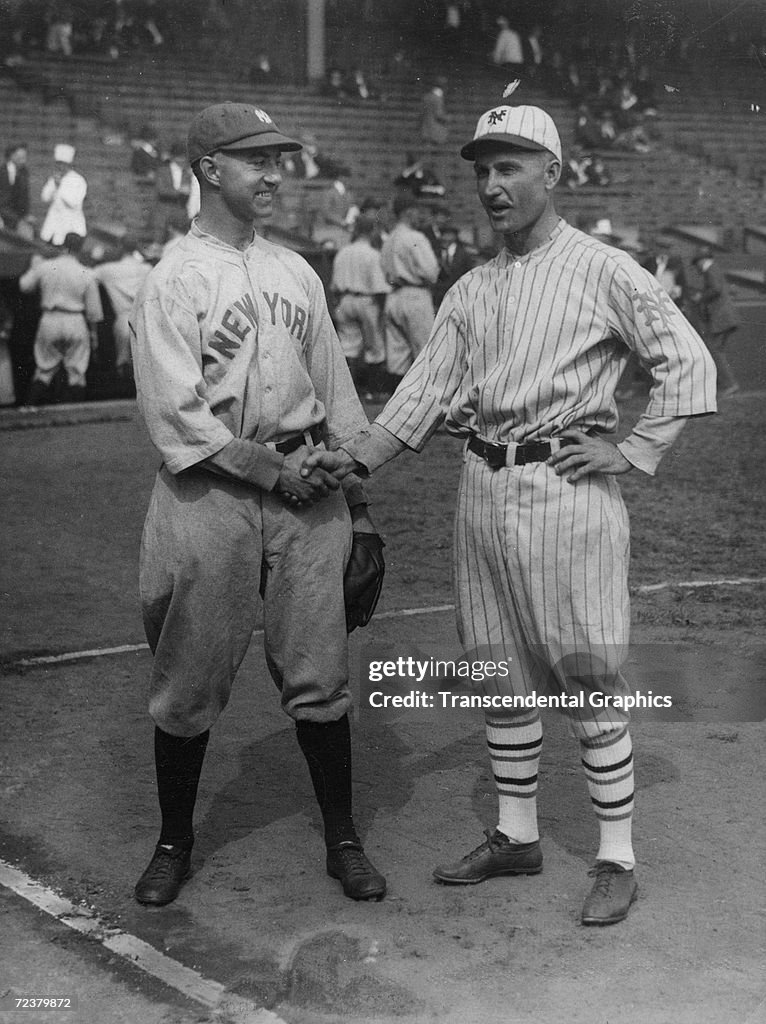
The New York papers were enamored with Bancroft as well. The New York Daily News reported that Bancroft was called ‘Beauty’ by Giants fans in recognition of his skillful fielding. Another article suggested the name referred to Bancroft’s own use of the word to describe when a pitcher threw a good pitch or when a fielder made a good play. However the name originated, it stuck, with the press continually referring to Bancroft by the nickname ‘Beauty’.
Bancroft would enjoy his best years with the Giants, winning three consecutive pennants from 1921-1923. He served as team captain under McGraw and was part of the ‘Million Dollar Infield’ with third baseman Heinie Groh, second baseman Frankie Frisch, and first baseman George ‘High Pockets’ Kelly. During those pennant winning seasons, Bancroft batted .318, .321 and .304, respectively. He led the league in put-outs, assists and double plays in 1921 and 1922, and in 1922 set a single season record for most chances by a shortstop with 984. The Washington Times called Bancroft “the best fielding shortstop ever,” and Giants assistant coach and future Hall of Famer Hughie Jennings said of Bancroft “he uses his brain. A player like him at short means everything to a ballclub.”
Prior to the 1924 season, McGraw put together a trade with his friend and former Giants pitcher Christy Mathewson, now president of the Boston Braves. The deal sent Bancroft to the Braves as player-manager, along with Casey Stengel and outfielder Bill Cunningham for Joe Oeschger, who had pitched all 26 innings of a scoreless game against Leon Cadore and the Brooklyn Robins in 1920, and veteran outfielder Billy Southworth. Bancroft spent the next four seasons with the Braves, batting .319 in 1925 and .311 in 1926, and leading the league in fielding percentage in 1925 with a .945 mark. In both 1925 and 1926 he finished in the top ten in MVP voting.
Unfortunately, these were lean years for the Braves, and after the 1927 season Bancroft was released. He signed as a free agent with the Brooklyn Robins and its iconic manager, Wilbert Robinson, who immediately named Bancroft team captain. Of his time in Brooklyn, Bancroft would say “When the Robins are winning they draw a crowd of about 25,000 to cheer ‘em on. When they’re losing, they draw about 25,000 to jeer ‘em!”
Bancroft finished his career in 1930 with the New York Giants, a move reuniting him with his friend and former mentor, John McGraw. Bancroft appeared in only nineteen games that season, serving more as a coach for McGraw than as a player.
In his 16 year career, Bancroft played 1,913 games, with 8,250 at bats, 2,004 base hits, scored 1,048 runs and walked almost twice as many times (827) as he struck out (487). He batted .300 or better five times, narrowly missing a sixth with a .299 average. His lifetime batting average was .279. With his glove, Bancroft led the National League in put-outs four times, assists three times, double plays three times, and fielding percentage twice. He played in four World Series, winning two championships with the Giants. Hall of Famers Rogers Hornsby and Kiki Cuyler both selected Bancroft as their choice for the all-time best National League shortstop, as did veteran Yankees scout Joe Divine and Washington Senators owner Clark Griffith.
Bancroft was inducted into the Hall of Fame by the Veterans Committee in 1971, and his induction isn’t without controversy. Critics point to his .279 lifetime batting average and his lack of power (1,575 of his 2,004 career hits were singles). They attribute his induction to the influence of Frankie Frisch, Bancroft’s former middle-infield teammate with the Giants. Frisch, at the time the chairman of the Veterans Committee, has been criticized by sportswriters and baseball historians for wielding his influence to induct friends and former teammates who were not worthy of the honor. It’s a debate that continues today.
When Dave Bancroft received the call from a local sportswriter that his name had been included on the list of new Hall of Fame inductees, he replied that the news came as “a complete surprise,” and was the “nicest thing I had ever heard.” Bancroft was 80 years old and due to poor health was unable to attend his induction ceremony. He passed away the following year at the age of 81.
Sadly, there is no mention of his baseball career or Hall of Fame induction on his graveside marker. Curiously, there is no logo etched on his cap on his Hall of Fame induction plaque. Bancroft enjoyed his best years with the Giants, but played in more games with the Phillies, possibly the reason no team selection was made. Even without the logo the plaque is deserving, acknowledging a worthy inductee who truly was a Beauty at shortstop.
Ron Christensen
REFERENCES:
- Beauty At Short, by Tom Alessia (the title of this essay and much source material are taken from Tom’s book)
- Wikipedia: Dave Bancroft
- Baseball Reference
- National Baseball Hall of Fame: Dave Bancroft
- National Baseball Hall of Fame: Hall of Fame History
- SABR: Dave Bancroft Racks Up 6 Hit Game, by Tim Hagerty
- SABR: Dave Bancroft, by Trey Strecker
- SABR: A Giants Fall To Minneapolis, by Tom Allesia
- Baseball Fever: Dave Bancroft
- Section 215 (Phillies): Who The Heck Was Dave Bancroft?, by Kevin Lagowski
- Wikipedia: Frankie Frisch
- Cooperstown Expert: Frankie Frisch’s Vets Committee Selections Defined and Damaged the Hall, by Jim Smiley
Photo Credits: All from Google search
Subscribe to Baseball History Comes Alive. FREE BONUS for subscribing: Gary’s Handy Dandy World Series Reference Guide.




I get so tired of the complaints of someone being ONLY “a singles hitter.” Baseball players see things a bit differently. Baseball, played properly, is a TEAM sport; and, secondly, the entire aim of any at-bat is to make contact and get a potential run on base! Teammates can advance a runner. Home-run hitters are one-trick ponies. Get on first, you may be a run. As Harry Truman once famously noted in his typical earthy language…”One can accomplish miracles if he doesn’t give a shit who gets the credit.”
Thanks, Frank. Couldn’t agree more! The point of an at bat is to get on base, and a single does that quite well. A single can start a rally or keep one going, drive in a run with a baserunner on second or third, even help redirect some of the pitcher’s focus from the batter to the runner now on first, especially if that runner, like Dave Bancroft, is an adept base stealer. There’s certainly no shame in hitting singles.
I appreciate your feedback on the essay.
Good point on base theft. I’d have thought more of Maury Wills or Lou Brock, but now that y’all mention it – Bancroft must have been a major migraine to any pitcher when he was on first base. Baseball was so much more interesting back then.
Agree with your last point…or as I like to say, the modern game lacks the “charm” of the old days!