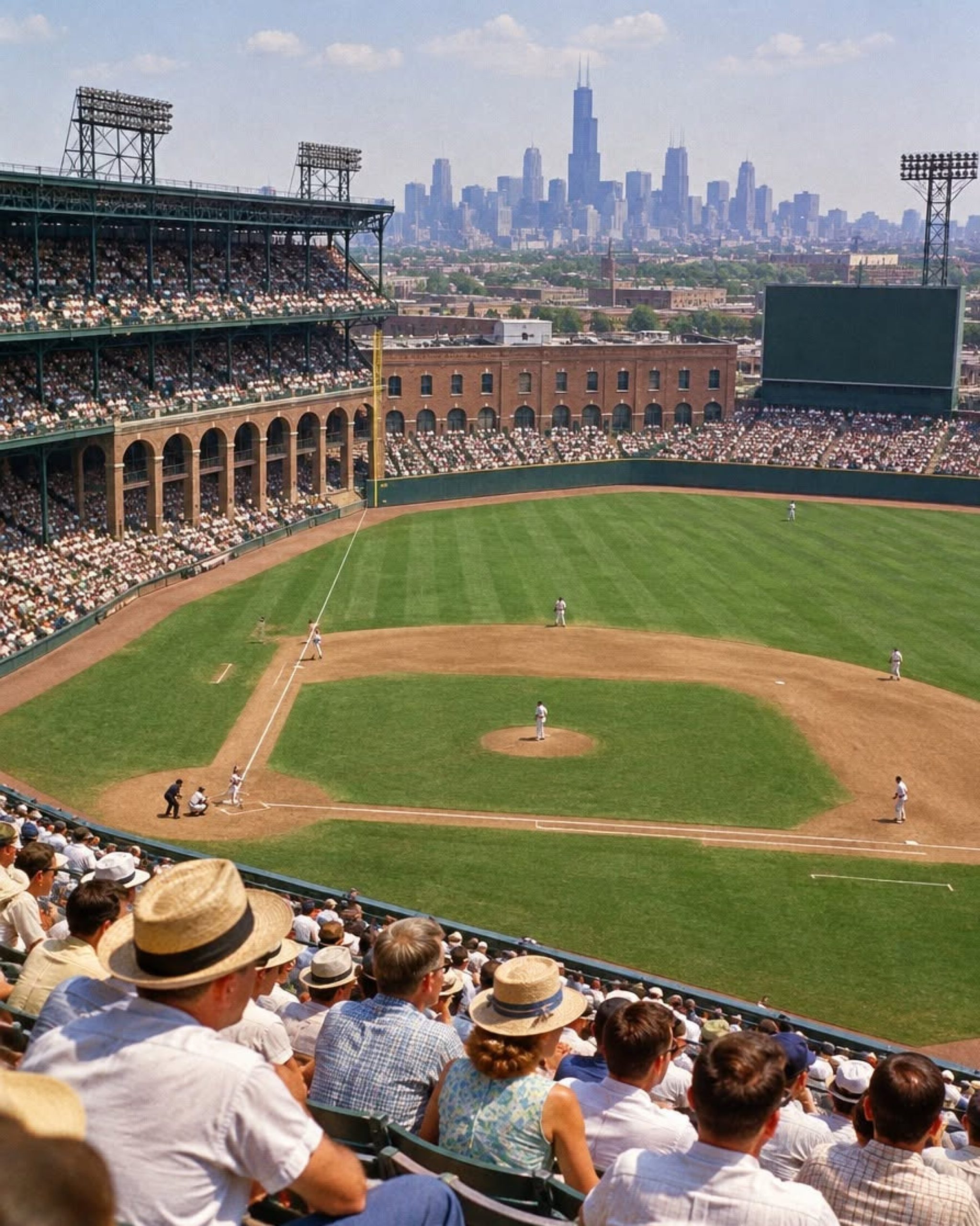
Panoramic Photo Above:
Baseball History Comes Alive Now Ranked As a Top Five Website by Feedspot Among All Baseball History Websites and Blogs!
(Check out Feedspot's list of the Top 35 Baseball History websites and blogs)
Subscribe to Baseball History Comes Alive
Free Bonus for Subscribing:
Gary’s Handy Dandy World Series Reference Guide
On Martin Luther King day, 2026, it’s fitting that we salute the Bismark Churchills, a ground-breaking semi-pro team that almost no one has ever heard of. In 1935, the Churchills featured such Negro League stars as Satchel Paige, Quincy Trouppe, Hilton Smith, and Chet Brewer. I was familiar with the rich history of baseball in Bismark, North Dakota, including Satchel Paige’s participation, but until I read Ron Christensen’s essay, I had no idea of the role the Churchills played in breaking down baseball’s racial barriers, years before Jackie Robinson. Thanks to Ron for calling our attention to this truly historic team. -GL
The 1935 Bismark Churchills:
A Team Ahead of Its Time!
“The Bismark Churchills was the best team I ever saw, the best players I ever played with…” -Satchel Paige
In its infancy, baseball was an informal game played by local rules that varied from town to town. As its popularity grew and its rules became more formally defined, the game transitioned from its club level roots to one with professional structure, including a hierarchy of competitive minor and major league teams. This evolution was fast to develop. By 1856 the New York Mercury had coined the term ‘The National Pastime’, one still in widespread use today. In 1869 the Cincinnati Red Stockings became the first openly salaried, professional team. In 1871 the National Association of Baseball Players, baseball’s first professional league, was formed. And in 1876 the National League was established, followed in 1901 by the American League, the two major leagues that continue today.
But it wasn’t until 1947 when Jackie Robinson donned a Brooklyn Dodgers uniform and strode onto Ebbets Field to assume his position at first base that baseball’s color barrier was finally broken. Robinson broke the minor league color barrier the previous season as a member of the Montreal Royals, a Dodgers’ minor league affiliate, in a game against the Jersey City Giants in New Jersey. Not since the days of Moses Fleetwood Walker in the early 1880’s had there been an African-American player in professional baseball.
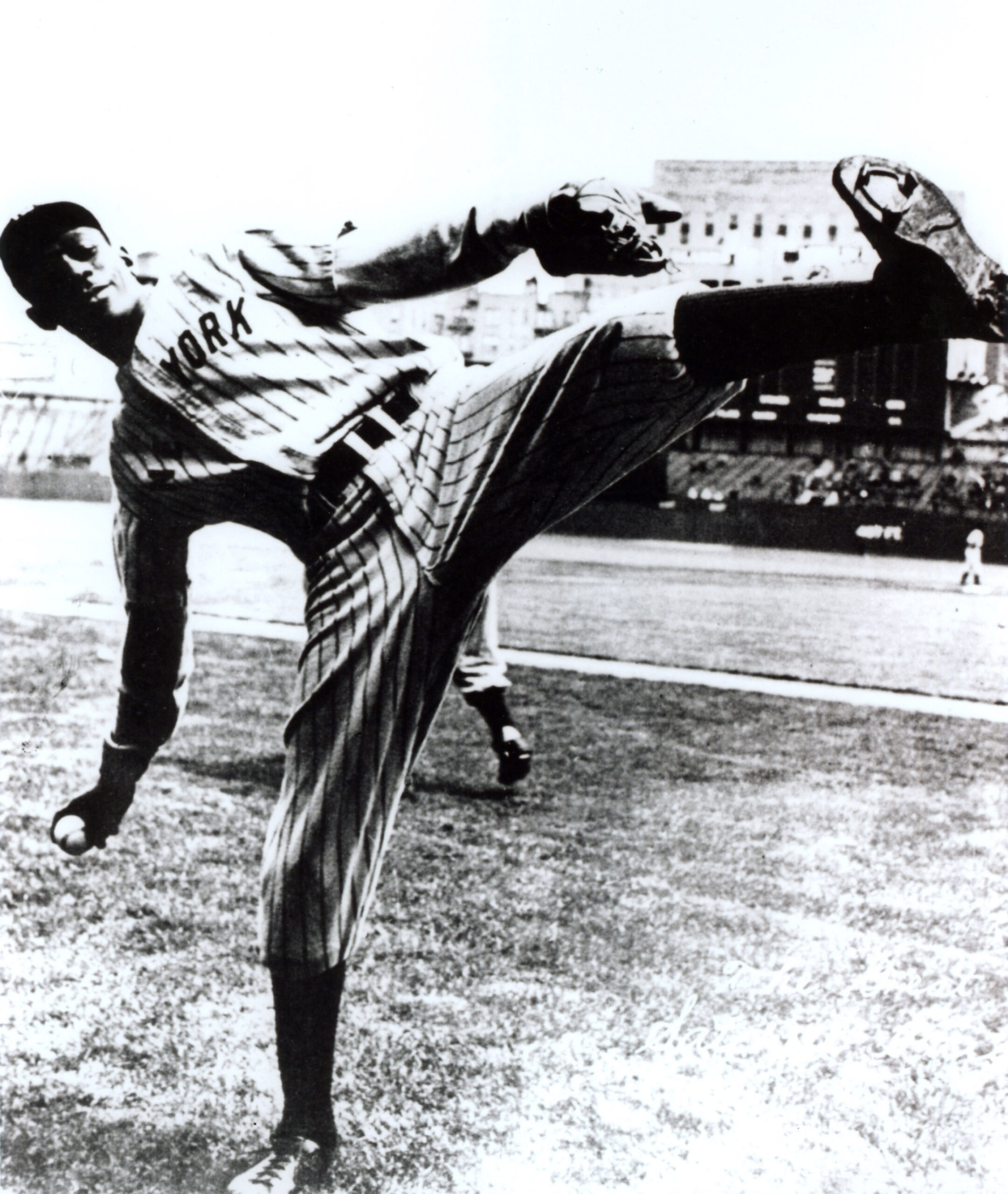
Robinson’s achievements in bringing about the end of more than sixty years of baseball segregation were important not just for baseball, but also proved to be pivotal in advancing the movement for civil rights and in furthering the cause of equal opportunity in America. He instantly became a symbol of hope and progress, an advocate for social change and a voice of empowerment for Black communities. His achievements earned him posthumous recognition from both the President and the United States Congress in being awarded the Presidential Medal of Freedom and the Congressional Medal of Honor. Major League Baseball has also honored Robinson by permanently retiring his uniform number (42), and annually celebrating April 15th as Jackie Robinson Day with all players wearing #42 to commemorate his historic accomplishment.
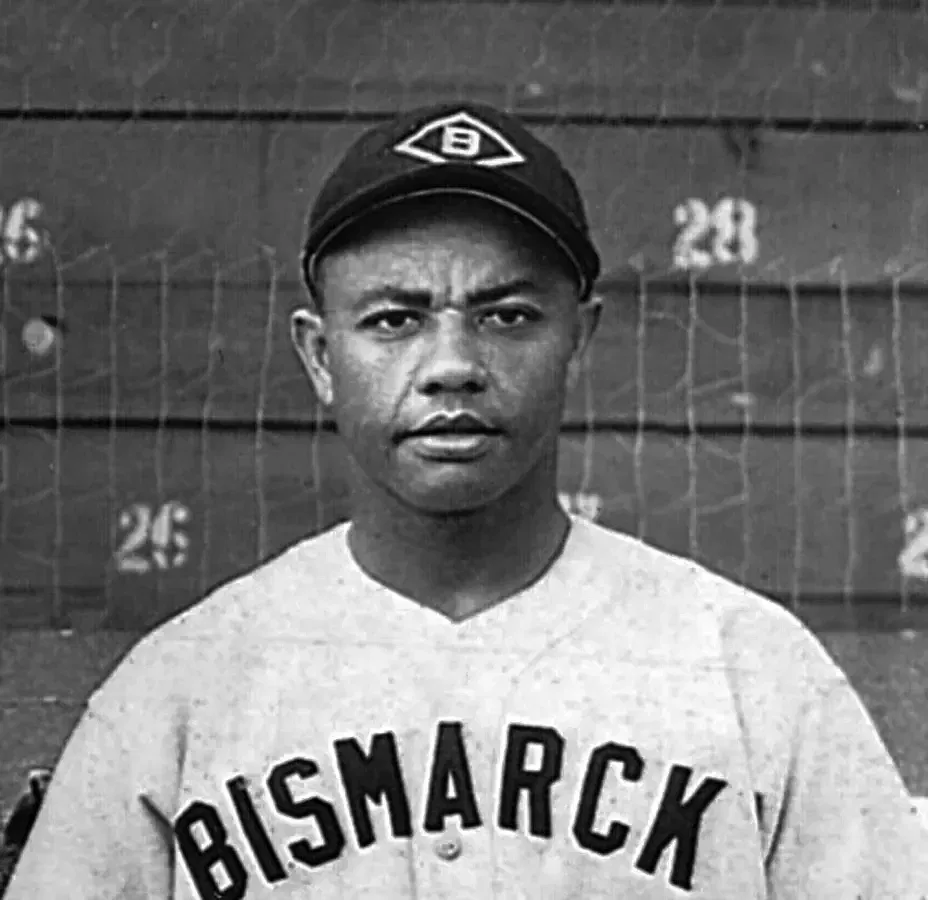
But somewhere between Moses Fleetwood Walker and Jackie Robinson we’ve completely overlooked the Bismarck Churchills, a semi-professional team in North Dakota and a colorful part of Bismarck’s rich baseball heritage. In the 1930s the remote Upper Plains of North Dakota consisted of a desolate stretch of fairly isolated communities with little connection between them beyond hard work, barren wintry landscapes, and baseball. Jim Crow laws of the southern states hadn’t crept into to the Upper Plains, and what little racial intolerance there might have been had more to do with ignorance than with outright bigotry, as there were few Black Americans residing there before 1930.
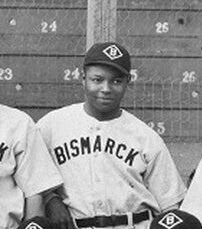
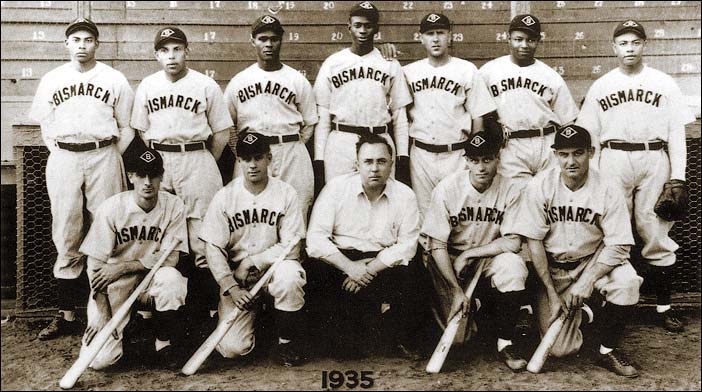
Enter Neil Churchill, a passionate baseball fan and former player (he was once a catcher for Hall of Famer Burleigh Grimes) who came to Bismarck in 1919, soon after World War I ended. Churchill (front row, center in feautred photo), an entrepreneur and owner of a local auto dealership, soon began playing for the Bismarck team, then known as the Bismarck Grays, and in 1926 was named its player-manager. In 1933 he bought the team.
Churchill was competitive, and through the years Bismarck had developed a fierce rivalry with neighboring Jamestown for baseball bragging rights in North Dakota. In July of 1933, after purchasing the team, Bismarck lost a very important game to Jamestown, one that relinquished not only bragging rights but also a share of the gate proceeds. Not one to easily accept defeat, Churchill was determined to strengthen his team with the best possible players he could find. Race was not a factor in his quest to improve his ballclub.
Churchill reached out to his friend, Abe Saperstein, owner of the Harlem Globetrotters and a leading figure in Black baseball at the time. With Saperstein’s assistance, Churchill was able to lure none other than Satchel Paige to Bismarck. Paige at the time was in a contract dispute with Gus Greenlee and the Pittsburgh Crawfords, and Churchill’s offer of $500 a month and a new Chrysler automobile was too enticing to turn down. Along with Paige, Saperstein brought in Negro League players Red Haley, Roosevelt Davis and Quincy Troupe.
Paige arrived in Bismarck in August, winning seven straight games without a loss, including a significant ten inning 3-2 victory over Jamestown on Labor Day weekend, one where Paige out-dueled Negro League Ace and future Hall of Famer Rube Foster, whom Jamestown had brought in specifically to pitch against Paige. With the victory and a season record of 38-12-5, Bismarck was again able claim its place as North Dakota state champions.
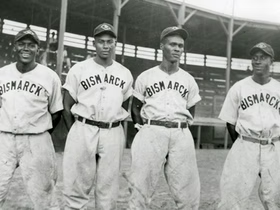
Paige didn’t return to Bismarck in 1934, but he did in 1935 and brought with him his longtime friend and Negro League great Ted ‘Double Duty’ Radcliffe, the nickname referring to Radcliffe’s ability to excel as both a pitcher and as a catcher. The Churchills completed the season with an outstanding record of 60-19-3, including a 30-2 effort by Paige who accumulated 321 strikeouts in 330 innings. The team was invited to participate in the inaugural National Baseball Congress World Series in Wichita, Kansas, a thirty-two team tournament of the best semi-professional teams in the country as selected by Hap Dumont, the NBC founder. The tournament featured baseball legend Honus Wagner as it’s guest of honor. Paige won four games in the tournament, striking out 60 batters in leading Bismarck to the championship. He would be selected Tournament MVP.
Paige did not return to play for Bismarck in 1936, and at the end of that season Neil Churchill disbanded the team, leaving a void in Bismarck baseball that would not be filled until 1955. Churchill continued with his Chrysler dealership, and was elected Mayor of Bismarck in 1939. After the 1936 tournament, in which the Paige-less Churchills won four games before being eliminated, NBC did not invite another integrated club to participate in its ‘Little World Series’ until after Jackie Robinson broke baseball’s color barrier in 1947.
Twelve years before Jackie Robinson made baseball history, Neil Churchill and his integrated Bismarck baseball team gave the baseball world a glimpse of what baseball could be, all due to the vision of one man to whom color was a bridge rather than a barrier. In this regard, Churchill was the Branch Rickey of his day, and though he performed on a much smaller stage, Neil Churchill was nonetheless a true baseball trailblazer..
Major League Historian John Thorn described the 1935 Bismarck Churchills as “the most dominant team in the country, including the major leagues.” Years later, Satchel Paige said, “that was the best team I ever saw, the best players I ever played with. But who ever heard of them?”
Paige’s remark was astute. How could the first ever integrated baseball team pave the way to integrated baseball if no one ever really heard of them?
Ron Christensen
REFERENCES:
- Color Blind: The Forgotten Team That Broke Baseball’s Color Line, by Tom Dunkel
- SABR: May 5, 1935 – Satchel Paige Loses North Dakota’s Semi-Pro Season Opener, by Thomas E. Merrick
- SABR: June 6, 1935 – Satchel Paige Strikes Out 17 for Bismarck in Exhibition Game Against Monarchs in Winnipeg, by Tim Hagerty
- The 1935 Bismarck All Stars, by Mark Stoler
- Chicago Baseball Museum: North Dakota Baseball Way Ahead of its Time with 1930’s Integrated Teams, Including Duty, by George Castle
- State Historical Society of North Dakota: Bismarck Baseball
- Bismarck Larks: Bismarck Baseball, The Early Years
- African American Registry: The Bismarck Grays Baseball Team
- Old Fort Baseball Company: The Bismarck Churchills
- Prairie Public: Bismarck’s 1935 Semi-Pro Baseball Team, by Cathy A. Langemo
- Library of Congress: Breaking the Baseball Color Line
- Wikipedia: The Bismarck Baseball Club
- Wikipedia: Moses Fleetwood Walker
- Wikipedia: National Baseball Congress World Series
Subscribe to Baseball History Comes Alive. FREE BONUS for subscribing: Gary’s Handy Dandy World Series Reference Guide. https://wp.me/P7a04E-2he




Thank you to Ron Christensen for this excellent piece about little-known baseball history.
Thanks for checking in, Len!
Thank you, Len! So glad you enjoyed it. I’m grateful for your feedback, and I truly appreciate your very kind words.