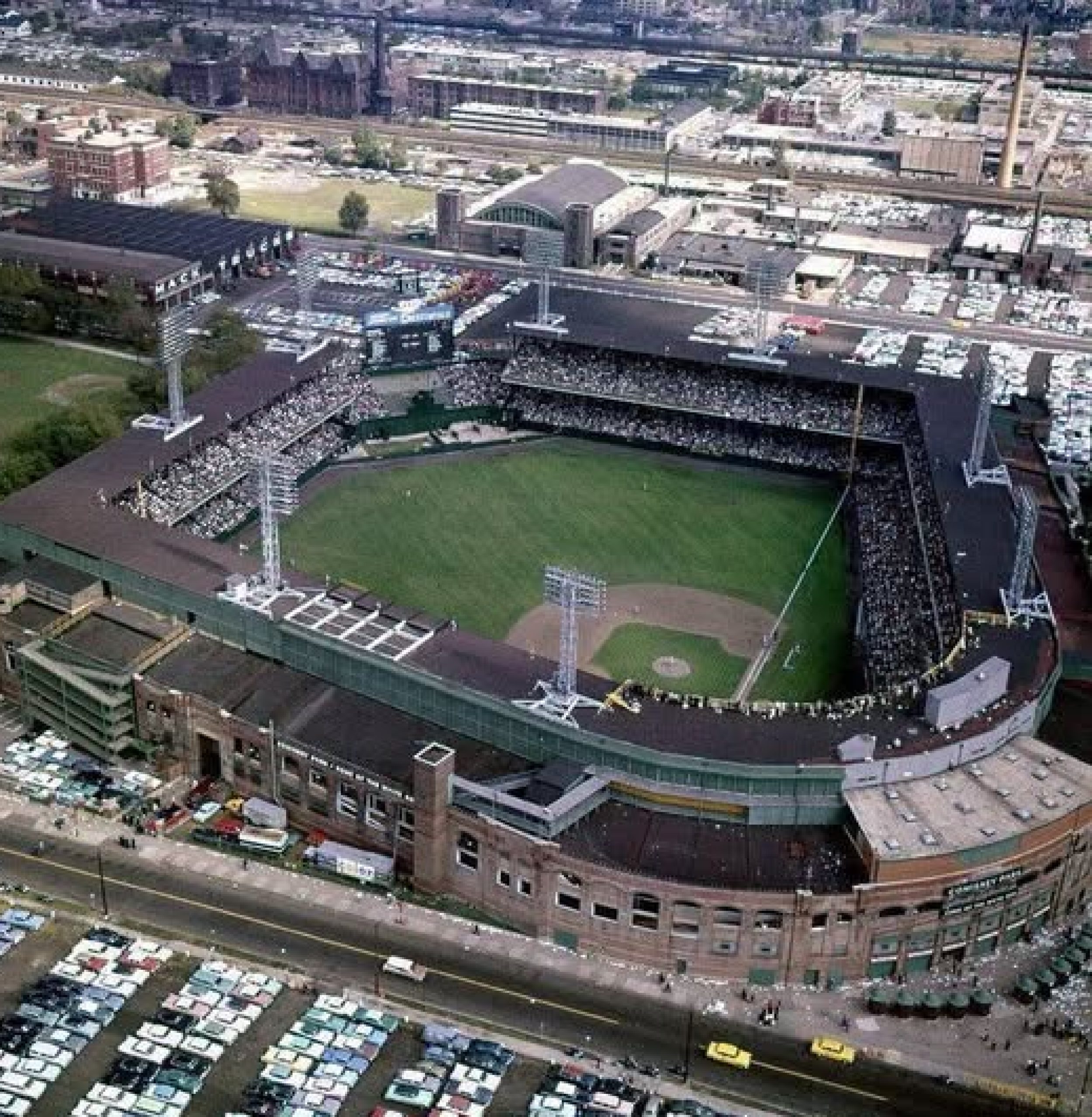
Panoramic Photo Above:
Comiskey Park, Chicago
Baseball History Comes Alive Now Ranked As a Top Five Website by Feedspot Among All Baseball History Websites and Blogs!

(Check out Feedspot's list of the Top 35 Baseball History websites and blogs)
Visit the Baseball History Comes Alive Home Page
Subscribe to Baseball History Comes Alive
Free Bonus for Subscribing:
Gary’s Handy Dandy World Series Reference Guide
Denny McLain and 1968 Tigers Photo Gallery

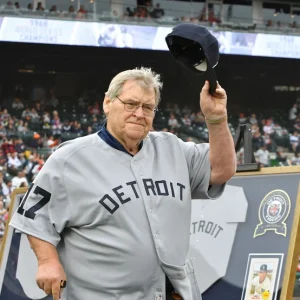
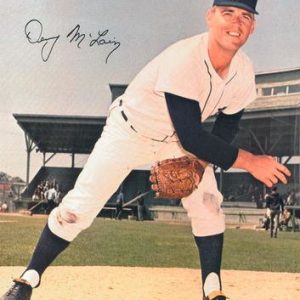
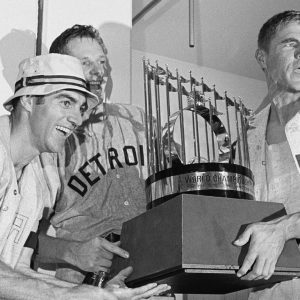
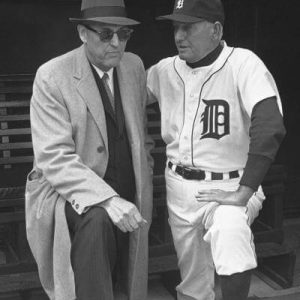
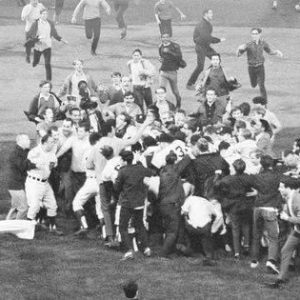
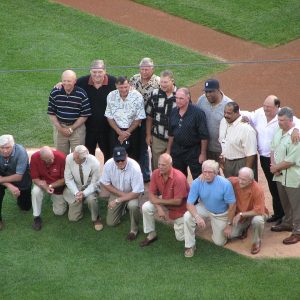
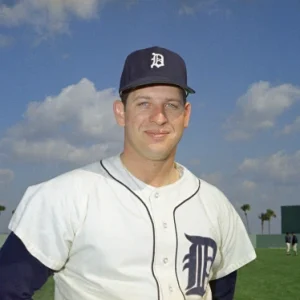
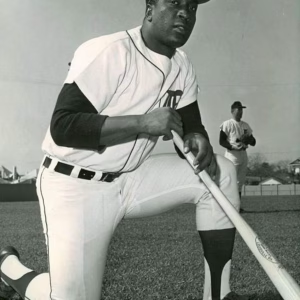
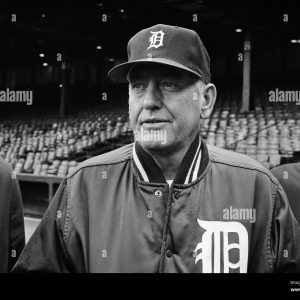
Today we welcome back Matt Kastel with an interesting essay describing the life and career of Denny McLain, the last player to win 30 games. This essay is a condensed version of Matt’s longer essay for which he interviewed McLain. It’ll be part of a book Matt is planning to publish in the future. I think you’ll enjoy what Matt has for us today. -GL
The Rise and Fall of Denny McLain
At age twenty-five, Denny McLain embodied the future of baseball. Yet, 1970 eviscerated his career and shattered his life.
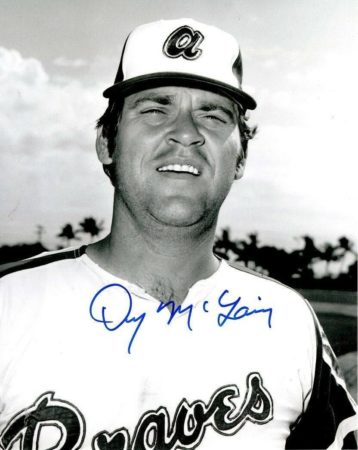
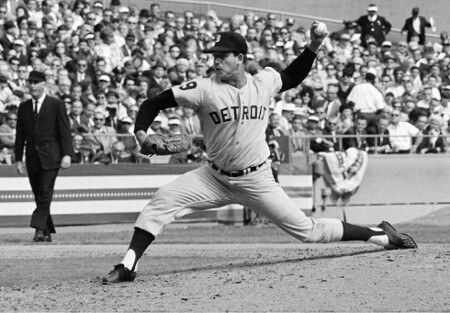
To grasp McLain’s crash, it’s best to understand his lofty heights. In 1968, he became the last man in history to win 30 games in a single season, finishing with 31 victories for the World Champion Detroit Tigers. It was a feat unmatched since Dizzy Dean in 1934, and something McLain himself thought impossible.
“I didn’t think I would get there until I got to the halfway part of the season,” McLain recalls. “I historically had a real bad right shoulder. Somehow, someway, we were keeping it together, and I mean eating cortisone shots.”
The pressure was crushing. “I had to sit in a clubhouse during the All-Star game, and everybody in the ballpark, including every player, asked you three times: Are you gonna win 30?” Even after he accomplished the impossible, it felt unreal. In the offseason, his wife Sharyn asked in disbelief, “Did you really do that?”
But McLain insists that 1968 wasn’t just about him. It was about the recovery of Detroit. The city was still smoldering from the shocking bedlam of 1967. “We had 40 people get killed in riots in the city of Detroit, so the bottom line is we needed to point everybody in the area of winning a pennant.”
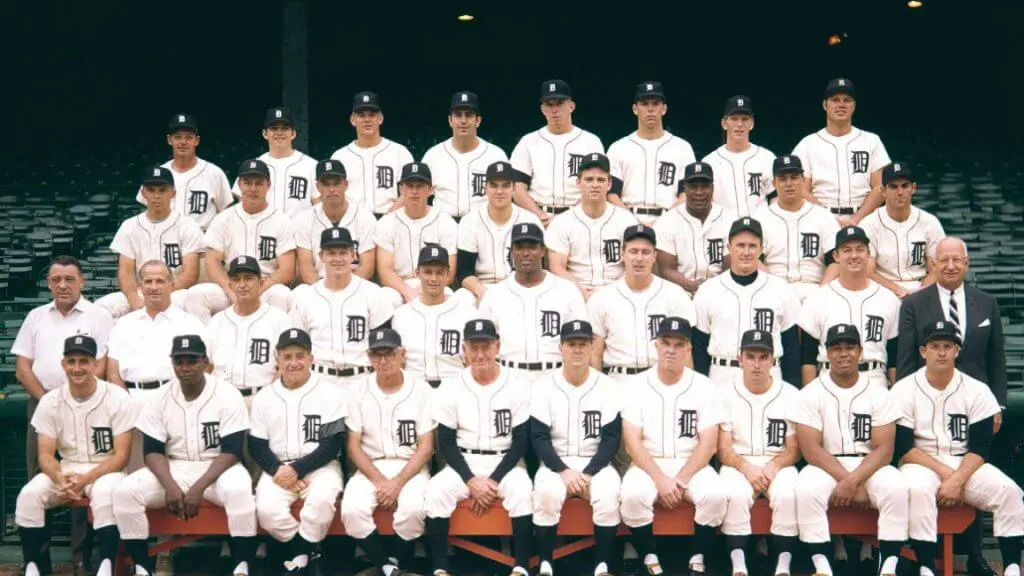
When the Tigers dethroned the Cardinals in Game Seven, it ignited a celebration he never forgot. “The kids in the neighborhood painted every one of our trees… Every roll of toilet paper that they could find in the state of Michigan they had in my front yard. I have never seen so much gorgeous paper in my life!”
At his peak, McLain was a workhorse, throwing 1,380 innings and winning 108 games in a five-year span. Did his arm hurt? “Absolutely!” But physical pain paled to the storm brewing on the horizon.
The Downfall
How did it unravel so quickly? In 1970, a blockbuster issue of Sports Illustrated contended that mobster Tony Giacalone had broken McLain’s toes in 1967 over a gambling debt. With this exposé, McLain’s 1967 toe injury—which had sidelined him during a critical pennant chase—was suddenly viewed through a lens of suspicion. Sports Illustrated asserted that Giacalone had bet against the Tigers. Had McLain thrown the season?
The story blindsided McLain during a lunch with Pepsi executives. “Somebody said, ‘Did you hear about the story? There’s going to be a story about you and gamblers.’ I said, ‘I don’t gamble, what are you talking about?’”
Prior to the article, the story of his toes injury had oscillated: his foot fell asleep, he chased raccoons, or he kicked a locker. Now, the narrative was a mobster stomping on him. Fifty-eight years later, McLain remains emphatic that it had nothing to do with the mob.
“It’s very simple. I got the hell kicked out of me in a ball game… We were smack dab in the middle of all this (the 1967 pennant chase). I started throwing everything I had in my locker.”
He recounts kicking the locker and snagging his foot in the wire mesh used to dry clothes. “I got stuck between two pieces of wire and then pulled it out and tore the hell out of some kind of a ligament.”
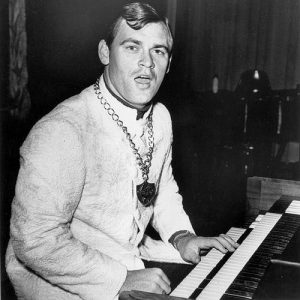
McLain concedes he may have crossed paths with mobsters but provides a practical reason: he was a talented keyboardist who played in clubs for extra money. “I’m playing in a place that two or three bad guys might be hanging out… It was an income for me. None of us made any real money.”
The article, however, accused McLain of funneling $15,000 in a bookmaking business run by the Syrian Mob in Flint, Michigan. McLain was so incensed he voluntarily approached the FBI. “I pushed the FBI to take me to a lie detector test,” he says. “And don’t you think that if there was any scent of guilt that, in fact, I would have never played ball again?”
McLain insists the FBI exonerated him of organized crime connections. But getting cleared by the FBI was one thing, Major League Baseball was another.
The Suspension
Right before opening day, Commissioner Bowie Kuhn slapped McLain with a suspension until July 1st. The logic was baffling. Kuhn stated that although McLain believed he was a partner in a bookmaking operation, he actually had fallen victim to a confidence scheme. Therefore, he wasn’t really a bookie.
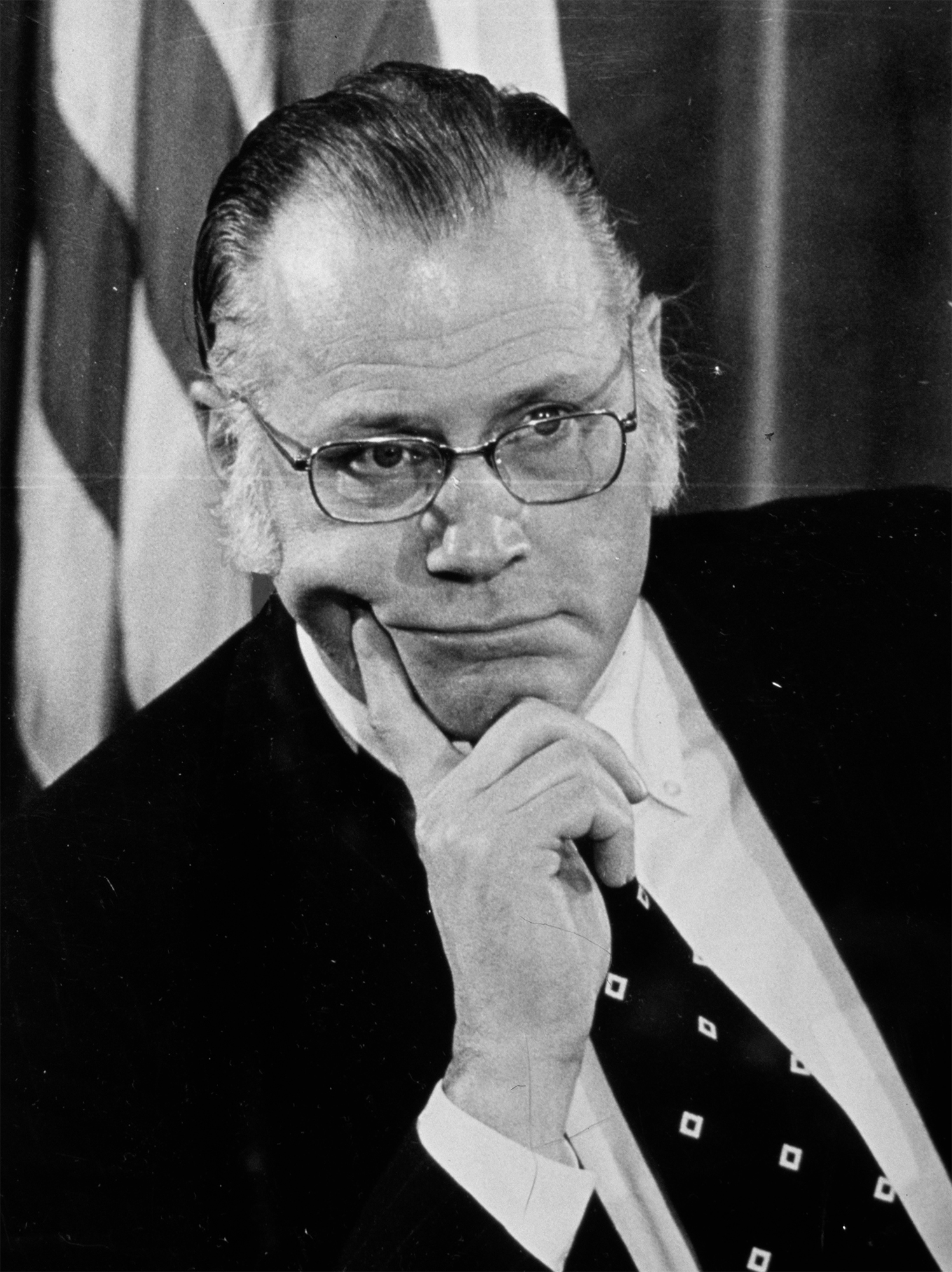
When asked to clarify the difference between believing you are a bookmaker and actually being one, Kuhn famously replied, “I think you have to consider the difference is the same as between murder and attempted murder.”
The punishment perplexed teammates. Dick McCauliffe noted, “If Denny’s innocent, it should be nothing. If he’s guilty, then this is not enough.”
During the investigation, MLB mandated McLain to see a psychiatrist. “They put me in a room all by myself, painted white,” McLain laughs. The doctor handed him a child’s game of shapes and slots. “I sat there for a minute and said, ‘What are they nuts? These guys are crazy!’”
The Final Straws
The 1970 season imploded further. McLain was suspended again for dosing a bucket of water on two sportswriters, Watson Spoelstra (grandfather of NBA head coach Erik Spoelstra) and Jim Hawkins. McLain characterizes Spoelstra, as being a “horrible alcoholic”, who at times was also the Tigers official scorer. “Lord, the things he called hits, and the things he called outs.”
After a game, the pair locked horns. “I had a bucket in my hand… I’m gonna hit him with the water,” McLain recalls. Spoelstra accused the pitcher of putting urine in the bucket. When writer Jim Hawkins challenged him on it, McLain doubled down.
“I said, ‘Honest to God… there’s some water still in the bucket. Give me the bucket.’” When Hawkins asked what he was going to do, McLain downed the remaining water to prove a point. “It was not even close to the truth. It was water.”
Manager Mayo Smith tried to defuse the situation, saying, “Denny likes to have fun at other people’s expense… but things can go too far.”
Things went too far shortly after, when McLain toted a gun onto a team flight. He claimed he bought it for protection after the Detroit riots. “Everyone on our ball club had a gun,” he insisted. Regardless, Commissioner Kuhn suspended him for the remainder of the 1970 season. Detroit subsequently exiled him to the Washington Senators in the off season.
The Aftermath
McLain’s post-Tiger career was haunted by the allegations. The suspensions corroded his rhythm. “I didn’t have zip… My mind was gone, and every once in a while, you hear some guy yell, ‘Who would you bet on tonight?!’”
His life after baseball was checkered. In 1984, he was convicted under the RICO act for racketeering and dealing cocaine, serving three years. In the 90s, he was convicted of embezzlement regarding a company pension fund, serving six more years.
Reflecting back, McLain mused, “I don’t think I ever set out to hurt anyone on purpose. I made a lot of stupid mistakes… typical mistakes of a 23-year-old. You’re in the big leagues. You really think you’re hot poop.”
Despite the ups and downs, McLain remains an optimist. “I wish everybody could walk in my shoes for at least 30 days and see what life can do to you, and how well life can treat you.”
For a baseball fan growing up in 1968, that wish is something most would gladly seize—as long as it was the 30 days between his thirtieth win and the World Series title.
We’d love to hear what you think about this or any other related baseball history topic…please leave comments below.
Matt Kastel
Photo Credits: All from Google search
Subscribe to Baseball History Comes Alive. FREE BONUS for subscribing: Gary’s Handy Dandy World Series Reference Guide. https://wp.me/P7a04E-2he




Great story.
It was 56 years ago yesterday that Walter Cronkite announced on his CBS Newscast of the impending SI story on McLain.
I remember also that McLain’s father-in-law was HOF’er Lou Boudreau. When McLain was traded to Washington in 1971, his manager was Ted Williams, making a direct connection to the “Boudreau Shift” in a “two degrees of Kevin Bacon” way.
It was also the last year of the Senators in Washington. I was actually at the game at Fenway where McLain pitched and lost his 22nd game of the season. Quite the fall off the career cliff in three short seasons.
Some say his musical career was his real tie with“Criminal Organ-ization”😜
Thanks Paul…some great personal insights.
McLain went to Mt. Carmel High School in Chicago. He pitched them to two Catholic League championships.
He was orginally signed by the White Sox, and the former Sox organist taught him to play the organ.
My friend Mike Roeder has a record of Denny playing the organ. Perhaps collectors may note this. McLain is an original.
Thanks Joe…great personal insight and remembrances! Was that Nancy Faust who taught him the organ, or was that before her time?
Ah, the trade. The best left side of the infield (Eddie Brinkman and Aurelio Rodriguez) outside of Baltimore, two time 20 game winner Joe Coleman, and Jim Hannan for McLain, Don Wert, Norm McRae and Elliot Maddox. Wert hit .050 in 20 games before retiring. McRae never pitched in Washington. Maddox, who later learned to hit with the Yankees, batted .217 in 1971 with a slugging average of .275. Plus, in addition to losing 22 games, McLain was a disrupter in the clubhouse. This may have been the only time in baseball history where a trade caused a franchise relocation. I was at the opening game of the 1970 Series in Riverfront Stadium when I learned of the trade. Ouch!