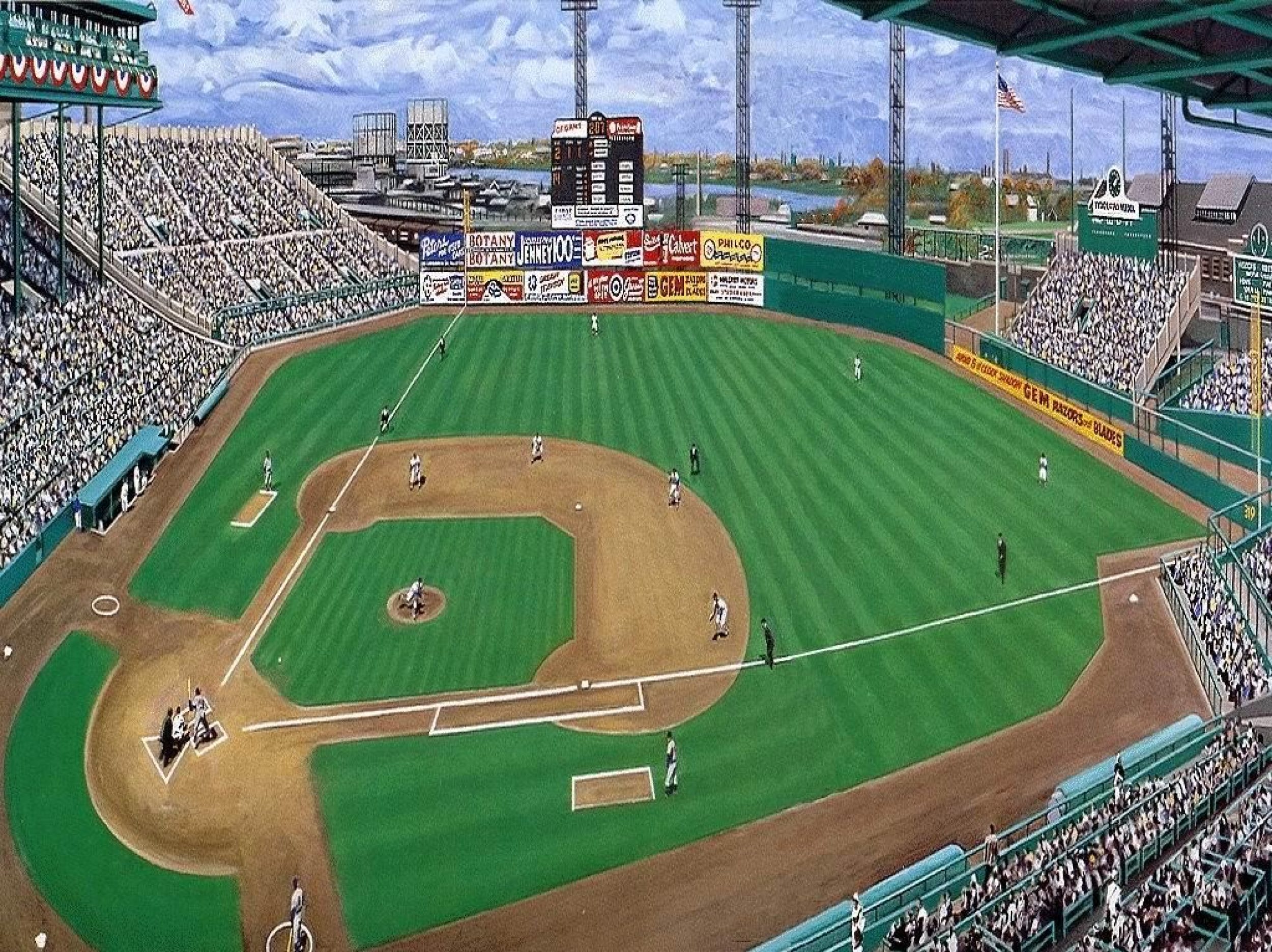
Panoramic Photo Above:
Braves Field during 1948 World Series
Baseball History Comes Alive Now Ranked As a Top Five Website by Feedspot Among All Baseball History Websites and Blogs!
(Check out Feedspot's list of the Top 35 Baseball History websites and blogs)
Visit the Baseball History Comes Alive Home Page
Subscribe to Baseball History Comes Alive
Free Bonus for Subscribing:
Gary’s Handy Dandy World Series Reference Guide
Today Ron Christensen returns with an interesting account of one of the first precursors to the modern playoff series: the Brooklyn Atlantics vs. the Philadelphia Athletics, played in 1866. As you read Ron’s essay, you’ll get the sense of how popular baseball was even back then, as it developed over the ensuing decades into the National Pastime. We don’t often read much about baseball’s origins, but this is a good one. – GL
Baseball’s First Professional Championship…Sort Of!
Each season, baseball crowns as its champion the victor of the World Series. Win the Series, take the crown. It’s the ultimate baseball championship, and it has taken place at the conclusion of every season since 1903.* Prior to this, end-of-season championships were played between the pennant winners of the National League and the American Association (1882-1891), between two half-season champions of the National League (1892), and between first and second-place teams of the National League (1894-1897, 1900). In seasons without a playoff series, championships were awarded to the National League’s first-place finisher (1876-1881, 1893, 1898-1899). The same is true during the tenure of the National Association of Professional Base Ball Players (1871-1875), also known as the National Association, baseball’s first professional league.
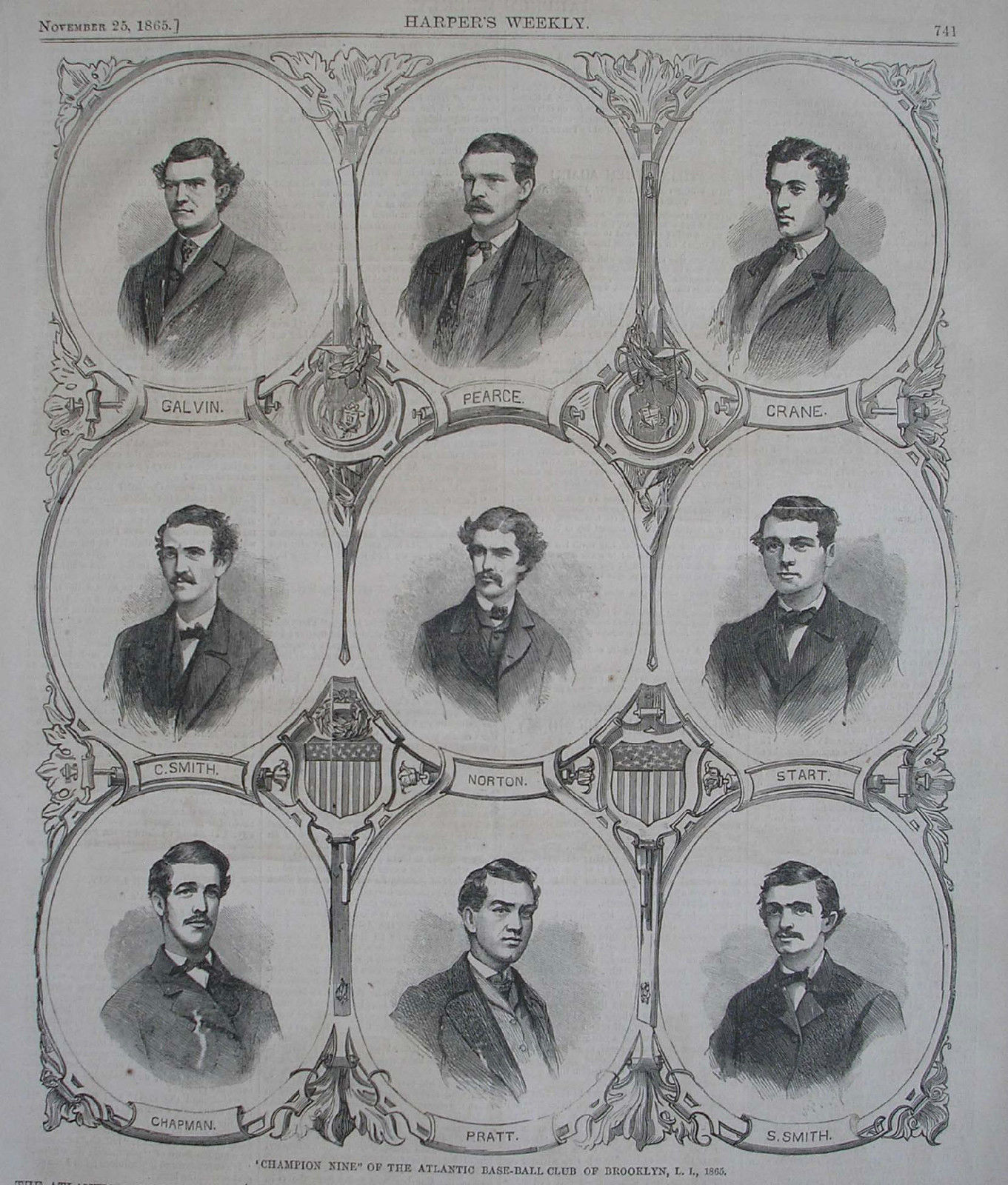
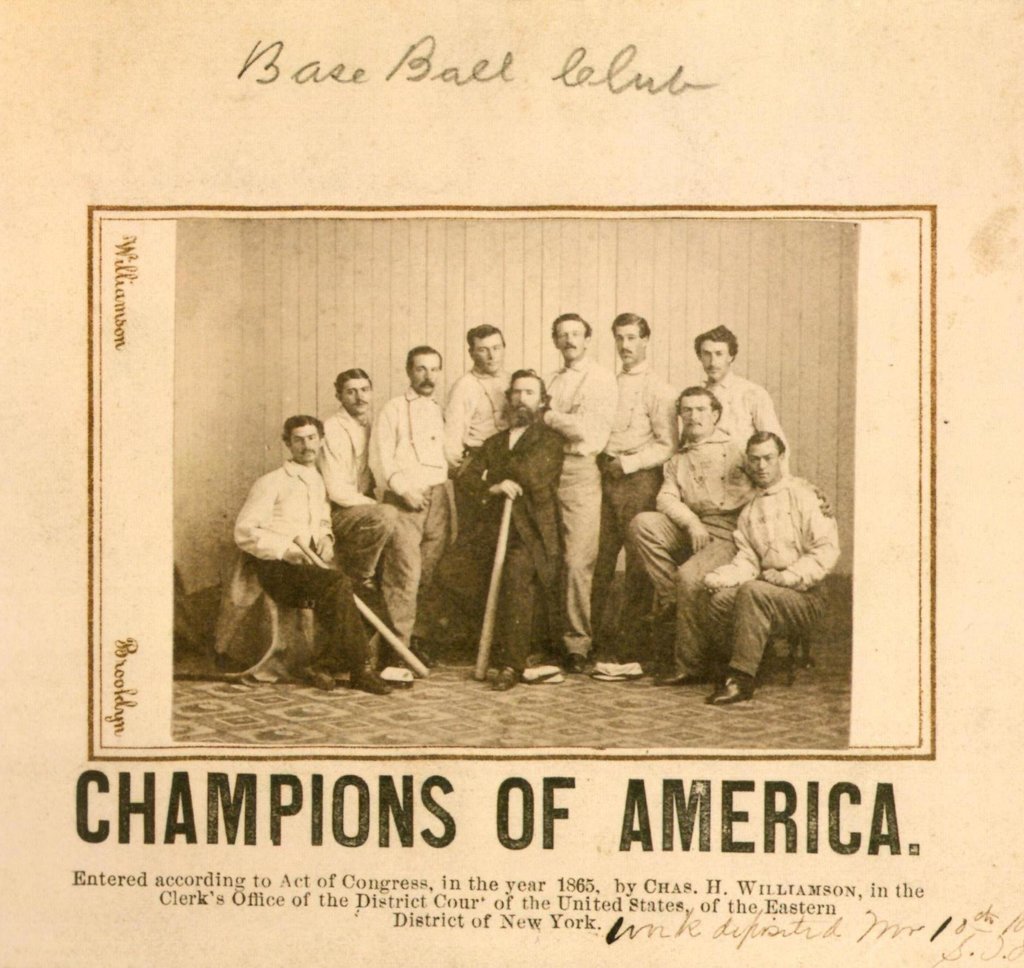
Prior to the formation of the National Association, the claim to a championship was fairly subjective. Baseball was an amateur game, despite some teams declaring professional status as early as 1869. The sport lacked structure, lacked formal rules to determine scheduling and standings, and followed local rules that varied widely. But in October 1866, a best-of-three championship series was played, one that helped shape the future course of baseball as a professional sport. It went like this:
The series was played between the Atlantics of Brooklyn and the Athletics of Philadelphia.** The Atlantics were arguably baseball’s first dynasty. In the nine years following the formation of the National Association of Base Ball Players in 1857 (the amateur organization that preceded the National Association of Professional Base Ball Players organized in 1871), the Atlantics had been pennant winners six times. They were also the first team to visit the White House, having been invited by President Andrew Johnson in 1865.
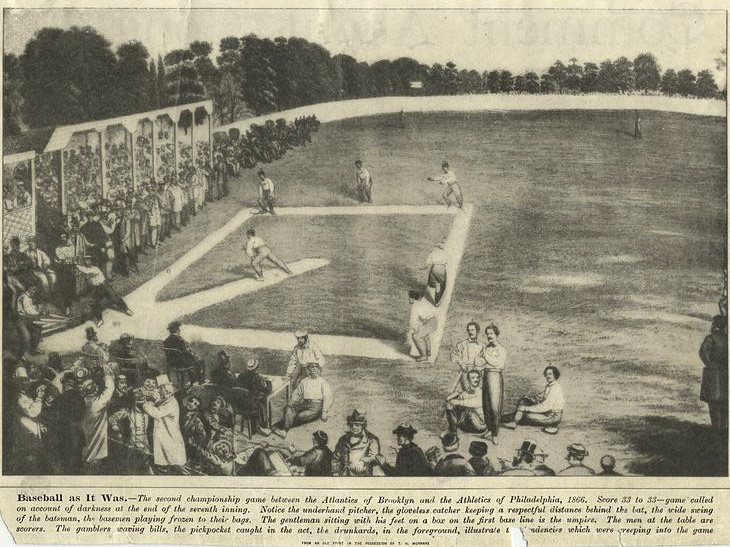
In 1866, the Atlantics finished the season with a commendable 17-2 record. But the Athletics of Philadelphia were undefeated, and rather than rest on their laurels as pennant winners, they instead challenged the Atlantics to a postseason championship playoff. It was an opportunity for both clubs to generate income, as the teams intended to charge admission to the games and share the gate proceeds.
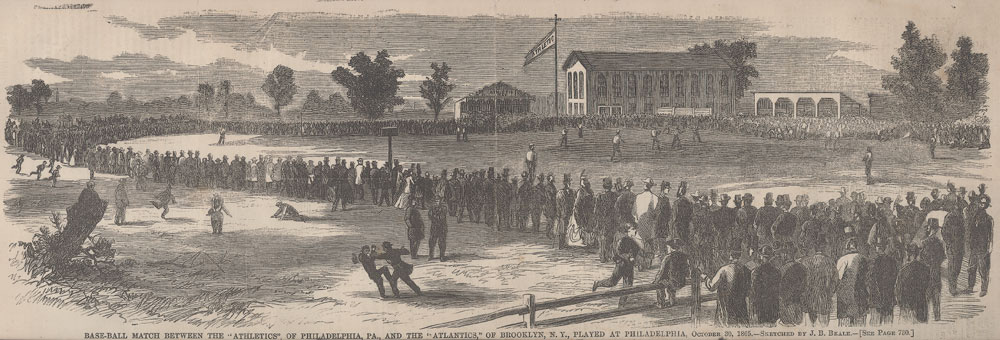
Game One was scheduled for October 1 in Philadelphia. It was never played. The Athletics advertised the contest in advance of the game and sold advance tickets at twenty-five cents each, more than double the normal ten-cent ticket price. Eight thousand tickets were sold, but by the morning of the game, as many as 30,000 people had arrived, overwhelming any ability of the Athletics and the Philadelphia police to maintain order and crowd control.***
The baseball grounds at the corner of Columbia Avenue and 15th Street didn’t offer much of an enclosure, and the crowds took advantage. People lined their horse-drawn carriages just beyond the playing field to gain a better vantage. They climbed the trees adjacent to the field and stood on nearby rooftops for clearer views. But mostly they swarmed the outfield, dozens deep, crowded shoulder to shoulder, all jostling for a better view in a scene later described as reminiscent of the ebb and flow of a wheat field in the wind. Fueled in part by alcohol rather than wind, the ebb and flow of the crowd eventually encroached so far onto the field that the game’s only umpire stopped further play before the first inning had ended. The Athletics, who were the home team but yet batted first (local rules), left with a 2-0 lead, all for naught as the game was canceled.
Game Two fared better, with upgraded crowd control sufficient to allow the game to be played. This one took place in Brooklyn, at the Capitoline Grounds in the Bedford section of the Borough. The grounds, rather than merely open space, were bounded on all sides by fencing. Only day of game ticket purchases were allowed – no advance tickets were sold. Seven gated entry points were staffed by 18 ticket-takers, and more than 150 policemen from 10 precincts were posted to maintain order. The 4,000 available seats quickly sold out, and it was estimated that as many as 20,000 additional fans stood outside the fencing for a possible view of the game, all behaving without incident. Brooklyn won the contest, 27-17.
The Game Three rematch (the second game actually played) returned to Philadelphia, where the Athletics assured that they and the city would be better prepared to manage the crowds. In fact, in the interim between this and the first game, the Athletics erected a fence around the field to deter on-field access by the anticipated overflow of fans. They also upped the ante – now charging a premium fee of $1.00 per ticket, a profit consideration made necessary by virtue of having only 4,000 seats to sell, as now with the fence in place, only 4,000 seats were available. Still, the non-paying fans climbed the nearby trees and stood on nearby rooftops.
In the end, the Athletics won convincingly, by a score of 31-12, to even the series at a game apiece. The Atlantics were accused of lying down and playing to lose to ensure the playing of a third and deciding game and a chance to share additional gate proceeds. And maybe they did, a not-so-unexpected indication that the business of baseball was being indoctrinated into the game itself.
But when the gate proceeds of this second game came to be divided, the Atlantics expected an equal share of the gross proceeds while the Athletics were only willing to divide the net proceeds, those available after deducting $1,500.00 for the cost of their newly erected fence. A stalemate ensued, one that remained unresolved, with the Atlantics returning to Brooklyn and no third deciding game being played. Although the series had played to a draw, with the Athletics the victor in the final game and completing the season with the best overall record, the Atlantics declared themselves league champions, something the record books reflect today.
Historically, this series didn’t offer a proper blueprint for determining a baseball champion. But it did offer a window into the rising popularity of the game, the ensuing interest of its dedicated fan base, and the promise of potential profits to be earned by those involved. And while it didn’t all come together in 1866, the 1866 championship series did set the wheels in motion for what was yet to come for baseball as both a business and a profession.
Ron Christensen
REFERENCES:
- SABR: October 1866 – A Return On Their Investment, by Eric Miklich
- SABR: Philadelphia, October 1866 – The Center of the Baseball Universe, by Jeff Laing
- The Spitter: Talking Baseball – The 1866 World Series, by Keith Good
- 19c Baseball: The Champions (1860-1869), by Eric Miklich
- Wikipedia: List of Pre-War Baseball Champions
*The American League was formed in 1901, twenty-five years after the formation of the National League (in 1876). There was no World Series played in 1901 or 1902, primarily due to the bitter rivalry that existed between the two leagues. The first World Series was played in 1903, but did not return in 1904 due to the refusal of John McGraw to allow his New York Giants to play, a decision backed by John T. Brush and the Giants ownership. There was also no World Series in 1994 due to a labor dispute between MLB and the Players Union.
**These were not the same baseball clubs as those organized later to be the Brooklyn Atlantics (aka: Superbas, Robbies, Dodgers, et al), and the Philadelphia Athletics (later relocated to Kansas City, then to Oakland, and now to . . . be continued).
***Various accounts of this game measure the size of the crowd differently, with estimates as low as 20,000 people gathering, and as high as 50,000 people gathering.
Subscribe to Baseball History Comes Alive. FREE BONUS for subscribing: Gary’s Handy Dandy World Series Reference Guide. https://wp.me/P7a04E-2he




Well told Ron!
Thank you Mark. Much appreciated. Very pleased you enjoyed it.
What a wonderful baseball web site! I love baseball And i,m à historia fan,so i,m thrilled..English isn’t my first language,l havé to translate into french,but it,s worth it.Thank you for all these articles
Hi Dominic- Thanks for checking in and thanks for the kind words. Glad to have you with us and glad to hear you’ve found the website to be of value! Please stay in touch! -Gary