
Panoramic Photo Above:
Los Angeles Coliseum
Baseball History Comes Alive Now Ranked As a Top Five Website by Feedspot Among All Baseball History Websites and Blogs!

(Check out Feedspot's list of the Top 35 Baseball History websites and blogs)
Visit the Baseball History Comes Alive Home Page
Subscribe to Baseball History Comes Alive
Free Bonus for Subscribing:
Gary’s Handy Dandy World Series Reference Guide
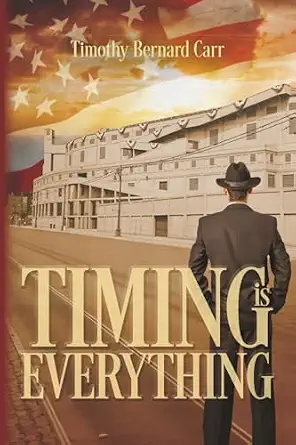
My Review of
Timing Is Everything
by
Timothy Bernard Carr
When was the last time you read a baseball-themed book that combines wishful thinking, “what if” speculation, time travel (à la H.G. Wells), along with a heavy dose of imagination and creativity? I think the answer for most of us would be “never”; but that is exactly what author Timothy Bernard Carr accomplishes in his interesting book, Timing is Everything. The result is a highly enjoyable reading experience for those who possess an open mind.
In the Prologue, the author presents the book’s theme:
“This book will explore how a small seemingly minor change could disrupt and change the fate of an organization, whether in sports or other areas of American life.”
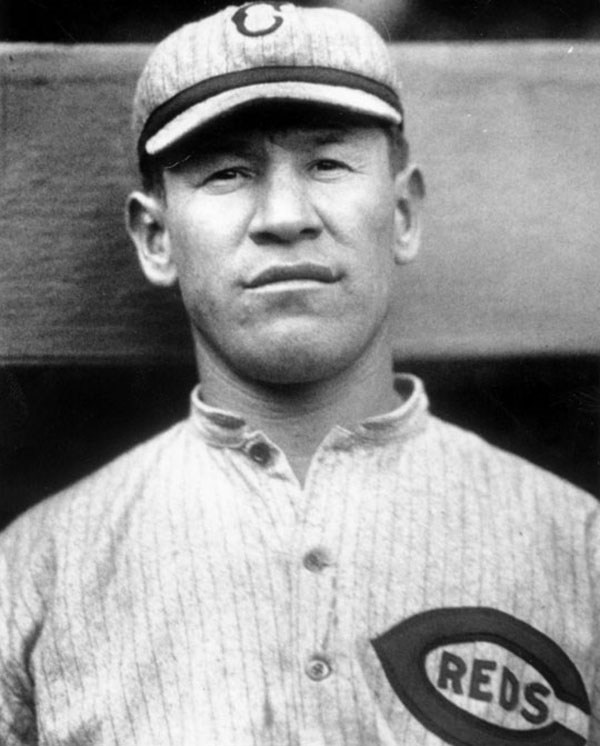
The story centers around protagonist Mark Killoran, an Irish American from Detroit, who, as the story unfolds, is described as a broken Vietnam veteran, an estranged father in a dysfunctional marriage, and an alcoholic who is barely clinging to his low-level, unsatisfying job with the Detroit Tigers. One day, quite unexpectedly, Killoran stumbles into a “time portal” that transports him back to the golden age of American sports. In his “new world,” he encounters such sports icons as Jim Thorpe, Ty Cobb, and Babe Ruth, among others. While an employee of the Tigers in this alternative world, he rises to high-level positions of responsibility within the organization; and in so doing, he helps to rewrite baseball – and American – history.
In an email exchange with the author, Tim Carr informed me that the main ideas of the book are “rooted in facts.” Starting from this foundation, he then allowed his imagination to take hold, playing “what if,” with the goal of correcting (if only in a fantasy world) some of sports’ most egregious injustices.
Killoran’s first encounter is with the great Native American athlete Jim Thorpe, and the issue of Jim being stripped of his two gold medals, earned in the 1912 Olympics. Tim Carr clearly feels Thorpe was treated unfairly and tackles the issue head-on. He develops a hypothetical alternative scenario – with protagonist Mark Killoran playing a major role – that results in Thorpe’s exoneration after admitting to a minor infraction of Olympic rules. Jim goes on to lead a prosperous life which includes fame, adulation, and the universal acclaim due him as one of the greatest athletes of all time.
Some readers may take issue with Carr’s interpretation of the Jim Thorpe situation, but, as the author makes clear, many sports figures at the time were guilty of the same offenses and, unlike Jim Thorpe, they got away with it. Also, unlike Thorpe, they often played under assumed names. This list would include such notable persons as President Dwight Eisenhower, who received payment for briefly playing baseball under an assumed name and then lied about it. Had Ike’s duplicity been exposed, he likely would have been expelled from West Point under the academy’s strict rules of integrity, thereby changing the course of history.
As Carr points out, Jim Thorpe received very little money for his infraction, certainly not enough to qualify him as a professional athlete. To support Carr’s point, in later years the IOC posthumously restored Thorpe’s status and presented replacement medals to his family, recognizing him in 2022 as the sole gold medalist in both of the events he won.
Another sports personality Killoran encounters in his new world is Ty Cobb. In possibly the most controversial aspect of the book, Carr presents Cobb – along with Tigers GM Mark Killoran – as playing a major role in convincing Tigers’ owner Frank Navin to successfully integrate baseball in the 1930s.
Carr’s intention is clearly two-fold: To point out the injustice of waiting until 1947 to break baseball’s odious color barrier; and to repair some of the damage done to Cobb’s reputation by many contemporary writers, including Al Stump. Was Cobb a vile racist who hated black Americans, as Stump portrayed him? Those who have read Charles Leerhsen’s book, Ty Cobb, A Terrible Beauty, are aware that this book provided a more balanced examination of Cobb’s life. Despite Cobb’s enduring reputation as a one-dimensional, unrepentant racist, there is credible evidence that this image is incorrect. He was known to treat African Americans with more respect than many white stars of his era. As I mentioned to Tim Carr in our email exchange:
“Leerhsen didn’t try to whitewash Cobb – he had his faults as we all do. I always hate it when contemporary writers look down their nose at someone who lived 50-100 years ago and cast judgment upon him without considering the context of the era in which the person lived. “
Is Tim Carr’s portrayal of Cobb based on fact, or is it just a case of far-fetched wishful thinking? Carr has much evidence to support this more nuanced view of Cobb. Possibly the strongest evidence comes from Negro League players who actually knew Cobb. The list includes Hall of Famer Buck O’Neil, who recalled that Cobb was “always cordial and respectful of Black players.” Cobb openly admired several Negro League stars, including Satchel Paige and Roy Campanella, and was known to hold the view that Black players should be allowed in major league baseball, adding, “The Negro should be accepted wholeheartedly, and not grudgingly.” After Jackie Robinson broke baseball’s color barrier in 1947, Cobb publicly endorsed integration. Willie Mays remembered that Cobb had spoken positively about Black players and believed they belonged in the major leagues. Not quite the conventional view of Ty Cobb.
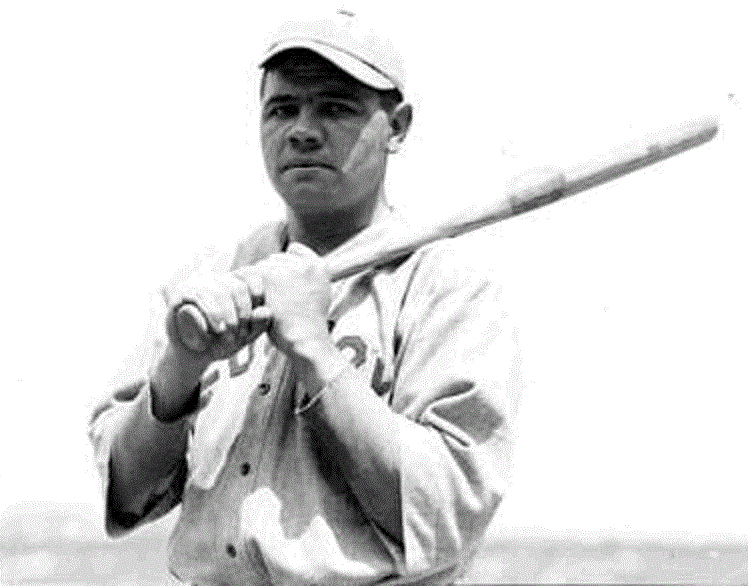
Babe Ruth’s desire to become a major league manager is well known, but unfortunately it never came to pass. Not as well known is that Tigers’ owner Frank Navin actually offered Babe the Tigers’ managerial helm in 1934. Alas, Babe decided not to interrupt his Hawaiian vacation and missed out on the opportunity. Author Carr expands on this theme and creates a scenario in which Navin actually signs Ruth as player-manager before the Yankees, with Tiger exec Mark Killoran playing a significant role in the acquisition of the great Bambino. This new position of responsibility brings out the “better angels” of Babe’s personality and, under his leadership, the Tigers – and not the Yankees – become the dominant team of the 1930s. Again, pure speculation, but an interesting concept to reflect upon.
While in his new world, Mark Killoran encounters many other historical personages, including a young John F. Kennedy. Killoran hopes to influence Kennedy to avoid foreign entanglements and thus avoid the “real-world” tragedy of the Vietnam War, a conflict that claimed the life of his twin brother.
These are just a few of the many encounters awaiting Mark Killoran in his alternative world. By the time he returns to contemporary America, he is a man changed for the better. While all this may seem to many as preposterous speculation, in Tim Carr’s skilled hands it all seems to work. I’m not one given to reading much historical fiction, or engaging in “what if’ speculation, but I enjoyed Timing is Everything. It’s a highly creative work – not the usual baseball fare – and I can heartily recommend it to all readers.
Gary Livacari
Subscribe to Baseball History Comes Alive. FREE BONUS for subscribing: Gary’s Handy Dandy World Series Reference Guide. https://wp.me/P7a04E-2he
Visit the Baseball History Comes Alive Home Page




Have you read any of J. B. Manheim books, there are six books in his The Deadball Files, they are about a contemporary lawyer learning hidden secrets of baseball history
Yes I have! Check out the book reviews category and you’ll see that I’ve reviewed three of his books.
Plus Jerry and I are friends. Here’s a link to the book reviews category: https://www.baseballhistorycomesalive.com/category/book-reviews/?ct_bot_detector_event_token=024addbb9a6bb74f4a08685a6000836f0c2aca398d210cbd47999457f0a3361a
Thank you, I probably found the books from your review now that I think about it