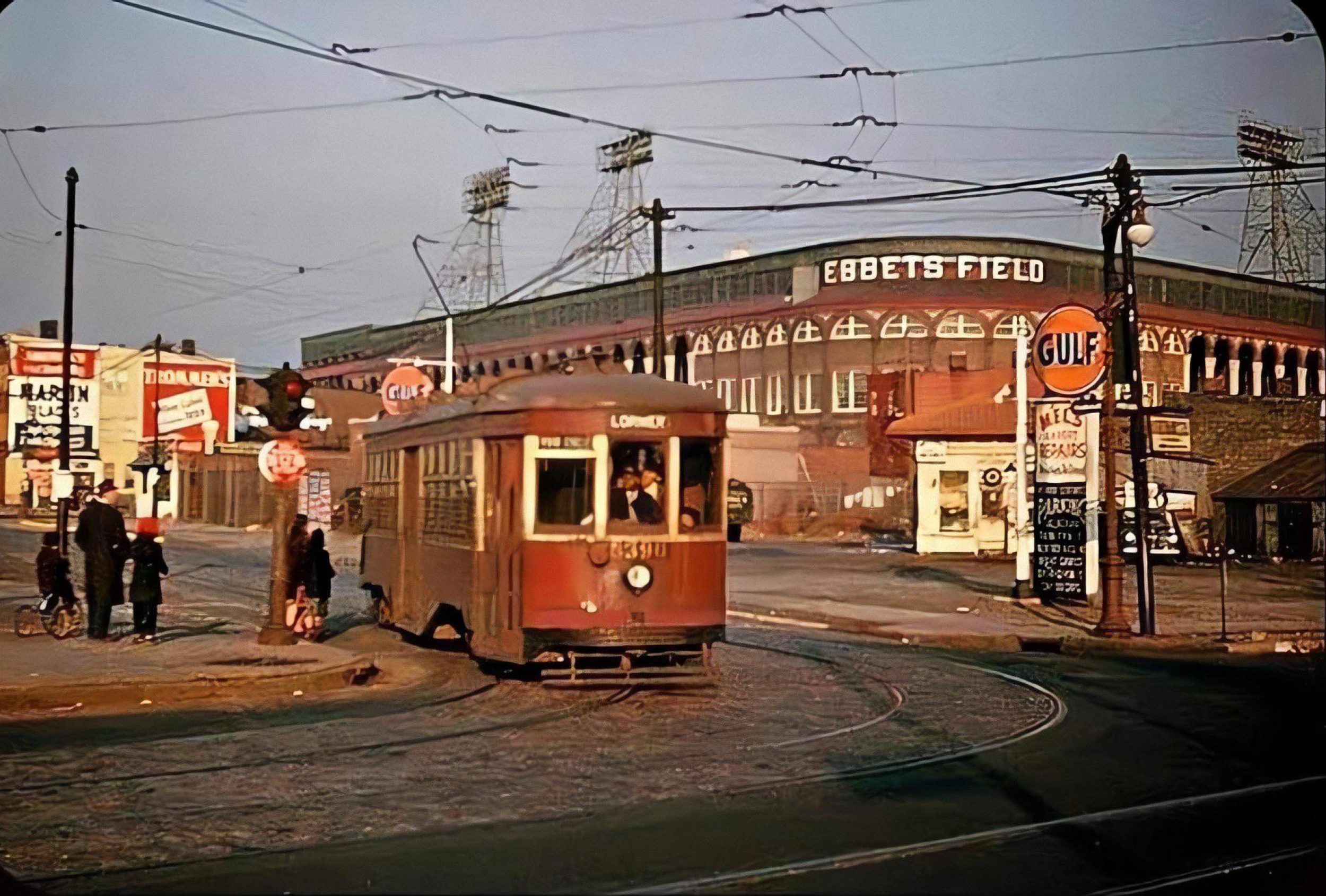
Panoramic Photo Above:
Ebbets Field, Brooklyn
Baseball History Comes Alive Now Ranked As a Top Five Website by Feedspot Among All Baseball History Websites and Blogs!

(Check out Feedspot's list of the Top 35 Baseball History websites and blogs)
Countdown to Opening Day, 2027
Guest submissions from our readers always welcome click for details
Visit the Baseball History Comes Alive Home Page
Subscribe to Baseball History Comes Alive
Free Bonus for Subscribing:
Gary’s Handy Dandy World Series Reference Guide
Lou Brissie Photo Gallery
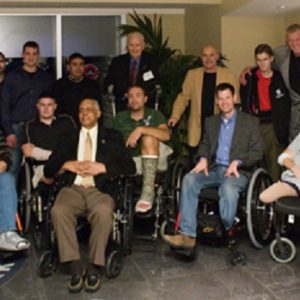
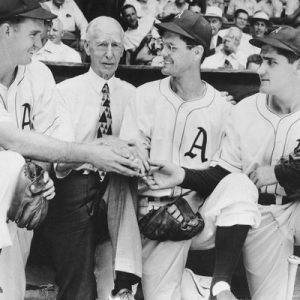
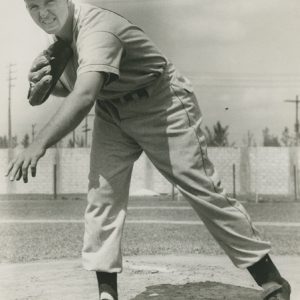
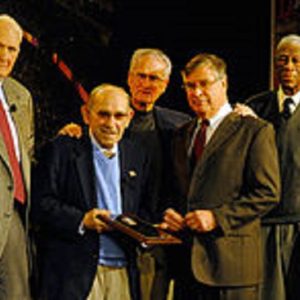
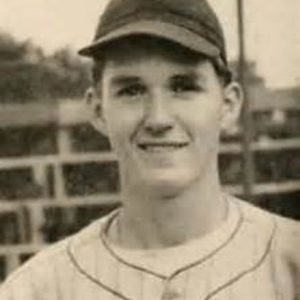
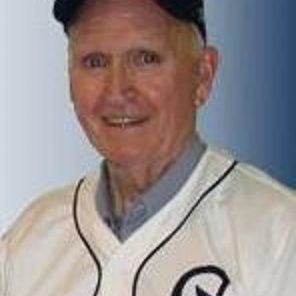
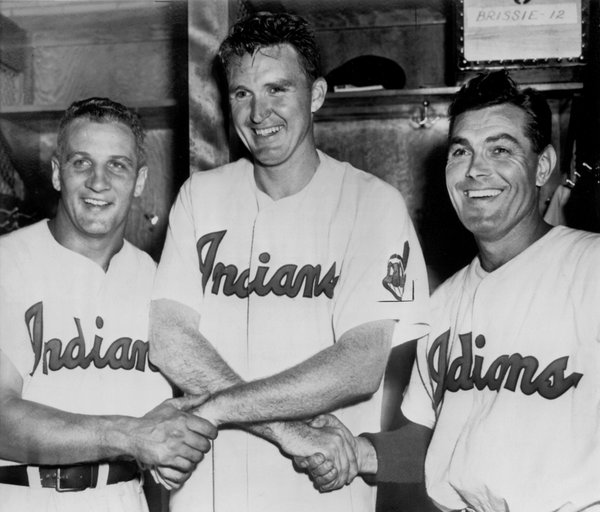
Since it’s Veterans Day, I’d like to repost an essay I wrote a few years ago about a ballplayer who was severely wounded in WWII. Despite his debilitating battlefield injuries, which left him in constant pain for the rest of his life, he never gave up on his dream of being a major league pitcher. Lou Brissie may not be a household name, but I hope you’ll take a minute or two to read his remarkable story. In the featured photo, we see Lou Brissie (c) with Indians teammates Al Rosen and Hank Majewski. -GL
A Genuine American War Hero:
All-Star Pitcher Lou Brissie
“You can’t amputate my leg. I’m a ballplayer. You’ve got to find another way!” –Corporal Lou Brissie imploring Army field surgeons, contemplating amputating his leg following a severe battlefield injury
On this Veterans Day, November 11, 2026, we salute a genuine American war hero: Lou Brissie. This is a story of one man’s extraordinary courage and unyielding determination in the face of overwhelming odds to fulfill his dream of one day pitching in the major leagues.
Lou Brissie eventually saw his dream come true, spending seven years in the major leagues with the Philadelphia A’s (1947-1951) and the Cleveland Indians (1951-1953), compiling a 44-48 record, a 4.07 ERA, and 436 strikeouts. While Lou’s career numbers might seem rather ordinary, his path to the major leagues was anything but ordinary.
As a talented youth, the 6’ 4”, 210-pound Anderson, South Carolina native’s goal was always to pitch in the majors. In 1941, he attracted the attention of Connie Mack. Unfortunately for Lou and so many others of his generation, World War II rudely intervened, and the lifelong ambitions of many, including Lou Brissie, were suddenly placed on hold.
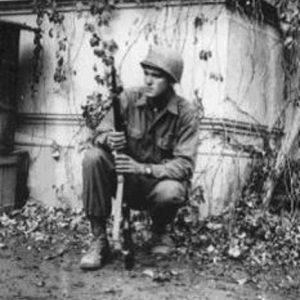
Lou enlisted in the Army in December 1942 and soon found himself fighting with the 88th Infantry Division Blue Devils in the Apennine Mountains near Florence, Italy. Lou’s life changed forever on December 7, 1944, the third anniversary of Pearl Harbor. A 170-mm German artillery shell exploded near squad leader Brissie, shattering his left leg and nearly killing him. As Lou later recalled:

“Our unit suffered over 90 percent casualties. Within minutes we lost three of our four officers as well as eight enlisted men.”
Brissie had to crawl for cover through the mud and then lay unconscious and near death until he was found hours later. Recovering at the Army field hospital, doctors told him that the injury to his leg was so severe it required amputation. As the above quote makes quite clear, Corporal Brissie would not hear of it. He begged the surgeons to save his leg, “even if it means jeopardizing my life.”
His urgent plea was honored, and the amputation was canceled. It would take more than a German mortar shell to keep Lou Brissie from fulfilling his dreams. Two years later, after 23 major operations, 40 blood transfusions, and countless hours of rehabilitation, Brissie miraculously returned to baseball, but now wearing a heavy metal brace under his uniform. Connie Mack remembered Lou and was impressed by his determination. He decided to give the young war hero another chance and signed him on December 15, 1946. Lou was assigned to Savannah in the Southern League, where in 1947 he surprised everyone by winning 25 games, with an incredible 1.91 ERA while striking out 278 batters.
The extraordinary performance earned Lou a ticket to the “Big Show,” and he was called up on September 28, 1947. Lou debuted in the final game of the year against the New York Yankees at Yankee Stadium on Babe Ruth Day. He lost the game 5-3, but to Lou it was anything but a loss: “I thought I had gone to heaven. It was a great experience.”
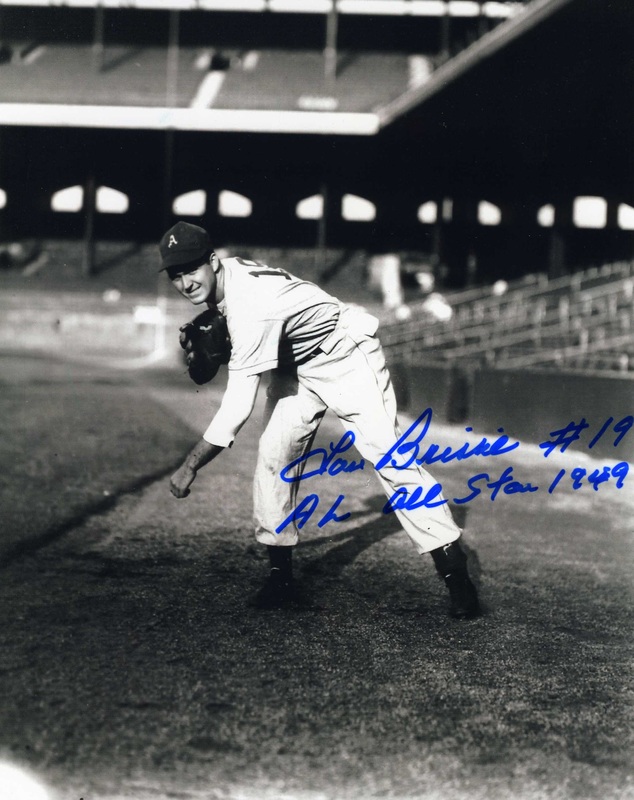
Near death and facing an amputation only three years earlier, Lou Brissie had realized his life’s ambition and was now a major league pitcher. He had his best seasons with the A’s in 1948, going 14–10, and in 1949, when he was 16–11. He even pitched three innings for the American League in the 1949 All-Star game.
Lou’s wife, Diana Brissie, shared with me a few other interesting tidbits about Lou, recalling that he loved Ted Williams and frequently went fishing with him. He also worked with Ted on the campaign to reinstate Shoeless Joe Jackson. He never forgot Connie Mack and grew to have a deep affection and respect for the legendary Athletics manager.

Accolades for Lou came from many quarters over the years. His Athletics teammate Eddie Joost said about him: “Lou was courageous beyond belief. I admire him so much for what he did.”
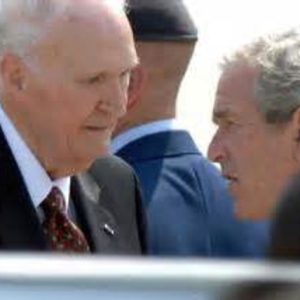
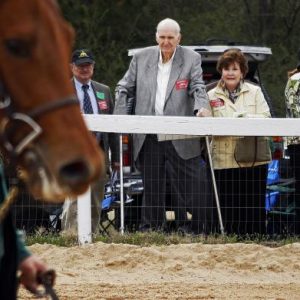
In his later years, he received many honors, including an invitation to meet President George Bush at Dobbins Air Force Base. Sportswriter Ira Berkow wrote his biography, The Corporal Was A Pitcher: The Courage of Lou Brissie. Famed horse breeder Cot Campbell was so impressed with the book that he named one of his colts “Lou Brissie.” The racehorse did quite well and placed third in the sixty-eighth running of the Aiken Trials in 2010 with Lou and Diana in attendance. Tom Brokaw, author of The Greatest Generation, honored Lou at a World Series game. The editor of the Baseball in Warfare website, Gary Bedingfield, added this:
“The fact that Lou Brissie ever stepped foot on a baseball diamond again after World War II is a testament to this man’s sheer determination, courage, and will.”

As the years went by, Lou came to rely on crutches and was in constant pain. The injured leg never fully healed. He was frequently invited to speak to veterans of the wars in Iraq and Afghanistan.
Once, when asked if he was a hero, Brissie, exhibiting the characteristic modesty of so many of his generation, replied, “I don’t think I am. But I knew some who are.” For his battlefield heroism, Lou received numerous decorations, including two Purple Hearts and the Bronze Star.
Brissie later served as the national director of American Legion Baseball. For his contributions to youth baseball, he received the “Americanism Award” at the Baseball Hall of Fame in Cooperstown. He was also elected to the South Atlantic League Hall of Fame in 1994. His number in Savannah was retired, and his high school in Ware Shoals, South Carolina, named their baseball field after him.
On this Veterans Day, we salute the service of Lou Brissie, a true American hero, who passed away on November 25, 2013, at the age of 89.
Gary Livacari
Photo Credits: All found on Google search
Subscribe to Baseball History Comes Alive. FREE BONUS for subscribing: Gary’s Handy Dandy World Series Reference Guide. https://wp.me/P7a04E-2he
Visit the Baseball History Comes Alive Home Page