Panoramic Photo Above:
Baseball During the Civil War
Baseball History Comes Alive Now Ranked As a Top Five Website by Feedspot Among All Baseball History Websites and Blogs!

(Check out Feedspot's list of the Top 35 Baseball History websites and blogs)
Countdown to Opening Day, 2027
Guest submissions from our readers always welcome click for details
Visit the Baseball History Comes Alive Home Page
Subscribe to Baseball History Comes Alive
Free Bonus for Subscribing:
Gary’s Handy Dandy World Series Reference Guide
Connie Mack Photo Gallery
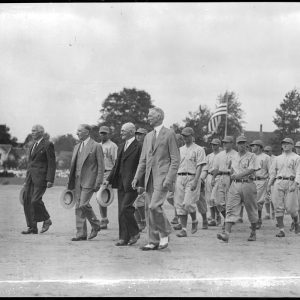

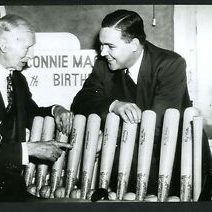
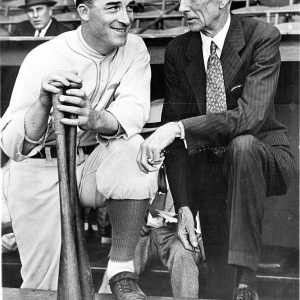

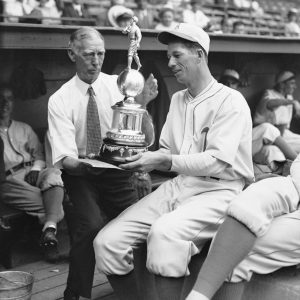
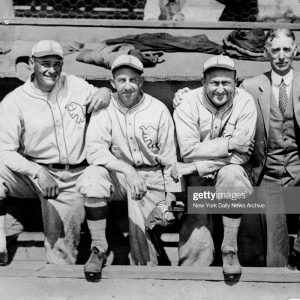
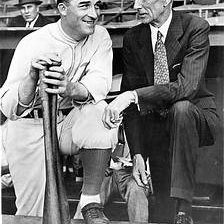
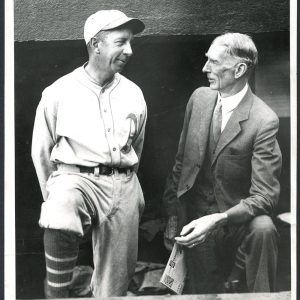

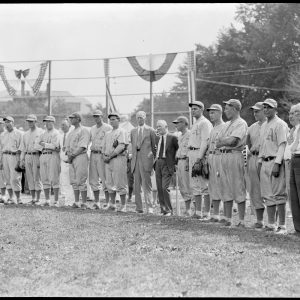
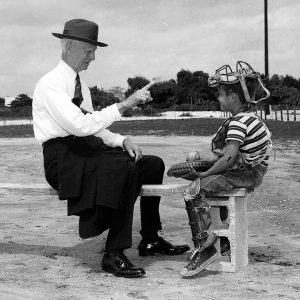
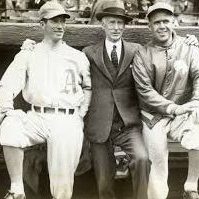
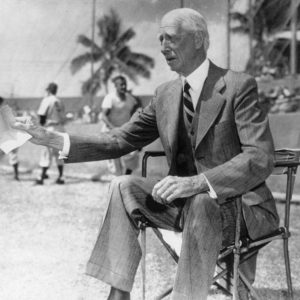
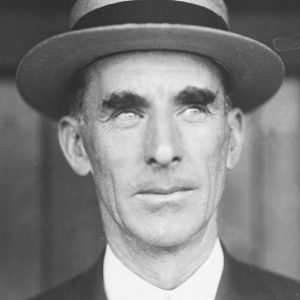
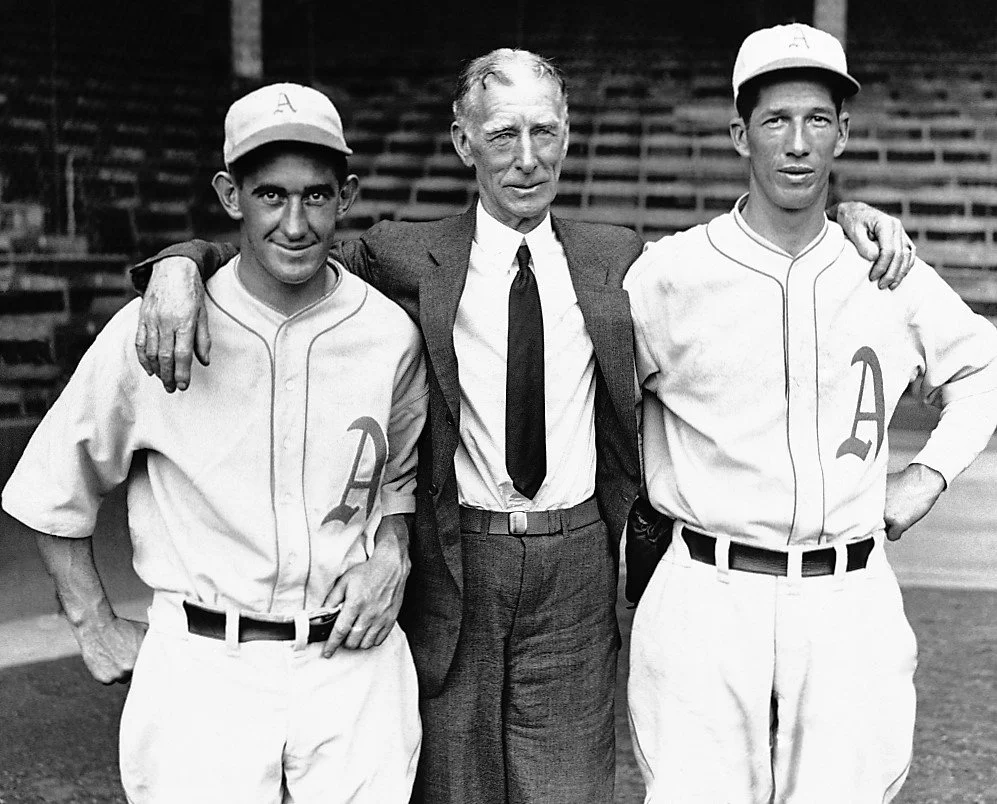
Today we welcome a guest submission from Stephen Kidd with an interesting essay about the “Tall Tactician,” Connie Mack. We’re all familiar with Mr. Mack, but Stephen’s essay offers more detail on his long tenure as manager of the Philadelphia Athletics. In the featured photo, we see Mr. Mack flanked by two of his star players: Mickey Cochrane and Lefty Grove –GL
Connie Mack:
The Man Who Couldn’t Quit Baseball
“No matter what I talk about, I always get back to baseball.” — Connie Mack
Imagine walking into your boss’s office and discovering that he’s been running the place for half a century. He’s survived two world wars, the Great Depression, nine presidents, and enough personnel changes to populate a small city.
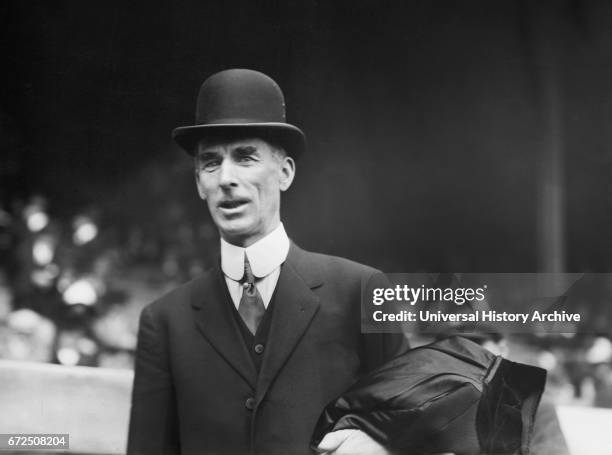
Now imagine that he owns the place, too. Meet one Connie Mack.
From 1901 through 1950, Mack managed the Philadelphia Athletics, establishing a record for managerial longevity never to be broken. Along the way, he won nine American League pennants, five World Series championships, and more games than any manager in major league history.
…He also lost more games than anybody else.
And that’s just the first clue as to why Connie Mack wasn’t your ordinary manager.
The Gentleman in the Dugout
Born Cornelius Alexander McGillicuddy in December, 1862, Mack began his major league career as a catcher in 1886. He played eleven seasons without ever becoming a particularly distinguished player.
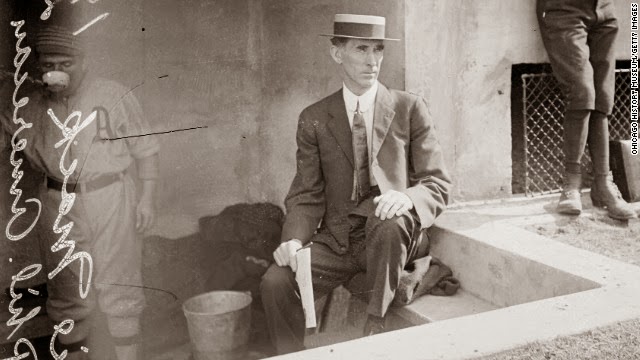
But what he lacked in ability, he made up for with his baseball IQ.
Mack studied opponents, recognized talent, and developed a knack for getting the best out of players who might not have attracted much attention. He also developed an appearance that would become unmistakable.
While other managers wore the traditional baseball uniform, Mack generally appeared in a business suit, complete with a stiff collar and tie. Tall, thin, and ramrod straight, he directed his players from the dugout, often waving a rolled-up scorecard to position his fielders. Mack was the maestro, conducting his nine-piece orchestra.
In an era when managers frequently relied on intimidation, Mack believed that publicly humiliating a player accomplished very little. His players called him Mr. Mack, and they meant it.
Building a Baseball Empire
In 1901, American League president Ban Johnson recruited Mack to establish a new team in Philadelphia. The city already had the Phillies, so Mack’s new club revived the Athletics name, previously used by a Philadelphia franchise in 1876. For the next 54 seasons, Philadelphia would have two major-league teams, one in each league.
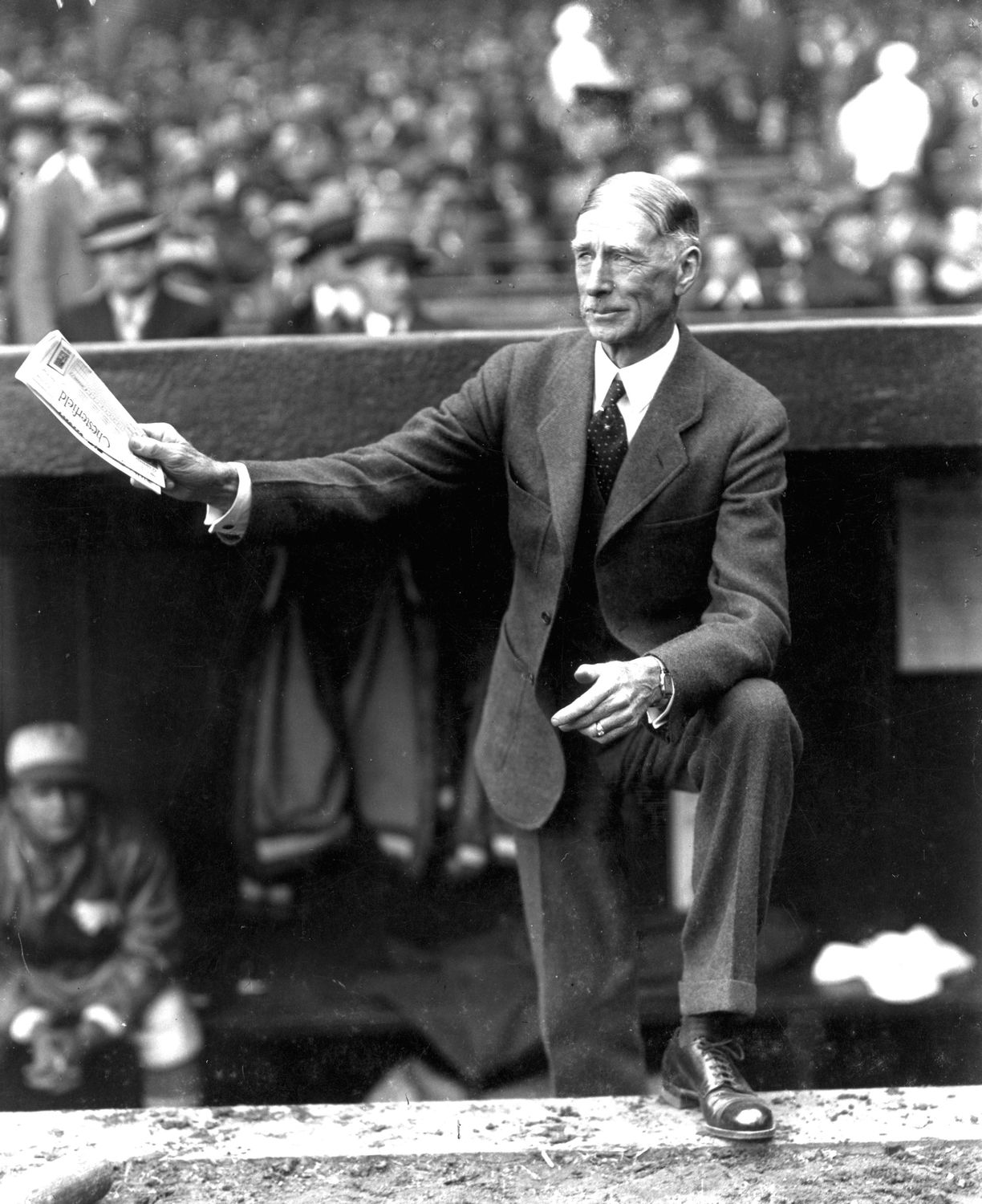
Mack was more than the Athletics’ manager. As a part-owner and executive, he enjoyed an unusual degree of control over the club’s operations. He could discover talent, develop it, negotiate contracts, and decide when a player had become too problematic or expensive to keep.
Between 1910 and 1914, Mack assembled one of the finest teams of baseball’s Deadball Era. Its celebrated “$100,000 Infield” featured Stuffy McInnis, Eddie Collins, Jack Barry, and Frank “Home Run” Baker. The pitching staff included two future Hall of Famers, Chief Bender and Eddie Plank.
Philadelphia won the World Series in 1910, defeating the Chicago Cubs, and twice dispatched John McGraw’s powerful New York Giants in 1911 and 1913. But by 1914, they stopped winning.
How to Destroy a Championship Team
The heavily favored Athletics met the Boston Braves in the 1914 World Series, and the Braves swept them in four games.
With the Federal League (1914-1915) competing for players, salaries rising and financial pressures mounting, Mack began dismantling his championship roster. In just two offseasons, one of baseball’s greatest teams had been reduced to a collection of youngsters and castoffs. Does that sound familiar, fans of today’s small-market teams?
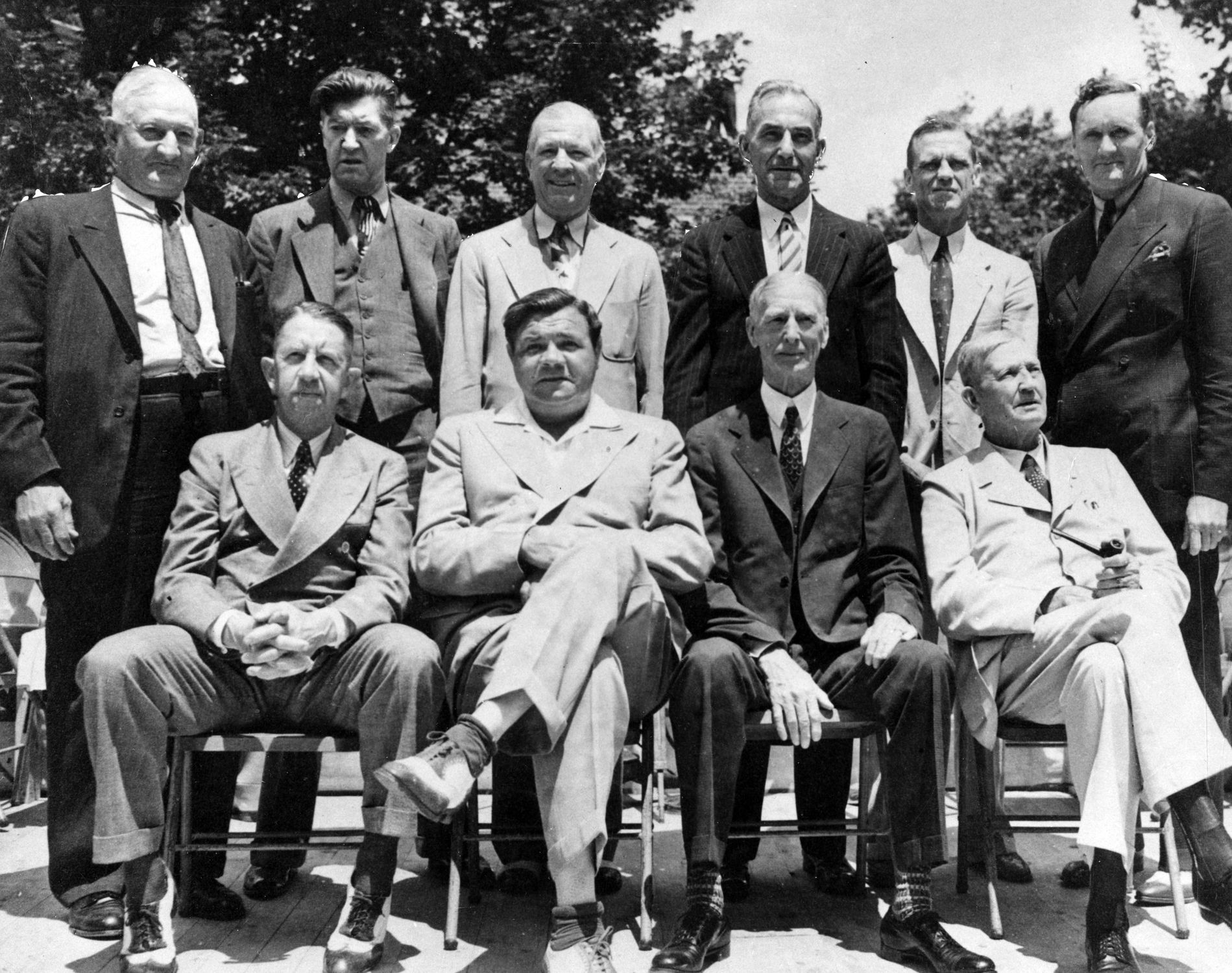
In 1915, the Athletics collapsed to 43–109. In 1916, just two seasons after winning the American League pennant, they finished 36–117. Let that sink in—a winning percentage of just .235.
Most managers would have been looking for another occupation. But Connie Mack wasn’t going anywhere. He owned a substantial interest in the team, and he believed he could build another winner. As it turned out, he was right.
The Second Dynasty
By the late 1920s, Mack had assembled another extraordinary collection of talent. This time, his stars included eventual Hall of Famers Jimmie Foxx, Al Simmons, Mickey Cochrane and the incomparable Lefty Grove.
The 1929 Athletics won 104 games and finished an astonishing eighteen games ahead of Babe Ruth’s New York Yankees. That alone shows the quality of Mack’s second dynasty. The Athletics repeated as World Series champions in 1930 and won another American League pennant in 1931.
Connie Mack, now approaching seventy, had built his second baseball empire. And once again, he would dismantle it.
History Repeats Itself
The Great Depression was devastating American businesses, and baseball was hardly immune. Attendance declined sharply. The Athletics’ payroll remained substantial, and Mack faced another painful financial reckoning. Once again, he began selling his stars.
Al Simmons was sold to the White Sox after the 1932 season, along with Jimmy Dykes and Mule Haas. In December 1933, Mack sold Mickey Cochrane to the Tigers and catcher Johnny Pasek, then sent Lefty Grove, Max Bishop and Rube Walberg to the Red Sox . Jimmie Foxx was traded to Boston in December 1935 along with pitcher Johnny Marcum. The Athletics, once among the most formidable teams in baseball, gradually returned to the cellar.
Mack’s reputation as a manager capable of building champions was matched by his reputation for breaking them apart. Critics questioned his judgment, his finances, and his unwillingness to surrender control.
Yet the old gentleman remained in the dugout. Year after year. Season after season.
The Numbers Tell Only Half the Story
When Mack finally retired after the 1950 season, he was 87 years old. His managerial record was almost impossible to comprehend:
- 3,731 victories – 3,948 defeats.
- Nine American League pennants.
- Five World Series championships.
- Fifty-three seasons managing major league clubs, including fifty consecutive years with the Philadelphia A’s.
He had witnessed baseball’s transformation from the nineteenth-century game of his playing days into the modern era of radio broadcasts, night baseball and integration. Add to that, Mack was elected to the Baseball Hall of Fame in 1937, while he was still actively managing!
Connie Mack died in Philadelphia on February 8, 1956, at the age of 93. The A’s had moved to Kansas City in the 1954 season, so the Philadelphia dynasty he had created was already history. But the image remains unforgettable: the tall, dignified gentleman in his business suit, standing in the dugout, rolled-up scorecard in hand.
Connie Mack wasn’t merely a baseball manager – for fifty years, he was a baseball institution. And perhaps the most remarkable thing about Mr. Mack isn’t that he won 3,731 games. It’s that even after losing 3,948, he still loved the game and kept coming back.
Stephen Kidd
Stephen Kidd is a graduate of the University of Kentucky, UCLA and the Peabody Conservatory of Johns Hopkins University in Baltimore. He is an avid baseball fan and owner of Who Is That? Studio, (www.whoisthatstudio.com) an online store offering museum-quality gifts featuring the lesser-known faces behind some of history’s most recognizable names.
Sources:
National Baseball Hall of Fame and Museum, “Connie Mack”. https://baseballhall.org/hall-of-famers/mack-connie
Society for American Baseball Research, “Connie Mack,” BioProject. https://sabr.org/bioproj/person/connie-mack/
SABR, “Connie Mack: The Tall Tactician”. https://sabr.org/journal/article/connie-mack-the-tall-tactician/
MLB.com, “A Short History of the Philadelphia Athletics”. https://www.mlb.com/athletics/history/philadelphia-athletics
MLB.com, “1929 World Series Recap”. https://www.mlb.com/news/1929-world-series-recap
Baseball-Reference, “Connie Mack Managerial Record”. https://www.baseball-reference.com/managers/mackco01.shtml
National Baseball Hall of Fame, “Mack Breaks Up Second A’s Dynasty, Trades Cochrane”. https://baseballhall.org/discover/inside-pitch/cochrane-sold-to-tigers
National Baseball Hall of Fame, “Philadelphia A’s Trade Jimmie Foxx to the Boston Red Sox”. https://baseballhall.org/discover-more/stories/inside-pitch/jimmie-foxx-boston-red-sox
Photo Credits: All found on Google search
Subscribe to Baseball History Comes Alive. FREE BONUS for subscribing: Gary’s Handy Dandy World Series Reference Guide. https://wp.me/P7a04E-2he
Visit the Baseball History Comes Alive Home Page