Panoramic Photo Above:
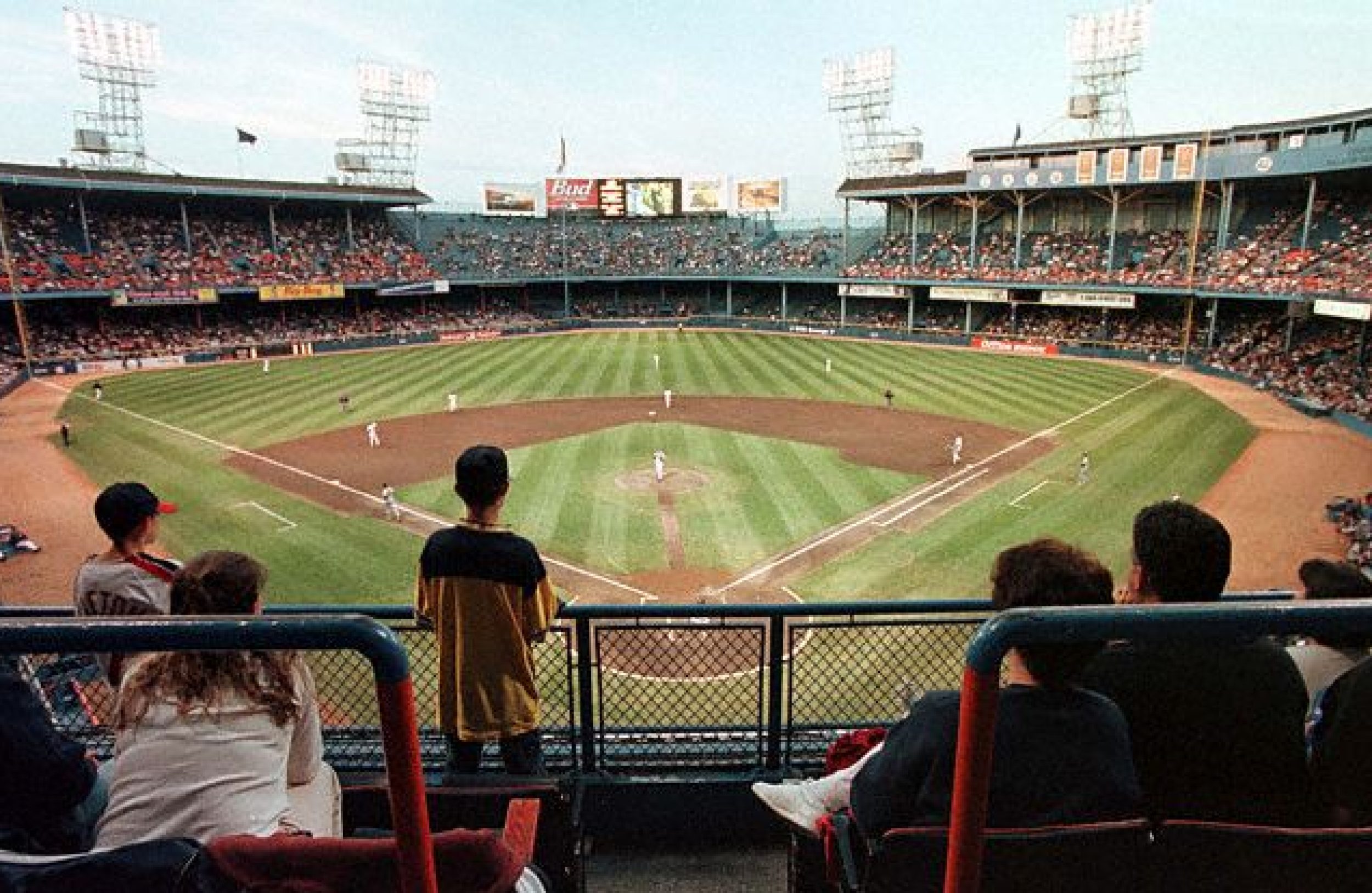
Opening Day at US Cellular, 1981

Baseball History Comes Alive Now Ranked As a Top Five Website by Feedspot Among All Baseball History Websites and Blogs!
(Check out Feedspot's list of the Top 35 Baseball History websites and blogs)
Guest Submissions From Our Readers Always Welcome! Click for details
Visit the Baseball History Comes Alive Home Page
Subscribe to Baseball History Comes Alive
Free Bonus for Subscribing:
Gary’s Handy Dandy World Series Reference Guide
Mickey Mantle Photo Gallery
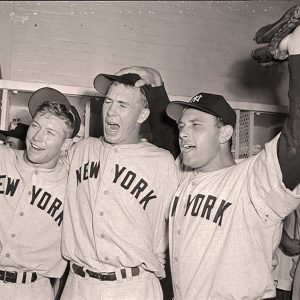

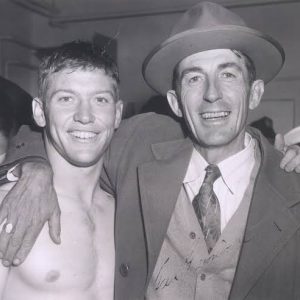
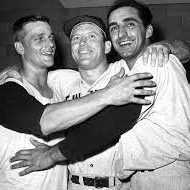
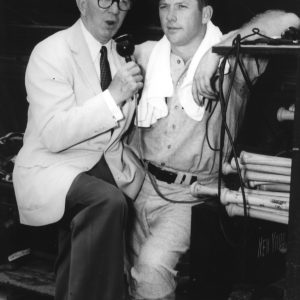
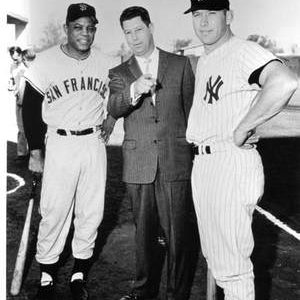
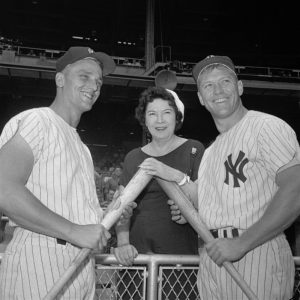

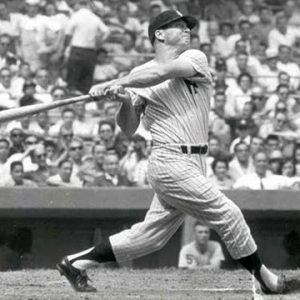
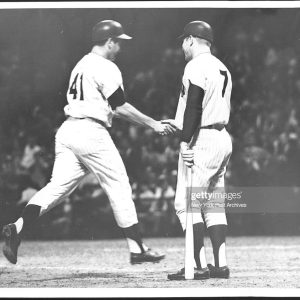
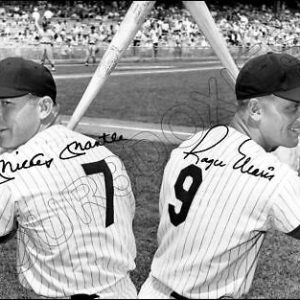
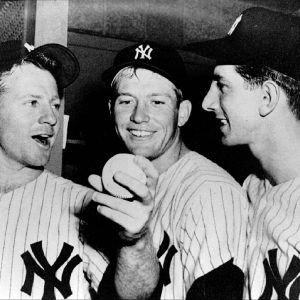
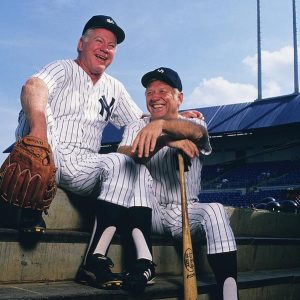
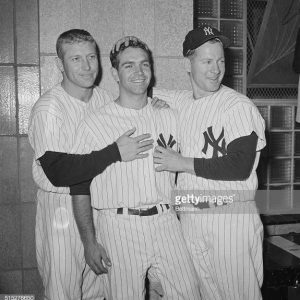
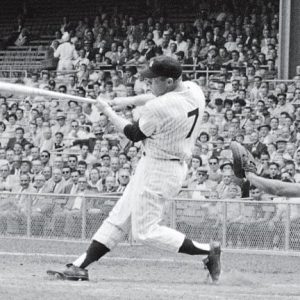
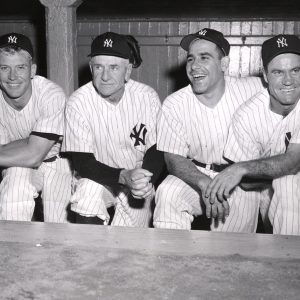
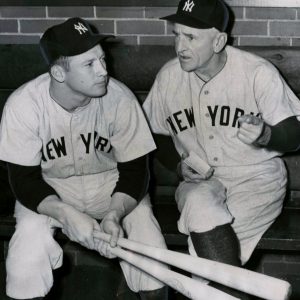
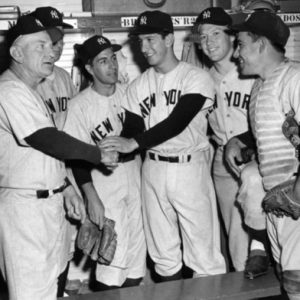
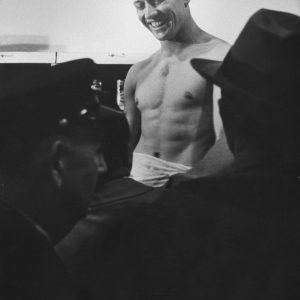
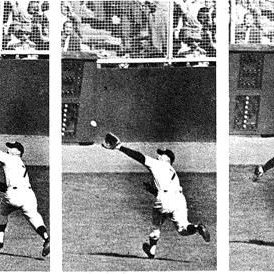
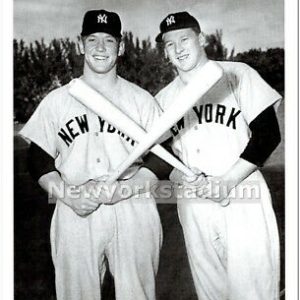
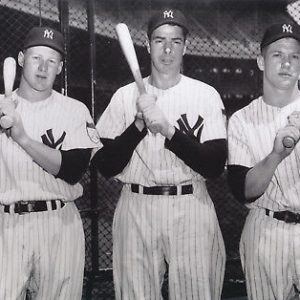
As I’ve said many times, when you look deep into the career of a major leaguer, you’ll always find something of interest that you weren’t aware of. Today Ron Christensen writes about the career of little-remembered, baseball lifer Loren Babe, who has a connection to two great Yankee stars: The Great Bambino himself, and Mickey Mantle. I think you’ll find Ron’s essay interesting -GL
Loren Babe:
The Yankees’ Other Babe
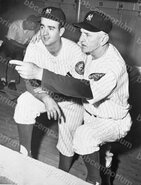
He was the ‘other’ Babe. The ‘overlooked’ Babe. The ‘forgotten’ Babe. But he was Babe just the same, one of three Yankees to share that name and the only one who held it as a birthright, not as just a nickname. He was Loren Babe, and his name, if not unrecognized in the annals of Yankee history, is certainly overshadowed by the other two ‘Babes’ who bore the name and wore the uniform.
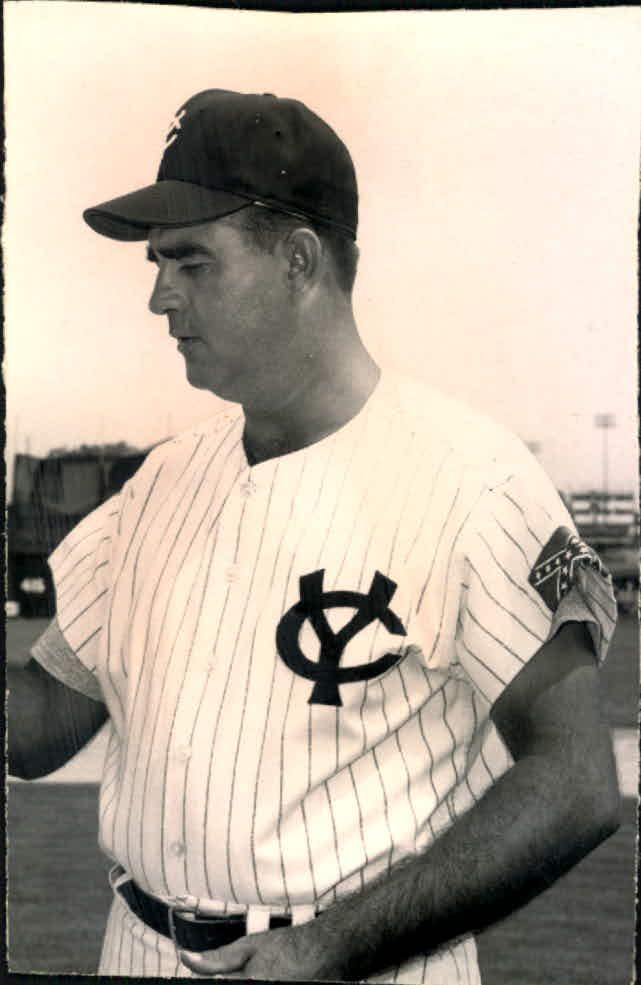
Runner-up would be Ellsworth Tenney ‘Babe’ Dahlgren, who played four seasons with the Yankees and had a twelve-year career with eight different ballclubs, primarily as a first baseman though he did see some time at third base and shortstop and even played one game at catcher. Dahlgren is best remembered as the player who replaced Lou Gehrig in the Yankee lineup on May 2, 1939, when the ailing Gehrig voluntarily removed himself due to complications from ALS, thus ending his historic streak of playing 2130 consecutive games. Dahlgren was also strategically positioned next to Gehrig during Gehrig’s ‘Luckiest Man’ speech on July 4, 1939, to catch or support Gehrig in the event Gehrig fell while speaking.
The clear and unequivocal first place finisher is, of course, George Herman ‘Babe’ Ruth, arguably the greatest player ever to play the game, and certainly the game’s most recognizable name. To list this Babe’s accomplishments would require a novel-length essay well beyond the scope of this newsletter. And anyway, it’s the ‘other’ Babe we’re here to focus on.
Loren Babe was signed by the Yankees as an amateur free agent in 1945 at the tender age of 17, soon after graduating from high school in Omaha, Nebraska. A left-handed hitting third baseman, Babe toiled through the Yankees farm system for seven years before making his major league debut on August 19, 1952, in a game against the Chicago White Sox, one that saw him go 1 for 4 with a stolen base in a 3-1 loss. A Yogi Berra homer provided the Yankees only run.
Babe would make only twelve appearances the rest of the season, batting a meager .095 and being left off the Yankees World Series roster. It didn’t help that as a third baseman Babe was playing behind sophomore sensation Gil McDougald, the previous season’s American League Rookie of the Year. Still, Babe was back with the Yankees for the start of the 1953 season, and it was here that he would leave a mark ensuring his place in Yankee history.
The day was April 17, 1953. The place, Griffith Stadium in Washington, D.C. The Yankees were in town for a series with the Senators, and that afternoon Mickey Mantle hit one of the longest home-runs the baseball world has ever witnessed. Not the longest, as this one ranks only seventh on Mantle’s top ten list of longest home runs, but it was colossal nonetheless, and quite possibly the most famous home run of Mantle’s career.
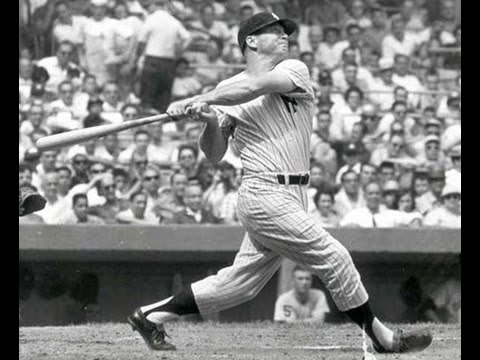
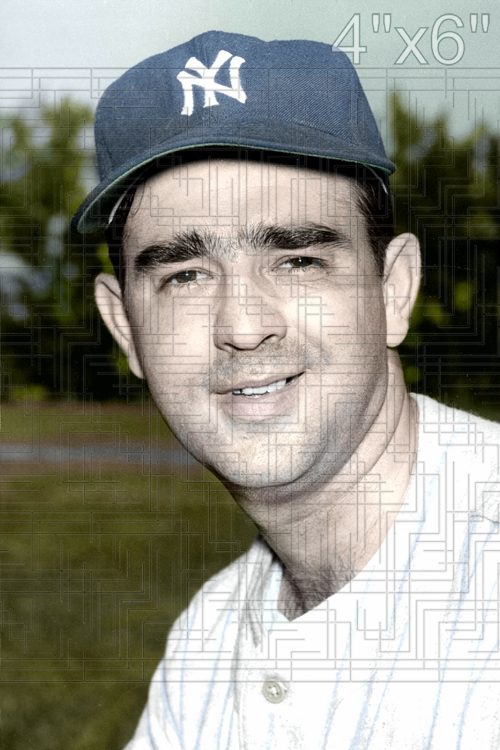
But to hit a home run you need a bat, and Mantle couldn’t find his. It was the fifth inning, and Mantle was about to step into the box to face left-handed pitcher Chuck Stobbs, but where in tarnation was his bat? Not able to find it, Mantle asked Loren Babe if he could borrow his, and of course Loren agreed. Mantle grabbed the bat, stepped into the box, and batting right handed connected on a fastball below the letters that sailed over the left field bleachers, over the back wall of Griffith Stadium, clipped the beer sign affixed to the top of the football scoreboard, and continued over Fifth Street before finally returning to Earth in the backyard of 434 Oakdale Street, a few houses in from Fifth. The ball was hit so hard that part of its cover was torn, though that might have happened when it clipped the beer sign.
Mantle had a habit of running the bases with his head down whenever he hit a home run – it was his way of not showing up the pitcher. This one was no different, though this time Billy Martin was on third, and seeing that the ball was about to leave the stratosphere, Billy thought it would be funny to pretend to tag up, something he took so long doing while watching the ball that Mantle almost ran into him. Had this happened it would have resulted in Mantle being called out and his majestic home run being reduced to a mere double. Fortunately, third base coach Frank Crosetti was there to prevent this from ever happening.
Yankees Public Relations Director Red Patterson was so impressed with Mantle’s home run that he left the press-box to find where the ball landed, only to be beaten there by ten-year-old Donald Dunaway, who was in the left field bleachers to see the ball sail over his head, then left the stadium in search of it. Dunaway found the ball, then showed Patterson where it landed. Patterson exclaimed, “this one’s got to be measured!”, and though he didn’t actually use a tape measure, his estimate of how far the ball had traveled, based on the dimensions of the park, the width of the street and the distance he paced off, was 565 feet. It was the home run that coined the term ‘tape measure home run’, and it says quite a lot about Mantle that this was only the seventh longest of his illustrious career.
The ball was presented to Mantle by Donald Dunaway in the Yankee locker room after the game. And what of the bat? Well, Mantle liked it so much he kept it for himself and used it the rest of the season. Unfortunately, Loren Babe didn’t last quite as long. He was sold to the Philadelphia Athletics nine days later, and after 103 games with the A’s, ended his playing career following the 1953 season.
Loren Babe spent the rest of his life in baseball, coaching and managing at the minor league level, and coaching and scouting at the major league level, including time as the Yankees first base coach in 1967, where he would be replaced by Whitey Ford the following season. In his minor league tenure Babe was instrumental in scouting and developing such players as Bobby Murcer, Mel Stottlemeyre, Ron Blomberg and Mike Hegan, and as manager of the Toledo Mud Hens he mentored a young Tony LaRussa, who credited Babe with teaching him the fundamentals of managing.
In 1983 while a scout with the White Sox, Babe was diagnosed with colon cancer. Needing 57 more days of major league service to vest in a player’s pension that included health benefits, the White Sox promoted Babe to its major league coaching staff to enable him to qualify. In a poignant twist of fate, it was hitting instructor Charlie Lau, himself struggling with cancer, who stepped down temporarily to make room for Babe on the staff. Sadly, Loren Babe succumbed to cancer on February 14, 1984 at the age of 56. Charlie Lau followed him one month later, passing away on March 16, 1984 at the age of 50.
And the true hero of this story, the famous home run bat, lives on to this day, forever enshrined in the hallowed chambers of the National Baseball Hall of Fame in Cooperstown.
Ron Christensen
REFERENCES:
- Wikipedia: Loren Babe
- Wikipedia: Babe Dahlgren
- Baseball Reference: Loren Babe
- Baseball Almanac: Loren Babe
- Grokipedia: Loren Babe
- National Baseball Hall of Fame: Shortstops – Bat For A Blast, by Alexa Brown
- Pinstripe Alley: Yankees Birthday of the Day – Loren Babe, by Peter Brody
- The Mick.com: Mickey Mantle’s 10 Longest Home Runs, by Lewis Early
Subscribe to Baseball History Comes Alive. FREE BONUS for subscribing: Gary’s Handy Dandy World Series Reference Guide. https://wp.me/P7a04E-2he