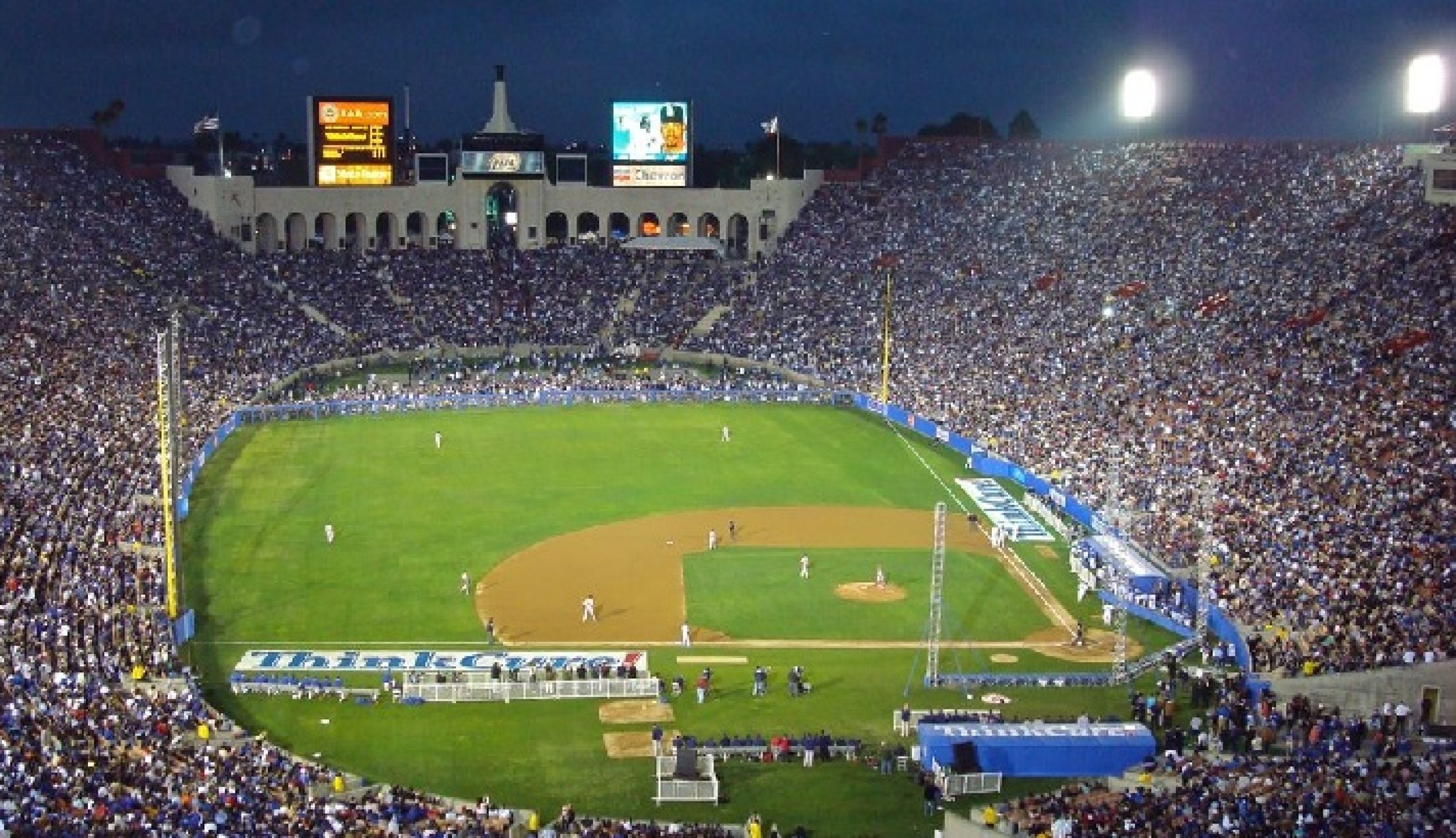
Panoramic Photo Above:
Los Angeles Coliseum
Baseball History Comes Alive Now Ranked As a Top Five Website by Feedspot Among All Baseball History Websites and Blogs!
(Check out Feedspot's list of the Top 35 Baseball History websites and blogs)
Guest submissions from our readers always welcome click for details
Visit the Baseball History Comes Alive Home Page
Subscribe to Baseball History Comes Alive
Free Bonus for Subscribing:
Gary’s Handy Dandy World Series Reference Guide
We welcome back Vince Jankoski as we feature a chapter from his upcoming book on pitching coaches, surely one of the most overlooked and underappreciated groups in all of baseball. Today Vince tells us about the remarkable career of Joe Becker, who I remember from his tenure with Leo Durocher’s Cubs. Becker is certainly one of the most accomplished pitching coaches in baseball history – with success everywhere he went – helping to develop the careers of numerous Cy Young Award winners and 20-game winners. But who is even aware of his many achievements? After you read Vince’s essay, I think you’ll agree with me that it’s about time Joe Becker receives some overdue recognition, and so we’re glad to shine our baseball spotlight on him today. –GL
Let’s Remember An Outstanding Pitching Coach:
Joe Becker
Since World War II, the Dodgers have been known for pitching. Although Dodger dominance in pitching became more pronounced after their move to Los Angeles, particularly after opening Dodger Stadium in Chavez Ravine, it, like many other things in life, began in Brooklyn. The progenitor of the Dodgers’ pitching dynasty was Joe Becker.
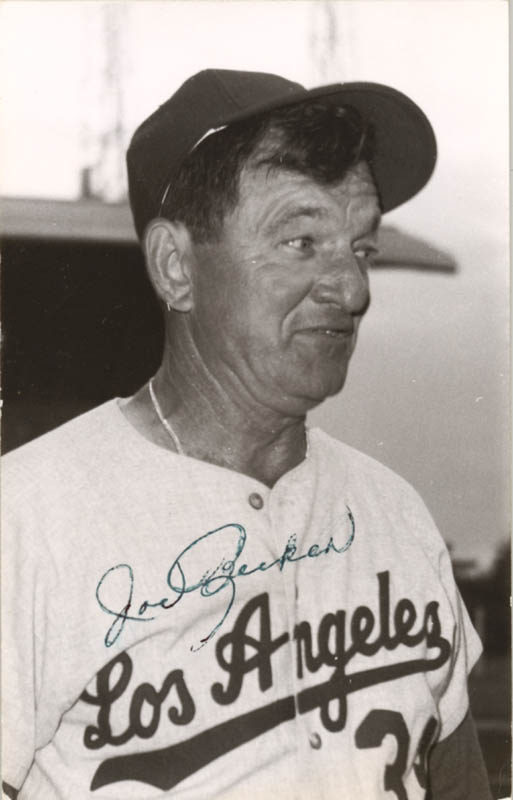
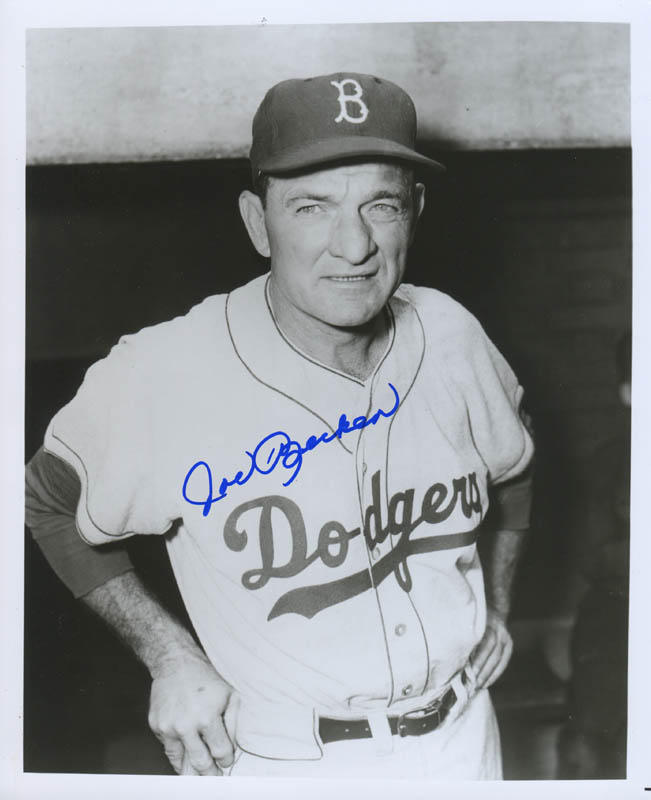
Joe Becker was pitching coach for the Brooklyn/Los Angeles Dodgers from 1955 to 1964. During that time, he coached some great and some very good pitchers: Hall of Famers Don Drysdale and Sandy Koufax, plus Johnny Podres, Don Newcombe, Sal Maglie, Clem Labine, and Ron Perranoski.
Becker was a nondescript catcher during his playing days. He played two seasons in Cleveland, 1936-1937, where in 40 games combined, he hit .241 with one home run. He played 14 years in the minors, reaching the upper levels in places like Baltimore, Montreal, Jersey City, Milwaukee, and Indianapolis, but he just couldn’t stick in the bigs – at least not until he became a pitching coach, which he did in 1955. It was Walter Alston’s second of his 23 years as Dodgers manager.
With the Dodgers, Becker coached in three different home ballparks: bandbox Ebbets Field (1955-1957), the misshapen Los Angeles Coliseum (1958-1961), and pitcher-friendly Dodger Stadium (1962-1964). He achieved success in each venue.
For example, team ERAs in the Ebbets Field era were a league-leading 3.68 in 1955, 3.57 in 1956, and a league-leading 3.35 in 1957. Team ERAs at the Coliseum were 4.47 in 1958, 3.79 in 1959, a league-leading 3.40 in 1960, and 4.04 in the final year at the Coliseum. At Dodger Stadium the ERAs were 3.62 in 1962, a league-leading 2.85 in 1963, and a league-leading 2.95 in 1964. Becker’s pitching staffs led the league in team ERA in all three venues.
Becker nurtured two Hall of Famers during his stay with the Dodgers, Don Drysdale and Sandy Koufax, from their beginnings in major league baseball and, in the case of Koufax, from his entry into professional baseball. Drysdale had a nondescript minor league career: 8-5, 3.46 at Class C Bakersfield and 11-11 at AAA Montreal before coming to the parent club. There was nothing to suggest that he was a future HOFer.
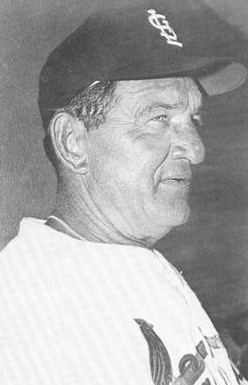
Koufax was coming out of college ball without ever playing in the minors. Surely, he had potential obvious to any observer, but he had no record to back that up. Furthermore, during Becker’s tenure, Koufax solved his one drawback: lack of control. In his first four full seasons, Koufax’s walks per nine innings were 4.4, 4.4, 6.0, and 5.4. In his last four seasons, the figures were 1.7, 2.1, 1.9, and 2.1.
In Brooklyn and Los Angeles, Becker coached 20-game winners Don Newcombe (twice) and Drysdale and Koufax once each. In addition, Becker should be given credit for Drysdale’s 23-win season in 1965, the year after Becker left the club, as well as Koufax’s two 20+ win seasons in 1965 and 1966 in which Koufax notched 26 and 27 wins, respectively.
Newcombe, Drysdale, and Koufax each won a Cy Young Award while being coached by Becker, and Koufax won two more in the two years immediately following Becker’s departure. In 1956, Newcombe and Maglie finished first and second in the Cy Young voting.
During Becker’s time with the Dodgers, they won pennants in all three ballparks: Ebbets Field in 1955 and 1956, the Coliseum in 1959, and Dodger Stadium in 1963. They won World Series titles in all three home parks in 1955, 1959, and 1963. The last two pennants were won largely on the backs of Becker’s pitching staffs as the 1959 and 1963 teams were weak offensively. The 1959 squad was sixth in the league in batting and slugging averages and tied for third in runs scored in the then eight-team National League
The 1963 team was fourth in batting average, eighth in slugging average and sixth in runs scored in the ten-team National League. Only one player had more than 16 home runs and no player batted in more than 88. In the two seasons immediately after Becker left Los Angeles, the Dodgers won two more pennants and another World Series title, again mostly due to their pitchers that Becker had mentored.
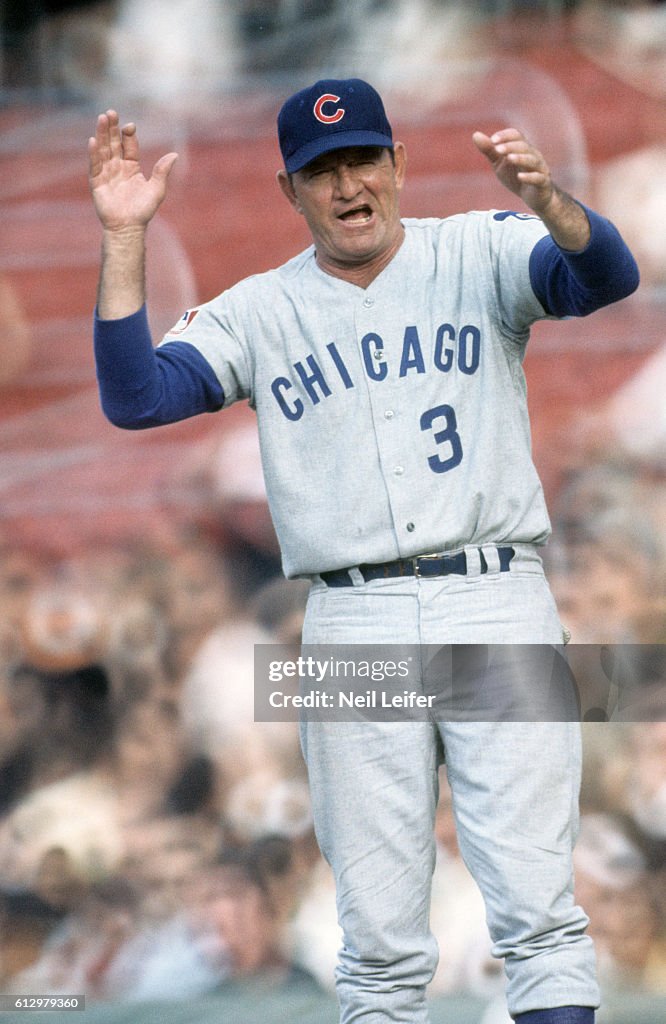
After leaving the West Coast, Becker had continued success coaching for the Cardinals (1965-1966) and Cubs (1967-1970). In St. Louis, he inherited Bob Gibson, already a young star. Nevertheless, Gibson would improve under Becker’s guidance, amassing 20 wins for the first two times in his Hall of Fame career during Becker’s two seasons with the Cards. After Becker left the Cards, Gibson would win 20 or more games three additional times and garner two Cy Young Awards.
Moving on to the Cubs in 1967, several upcoming stars improved upon Becker’s arrival. Ferguson Jenkins was 6-8, 3.31 in 1966, but had his breakout season in 1967, going 20-13, 2.80, the first of his seven 20-win seasons in eight consecutive years. Ken Holtzman improved from 11-16, 3.79 to 9-0, 2.53 in a season limited by his National Guard duty. Joe Niekro had a fine rookie season, going 10-7, 3.34. In 1969, Bill Hands won 20 games for the only time in his career.
Becker’s specialty seemed to be developing young talent. In Brooklyn, there was 21-year-old Podres and a pair of 19-year-olds, Koufax and Drysdale. In St. Louis, there was 20 year old Steve Carlton who, admittedly, did not reach stardom until a few years after Becker departed St. Louis. Finally, in Chicago, there was 24-year-old Jenkins, 20-year-old Holtzman, and a year later 22-year-old Niekro. All of these youngsters became outstanding hurlers and, in some cases, Hall of Fame material.
Becker’s foremost student was Koufax. Koufax came to the Dodgers as a raw talent. During Becker’s tenure, he morphed into a superstar. Becker should get much of the credit.
Four 20 game winners with the Dodgers, two in St. Louis and five in Chicago, gives Becker 11 pitchers winning 20 games or more, plus three more immediately after he left the Dodgers (Drysdale and Koufax), three more after leaving St. Louis (Gibson), and three immediately after he left Chicago (Jenkins), giving Becker an impressive total of 20 pitchers winning at least 20 games in a season to go along with three Cy Young Awards with the Dodgers, plus two more immediately after he left Los Angeles (Koufax), two more after departing the Cardinals (Gibson), and another in the season after he left Chicago (Jenkins, 1971). That gives him a very impressive total of having coached eight Cy Young Award winners. In five of the years in which his pupils won Cy Young Awards, only one such honor was given out in all of the major leagues. Drysdale, Koufax, Gibson, and Jenkins were all enshrined in the Hall of Fame.
Becker’s coaching career was ended by a heart attack in 1970. He survived, however, and lived until June 11, 1998, when he passed away at age 89 in his native Missouri.
Vince Jankoski
Photo Credits: All found on Google search
Subscribe to Baseball History Comes Alive. FREE BONUS for subscribing: Gary’s Handy Dandy World Series Reference Guide. https://wp.me/P7a04E-2he
Visit the Baseball History Comes Alive Home Page