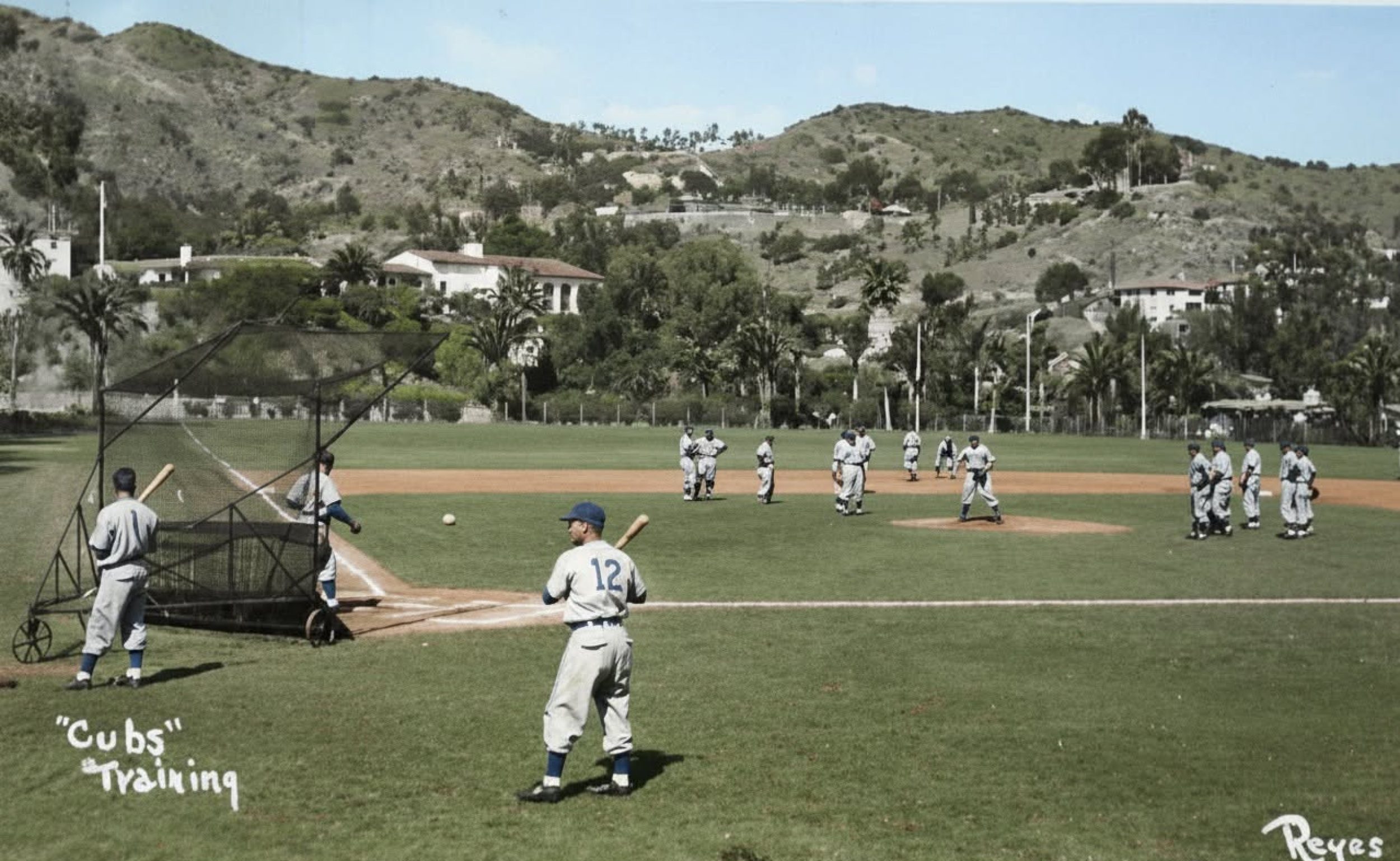
Panoramic Photo Above:
Cubs Spring Training on Catalina Island
Baseball History Comes Alive Now Ranked As a Top Five Website by Feedspot Among All Baseball History Websites and Blogs!
(Check out Feedspot's list of the Top 35 Baseball History websites and blogs)
Visit the Baseball History Comes Alive Home Page
Subscribe to Baseball History Comes Alive
Free Bonus for Subscribing:
Gary’s Handy Dandy World Series Reference Guide
Today we welcome a guest essay from Randy Maniloff in which he celebrates the 150th anniversary of the National League’s first game, played on April 22, 1876. Randy also interviewed baseball historian John Thorn for this essay, and John offers interesting reflections on some of the rule changes baseball has seen over the years. I think you’ll enjoy what Randy tells us about this historic first game….along with John Thorn’s observations! –GL
Major League Baseball at 150!
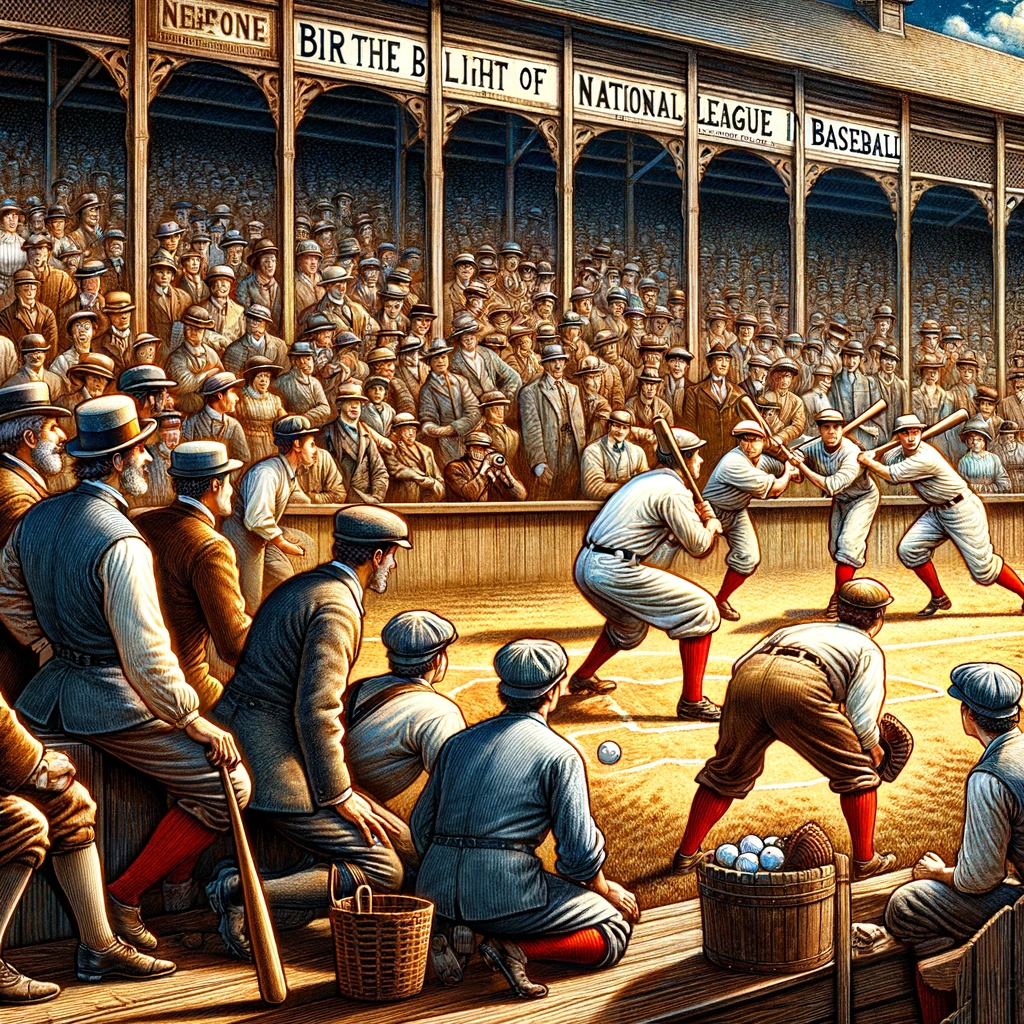
On April 22, 1876, the Boston Red Stockings defeated the home team Philadelphia Athletics 6-5. It was the debut contest of the newly created National League and stands as Major League Baseball’s inaugural game.
The sesquicentennial of Major League Baseball’s first pitch coincides with numerous rule changes in the sport over the past decade, with several designed to address fans’ dissatisfaction with the glacial pace of play.
Some traditionalists cry foul. But John Thorn, MLB’s official historian – a position he’s held since his 2011 appointment by then-Commissioner Bud Selig – welcomes them.
“Life has sped up, and baseball must keep pace,” Thorn tells me in a Q&A by email. While baseball’s “long past is the source of [its] strength,” the historian says, “the game on the field is better than ever.”
“Periodic adjustments to the rules…are necessary if fans are to maintain interest.” Thorn, 79, explains. “Most of the rule changes of the past century and a half have been to aid hitters in the face of their implacable enemies” – pitchers – “who initiate the action and thus are the drivers of change.”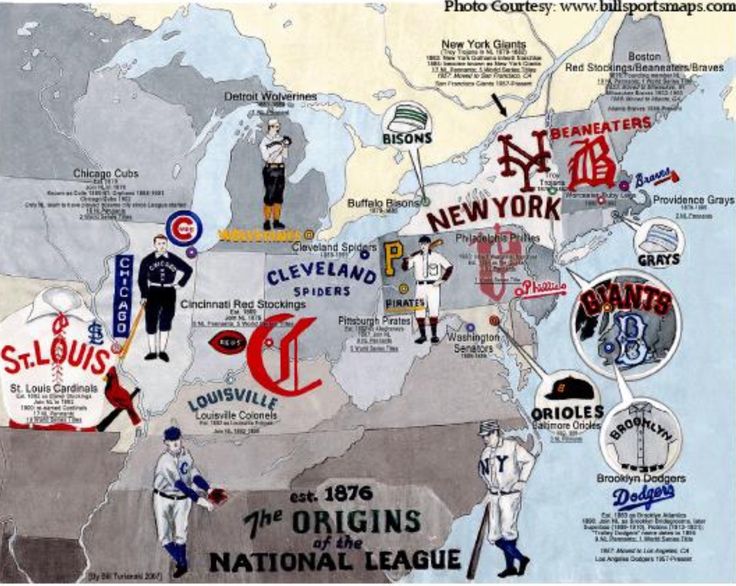
But Thorn can point to one place the game remains unaltered – between our ears. Because baseball is so evocative of our childhood, he says, the impressions of the game formed during that period are the ones that stay with us forever.
“Baseball’s Golden Age is not the 1920s, or the 1950s, or the 1980s,” Thorn tells me. “It coincides perfectly with when you happened to be twelve. Baseball stops time for each of us, magically, in a time of heroes and innocence.”
Several newspapers covered MLB’s debut, leaving a record that enabled Thorn to piece together a play-by-play that he published on his MLB-hosted blog, Our Game, along with some sights and sounds of the day.
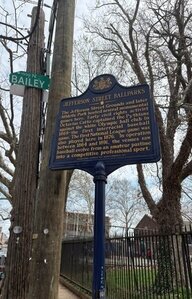
Over 3,000 people were in attendance at the Jefferson Street Grounds, in the city’s northern section, to witness the action that got underway on a late Saturday afternoon. According to The Philadelphia Inquirer, betting was “about even.” An opportunistic theater troupe, putting on a production at the city’s Walnut Street Theater, handed out over 3,000 score sheets.
The ball game was knotted at four headed into the ninth inning. With runners on first and third, Boston right fielder Jack Manning hit a ball that Athletics second baseman Bill Fouser couldn’t handle. It went into the outfield and two runs scored.
The Athletics got one back in the bottom of the frame and had two men on with two outs. But MLB’s first game would not end in a walk-off. Third baseman Ezra Sutton hit a dribbler to pitcher Joe Borden who threw to first base for the out. The home team didn’t win. It’s a shame.
MLB’s first outing was in the books in just two hours and five minutes. Surely there were no complaints that it took too long.
The league’s first game naturally produced numerous statistical firsts.
Borden is the league’s first winning pitcher. Only one of the runs he gave up was earned.
The leadoff hitter for the visiting Red Stockings, shortstop George Wright, is the answer to the question of who is Major League Baseball’s first player? Wright would later be elected to the game’s Hall of Fame.
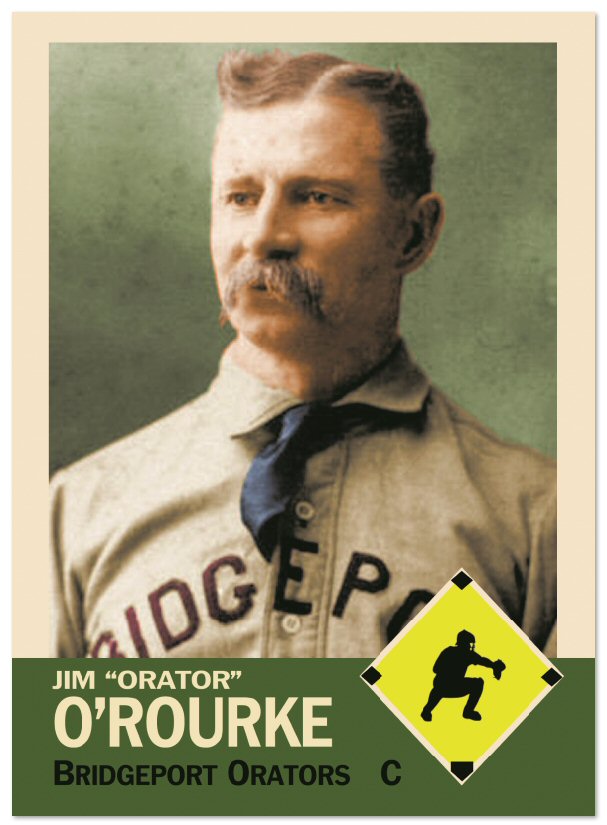
Credit for MLB’s first hit, a single in the top of the first, goes to Boston center fielder and future Hall of Famer Jim O’Rourke, nicknamed “Orator Jim” for his propensity for offering lengthy comments.
Once, when an umpire called a ball foul that O’Rourke believed was a home run, he responded:
“I am conversant with the conglomeration of facts in this case, and as my optical eyesight is of extreme excellence, I am positive of your misinformation.”
O’Rourke would later put his skills at bloviation to use in another way. He went on to earn a law degree from Yale University and practiced law for many years in Connecticut.
The lone umpire in Philadelphia that day was Billy McLean, a former boxer who Thorn has written “had no trouble standing up to players in a dignified fashion.” According to MLB’s historian, “so great was McLean’s judgment, temperament, and fair-mindedness” that National League officials agreed to his demand to be paid $5 per game.
The Athletics’ Opening Day loss foreshadowed things to come that season. With a 14-45-1 record, the team refused to incur the cost of a late-season road trip and was expelled from the league.
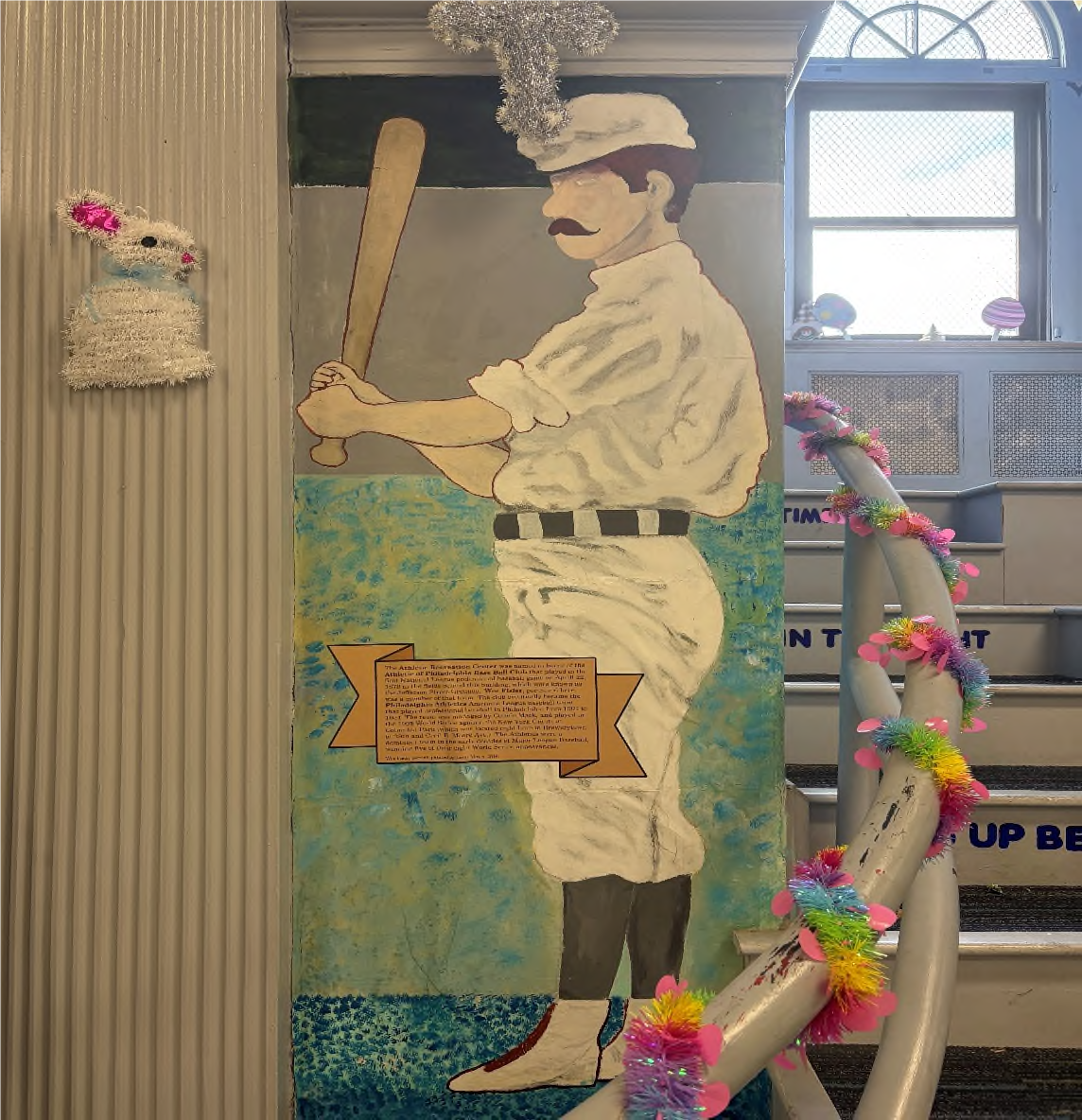
Today, the site of this celebrated game is the city-owned Athletic Recreation Center, named for the team that long ago called its fields home. Inside the building, a life-size painting of Wes Fisler, the Athletics’ first baseman that day, commemorates the event. It is a replica of Fisler, as he appears at bat at the Jefferson Street Grounds, in Thomas Eakins’s 1875 watercolor named “Baseball Players Practicing.”
I asked Thorn if the players from that maiden game witnessed nine innings today, what would they think looks most different?
The baseball historian finds his answer in the words of a Civil War historian. Thorn calls back a 1959 passage from Bruce Catton in American Heritage:
“A gaffer from the era of William McKinley, abruptly brought back to the second half of the twentieth century, would find very little in modern life that would not seem new, strange, and rather bewildering, but put in a good grandstand seat back of first base he would see nothing that was not completely familiar.”
“That is still true,” Thorn tells me. “The players would be of varying nationalities and skin colors, but that is the power and the glory of the game and the nation whose pastime it is.”
Randy Maniloff
Subscribe to Baseball History Comes Alive. FREE BONUS for subscribing: Gary’s Handy Dandy World Series Reference Guide.




Congrats to the NL on 150 years of good old country hardball! That said, I think Mr Thorn is mistaken in that there is absolutely no justification whatsoever for the abomination of the extra inning ghost runner. Frankly it’s my contention that most of the recent rule changes are motivated by greed and by the perceived need to kowtow to today’s average attention span which is measured in microseconds.