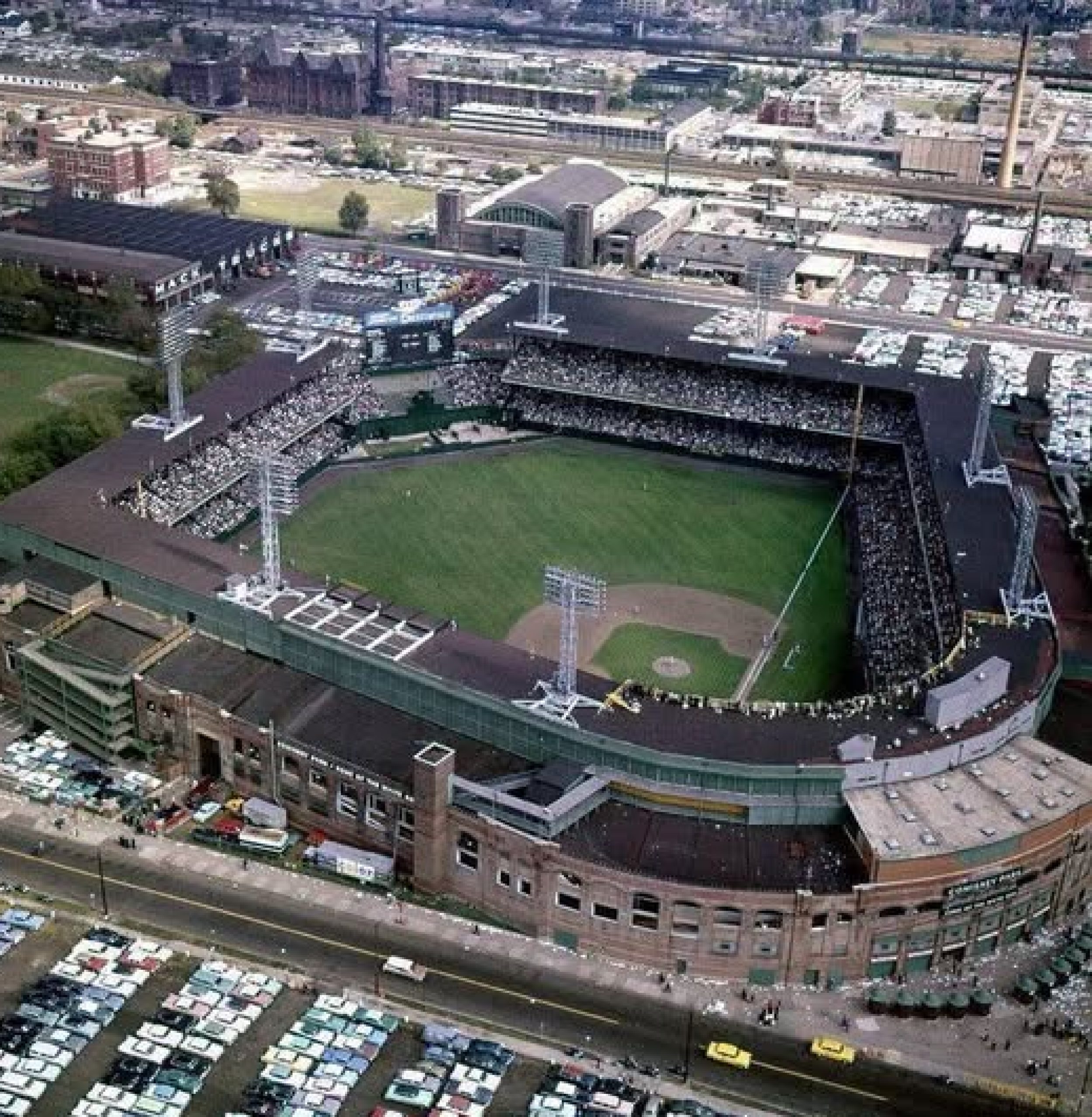
Panoramic Photo Above:
Comiskey Park, Chicago
Baseball History Comes Alive Now Ranked As a Top Five Website by Feedspot Among All Baseball History Websites and Blogs!

(Check out Feedspot's list of the Top 35 Baseball History websites and blogs)
Visit the Baseball History Comes Alive Home Page
Subscribe to Baseball History Comes Alive
Free Bonus for Subscribing:
Gary’s Handy Dandy World Series Reference Guide
Baseball and the Military Photo Gallery
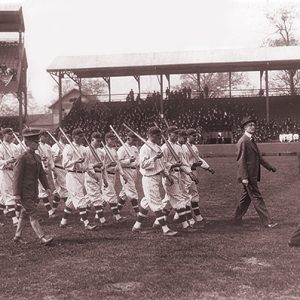
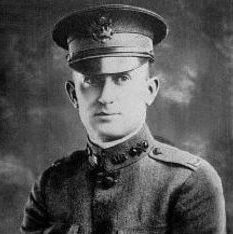
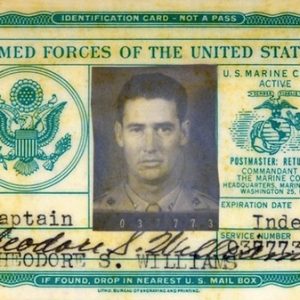
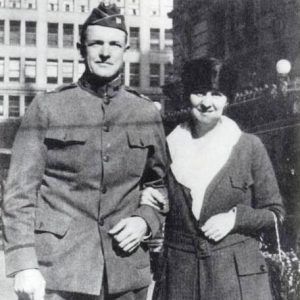
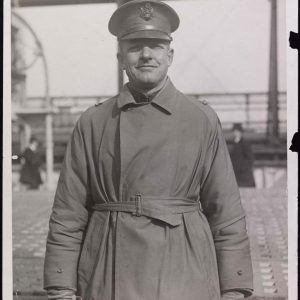
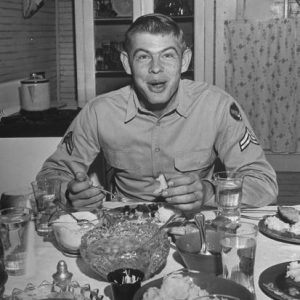
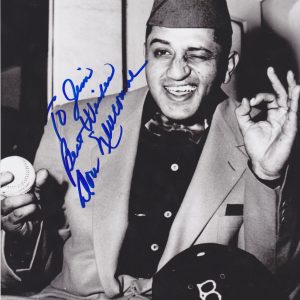
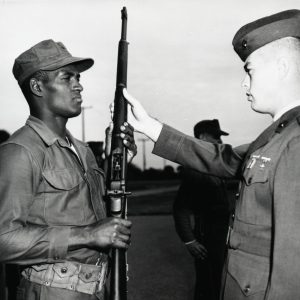
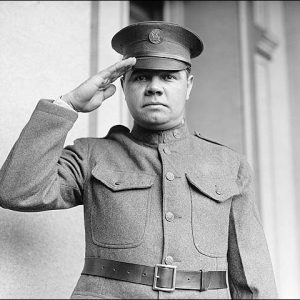
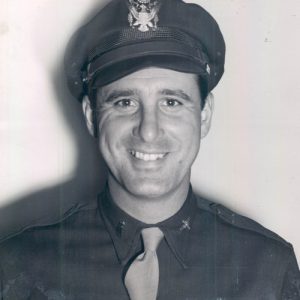
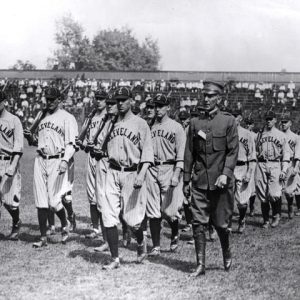
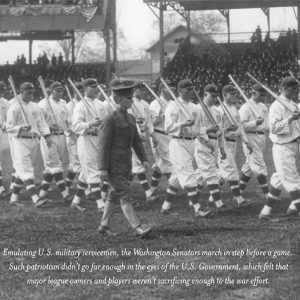
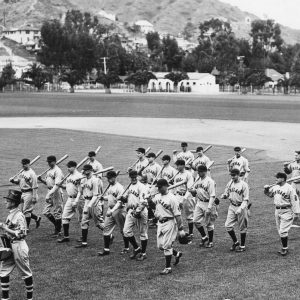
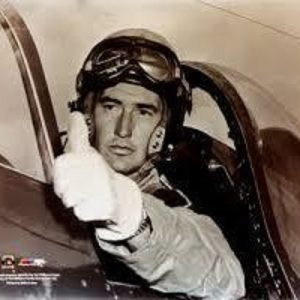
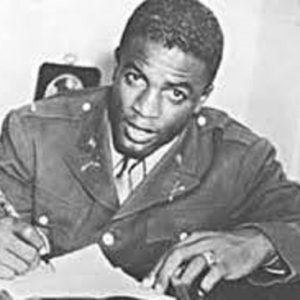
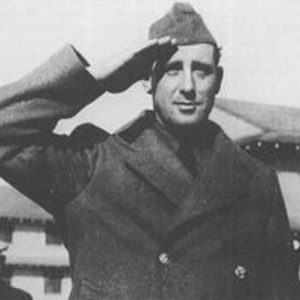

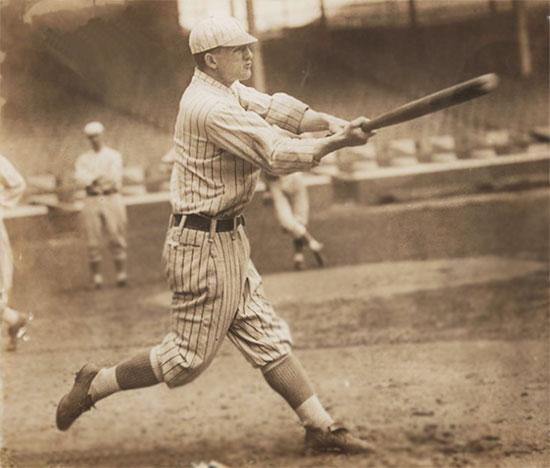
We welcome back Ron Christensen with a follow-up essay to his Veterans’ Day post from last Fall. Today, Ron pays tribute to Eddie Grant, the first major league player to be killed in action in World War I. Ron also shows Eddie’s connection to the Curse of Coogan’s Bluff, which followed the Giants to San Francisco after their move from New York. -GL
Memorial Day Baseball Tribute:
Eddie Grant and The Curse of Coogan’s Bluff!
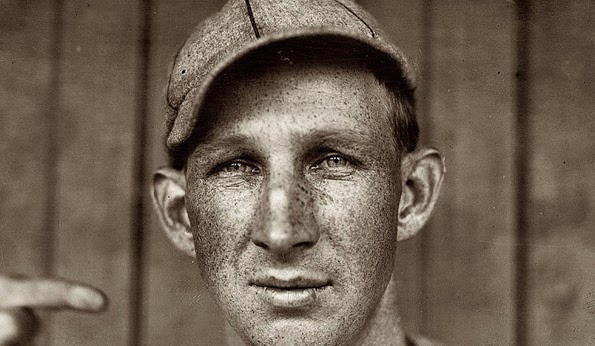
Eddie Grant, who we see in the featured photo above, was a Harvard-trained lawyer who played baseball for the Philadelphia Phillies, Cincinnati Reds, and New York Giants in a major league career that spanned from 1907 to 1915. Primarily a third baseman, Eddie was a soft-spoken intellectual who was well-liked by his teammates and was a favorite of John McGraw during his time with the Giants.
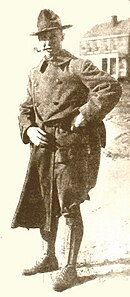
When the United States entered World War I, Eddie believed it was his duty to fight for his country. He enlisted immediately, securing the rank of Captain in the US Army Infantry, and headed to France as part of the American Expeditionary Force that fought in the Meuse-Argonne offensive near the close of the war. In heavy fighting during attempts to breach the Hindenburg Line and break the German Army along the Western Front, Eddie was killed by a mortar explosion, the first major league baseball player to lose his life in the war.
A commemorative plaque was dedicated in Eddie’s honor at a ceremony held at the Polo Grounds on Memorial Day in 1921. The ceremony took place between games of a double-header with the Giants and the Philadelphia Phillies, and was attended by several ballplayers, soldiers Eddie served with, a vice president of the Harvard Club, John McGraw, Commissioner Landis, and Eddie’s two sisters, both of whom unveiled the flag-draped monument now enshrined in the deepest reaches of center field. Commissioner Landis said that Eddie’s memory “shall live for as long as our game may last.” John McGraw placed flowers at the foot of Eddie’s monument every Memorial Day for as long as he served as Giants manager.
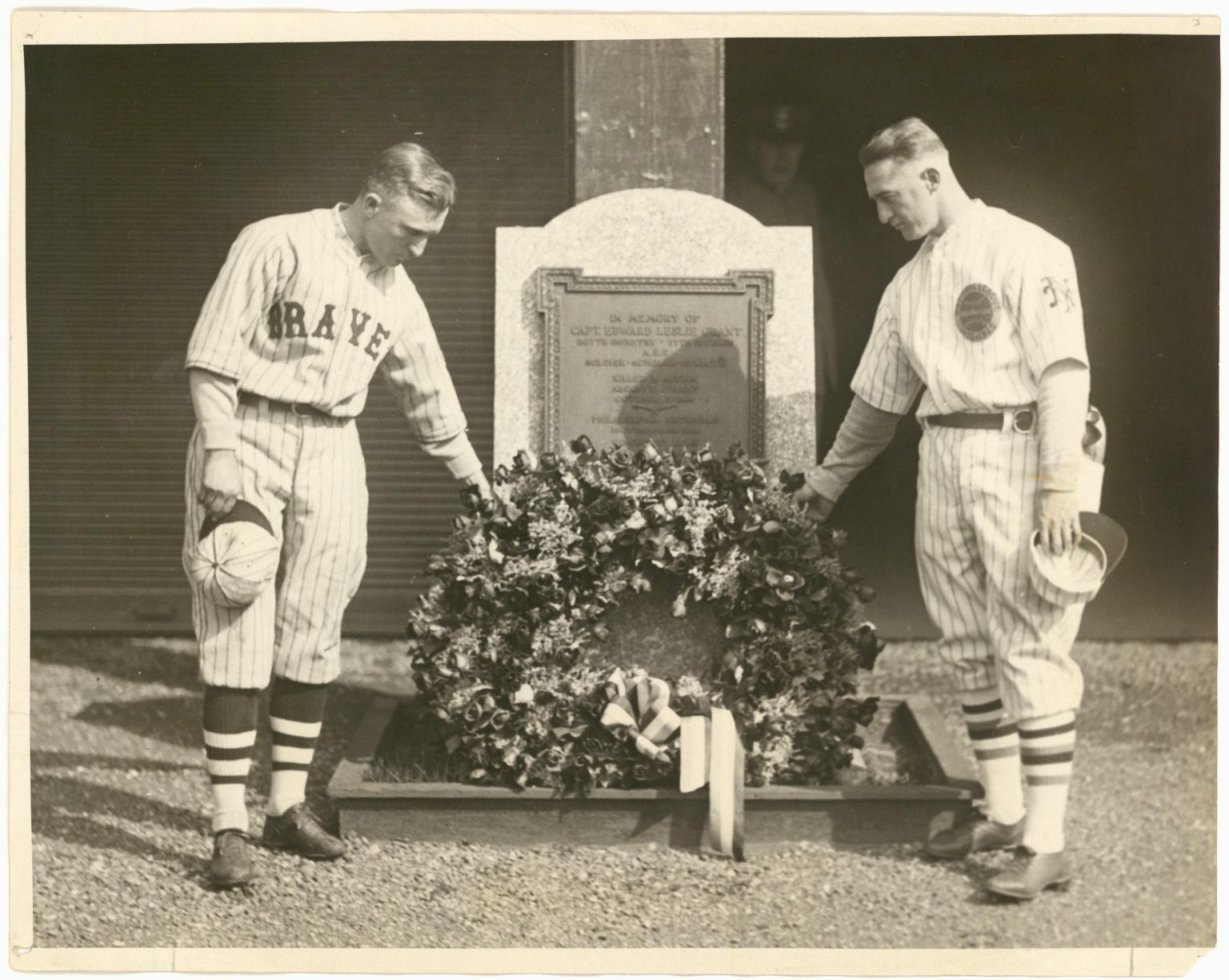
The Giants last won a World Series in New York in 1954, sweeping the Cleveland Indians in four games. They would relocate to San Francisco at the end of the 1957 season. In their final home game of 1957, Giants fans stormed the field after the final out, some in search of souvenirs, others seeking an outlet to express their anger at being abandoned by their beloved Giants, who, after 75 years in New York, were revered like family by so many. In the melee, Eddie’s bronze memorial plaque was removed from its granite base, never to be seen again. *
The Polo Grounds were located in the north-east of Manhattan between Broadway and the Harlem River, on land developed by James Coogan called ‘Coogan’s Bluff’. When Giants owner Horace Stoneham announced the Giants would leave New York for San Francisco, he vowed to take with them certain items of memorabilia that would become part of their new stadium, including Eddie’s plaque. Because the plaque was stolen, that vow was never kept, nor was the plaque ever replicated.
Disgruntled Giants fans claimed that luck would not follow the team to San Francisco, and without it, the Giants would never win a World Series there. The claim came to be known as ‘The Curse of Coogan’s Bluff’, and sure enough, in three later World Series appearances – 1962 vs. the Yankees, 1989 vs. the Athletics (this one even featured an earthquake in San Francisco), and 2002 vs. the Angels – the Giants lost each one. Many, especially forlorn fans from New York, believed it was The Curse.
In 2001, as an olive branch to end The Curse, historian and writer Mike Hanlon suggested to Giants owner Peter Magowan that a new plaque be made in memory of Eddie Grant to replace the one stolen from the Polo Grounds years before. In 2008, the new plaque was completed and installed on the right field tower at AT&T Park (now Oracle Park). Sure enough, the Giants went to the World Series in 2010 and defeated the Texas Rangers in five games. And if that wasn’t proof enough that the installation of the new plaque ended The Curse, the Giants went to the World Series two more times in the next four years (2012 vs. Detroit, and 2014 vs. Kansas City) and won both of those as well. After 52 years, The Curse of Coogan’s Bluff was finally over.
Or was it? None of the deciding games of those three World Series Championships were won in San Francisco. Maybe there is a bit of The Curse that still lingers around the Giants after all.
Ron Christensen
* There is a claim that the original plaque resurfaced some forty years after it was removed from the Polo Grounds, found hidden in the New Jersey home of a former police officer. This plaque, which is said to bear some differences from the original, has never been authenticated and is widely believed not to be the original Eddie Grant monument.
REFERENCES:
- Smithsonian Magazine: When Major Leaguer Eddie Grant Made The Ultimate Sacrifice, by Kevin Coyne.
- SABR: Eddie Grant, by Tom Simon
- Wikipedia: Eddie Grant (baseball)
- Wikipedia: Curse of Coogan’s Bluff
- Baseball Egg: Remembering Eddie Grant, by Dan Holmes
- Real Clear Public Affairs: Honoring Eddie Grant, By Carl M. Cannon
- Library of Congress: Echoes of the Great War, Meuse-Argonne
- Wikipedia: Meuse-Argonne Offensive
- Wikipedia: Lost Battalion (World War I)
- This Day In Baseball: May 30, 1921
Photo Credits: All found on Google search
Subscribe to Baseball History Comes Alive. FREE BONUS for subscribing: Gary’s Handy Dandy World Series Reference Guide. https://wp.me/P7a04E-2he
Visit the Baseball History Comes Alive Home Page




Great story, Ron!
Knew about Eddie Grant and the plaque dedicated to him in 1921. I did not know the back story of the disappearance and “curse”.
Funny, all “curses” ultimately come to an end.
I was convinced the “Curse of the Babe” was real until 2004.
Your story illustrated the “Curse of Eddie Grant” was somewhat broken six years later. Gary’s Cubs broke the “The Curse of the Billy
Goat” two years after that. Just read the obituary of Billy Sianis’ nephew, Sam who died last week and kept the legend alive after his uncle died.
The remaining “Curse” is the Indians/Guardians “The Curse of Rocky Colavito”, which almost was broken in 2016 and anlmost extended Gary’s Billy Goat legend until that rain delay..
These curses remind me of the joke about the guy who wore a necklace of garlic cloves around his neck for years. Finally, someone asked why. He replied, “To keep the elephants away”. The questioner said, “There’s no elephants within 6,000 miles”. To which Mr. Garlic retorted, “See, it’s working”.
BTW, your Yard Goats ( hey maybe we can start a new curse) beat up my Fisher Cats four straight and mercifully, the finale of the series was rained out today.
Thanks again for the essay.
Thanks Paul…you make some great points!
Thanks Paul. Glad you enjoyed it. Really liked your insight about the other baseball curses. I agree, the curse of the Babe WAS real until 2004. I guess it’s like you say – all curses come to an end eventually. I like the elephant joke too. My great-grandmother came here from Italy. I never knew her, she passed long before I was born, but my Mom told me when she was little, she remembers her grandmother wore a necklace of garlic to keep away evil spirits. It wasn’t just elephants that stayed away – even her own grandchildren wouldn’t go near her.
Sorry about your Fisher Cats, but bully for the Yard Goats! You’ll get them next time, I’m sure. I remember when I had my season tickets I saw the Goats play the Fisher Cats in Hartford at the new stadium, and Vlad Guerrero Jr. was with them. You could tell even then he was destined to be a great player.
Thanks again, Paul.
The photo said to be Wrigley Field is not correct. It’s been altered to show Wrigley signage. It’s actually Sportsman’s Park in St. Louis.
You’re right..thanks. I just change to a legit pic of Sportsman’s Park