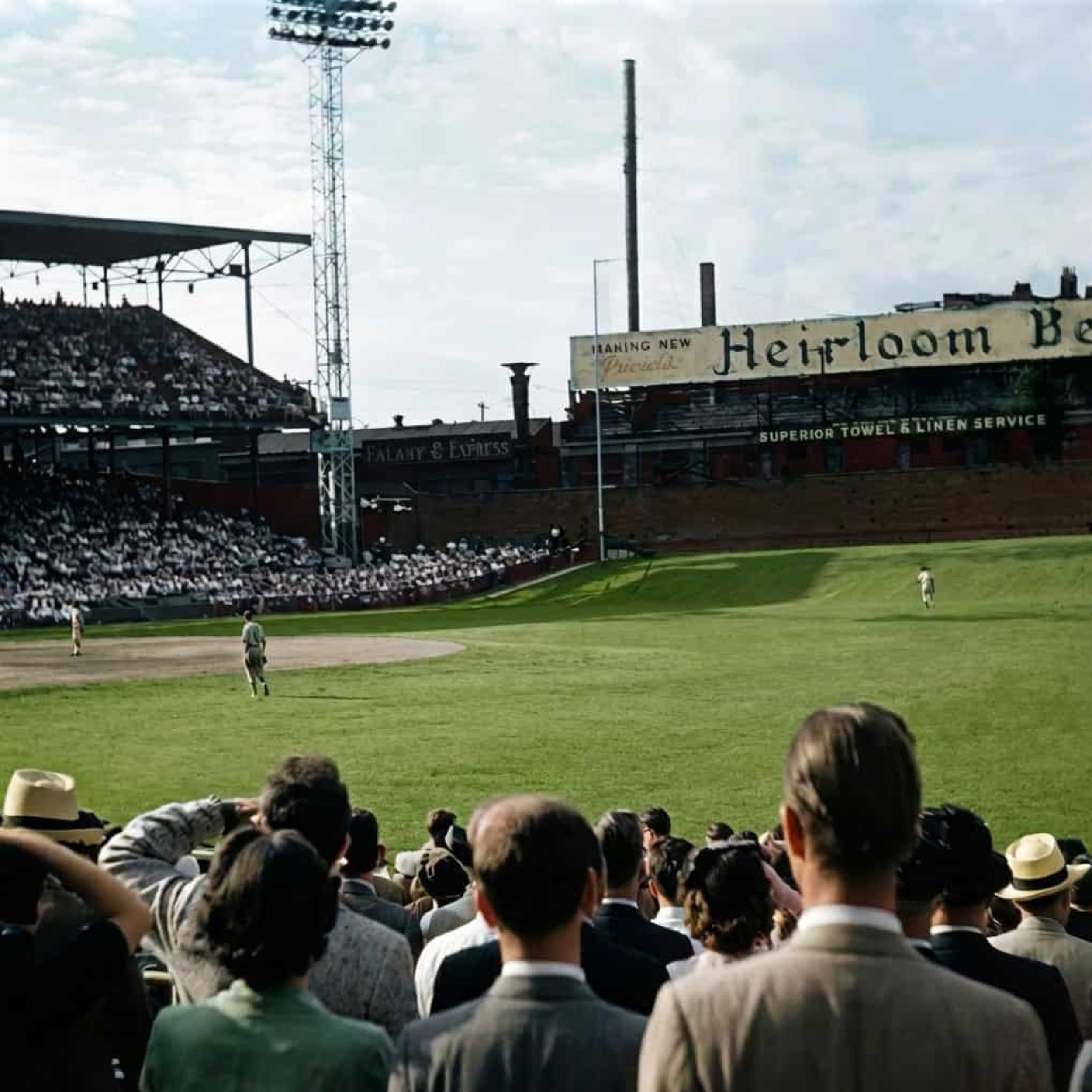
Panoramic Photo Above:
Crosley Field, Cincinnati
Baseball History Comes Alive Now Ranked As a Top Five Website by Feedspot Among All Baseball History Websites and Blogs!
(Check out Feedspot's list of the Top 35 Baseball History websites and blogs)
Guest submissions from our readers always welcome. Click for details
Visit the Baseball History Comes Alive Home Page
Subscribe to Baseball History Comes Alive
Free Bonus for Subscribing:
Gary’s Handy Dandy World Series Reference Guide
Most “senior” baseball fans (like me) are familiar with Hall of Famer Richie Ashburn, but until I read Ron Christensen’s essay today, highlighting his many career accomplishments, I really had no idea how good he actually was. Even though he was overshadowed by the many great slugging center fielders of his era, there’s no doubt Richie Ashburn deserves his place among the finest all-around ball players enshrined in Cooperstown. I think you’ll enjoy Ron’s essay. -GL
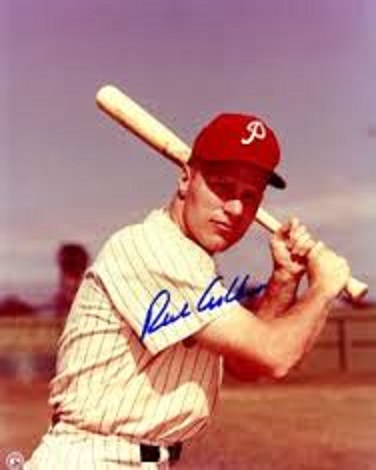
Richie Ashburn
Centerfield’s Best Kept Secret
If you were asked to select the greatest center fielder of all time, who would you pick? There’s certainly no shortage of greatness to choose from. In the Deadball Era, there was Ty Cobb, Tris Speaker, and Max Carey. In the modern era, you have Willie Mays, Mickey Mantle, and Duke Snider (immortalized in song as well as in Cooperstown). More recently there’s Andruw Jones, Ken Griffey, Jr., and Mike Trout. And crossing the color barrier before integration, there was Oscar Charleston, Cool Papa Bell, and Turkey Stearnes. Take your pick. All are in the Hall of Fame except for Trout, and he’ll be there on the first ballot once eligible.
None of this matters much in Philadelphia, where Phillies fans find such comparisons
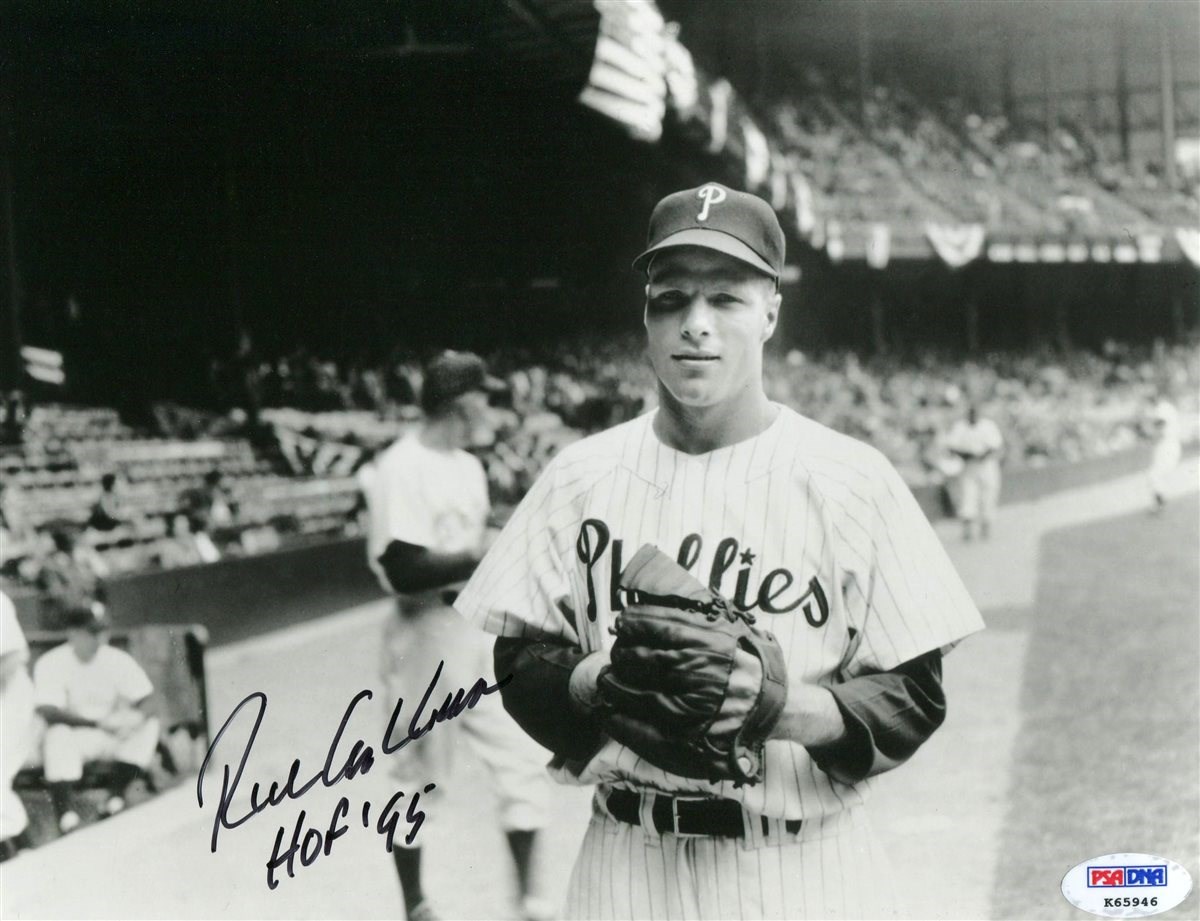
unnecessary and unconvincing. In Philadelphia there is one clear winner, and his name is Richie Ashburn. A Phillies icon, Ashburn’s career accomplishments are many, though sadly outside of Philadelphia his spotlight is often dimmed by the shadow of other contemporary superstars, most notably Willie, Mickey, and the Duke. Nevertheless, there’s no doubting Richie Ashburn’s talent as an elite center fielder, or his rightful place among the position’s all-time greats, however underappreciated he might be.
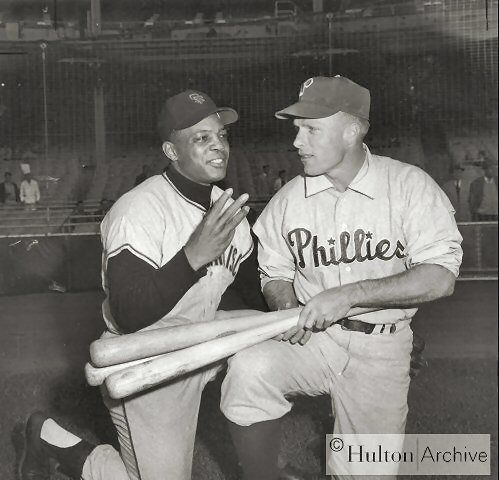
Ashburn grew up in Tilden, Nebraska, and was scouted while still in high school. He signed not one, but two contracts, the first with the Cleveland Indians in 1943 at age 16, and the second the following year with the Chicago Cubs. Both were voided by Baseball Commissioner Landis, the first because of Richie’s age, the second because it contained an illegal clause.
In 1945 Ashburn signed with the Phillies. He said later he did so because they were a terrible team, and believed this would enable him to make the club more quickly. The Phillies assigned Ashburn to Utica as a catcher, where he impressed manager Eddie Sawyer with his tremendous speed backing up plays at first base. Ashburn actually outran most batters even wearing all his catching gear. On one such play, the first baseman chased and missed a ground ball that was fielded by the second baseman, and the pitcher failed to cover first. Ashburn outran the batter to first and took the throw from the second baseman for the out. After that, Sawyer moved Ashburn to the outfield, telling him he was too fast to be a catcher.
In 1948 at the age of 21, Ashburn made his Phillies debut batting leadoff on Opening Day. He played left field for twelve games before replacing Harry “The Hat” Walker as the Phillies everyday center fielder. By June, he was batting .380 with a 23-game hitting streak, and was selected to the National League All-Star team as its starting center fielder, only the third rookie in major league history to ever start an All-Star game. He singled on the game’s first pitch, scored the game’s first run, and was credited with the game’s only stolen base. During the game, Ted Williams gave Ashburn the nickname “Putt-Putt”, saying Ashburn ran the bases like he had an outboard motor in the seat of his pants. Ashburn was named Rookie of the Year by The Sporting News, and finished third in balloting for National League Rookie of the Year.
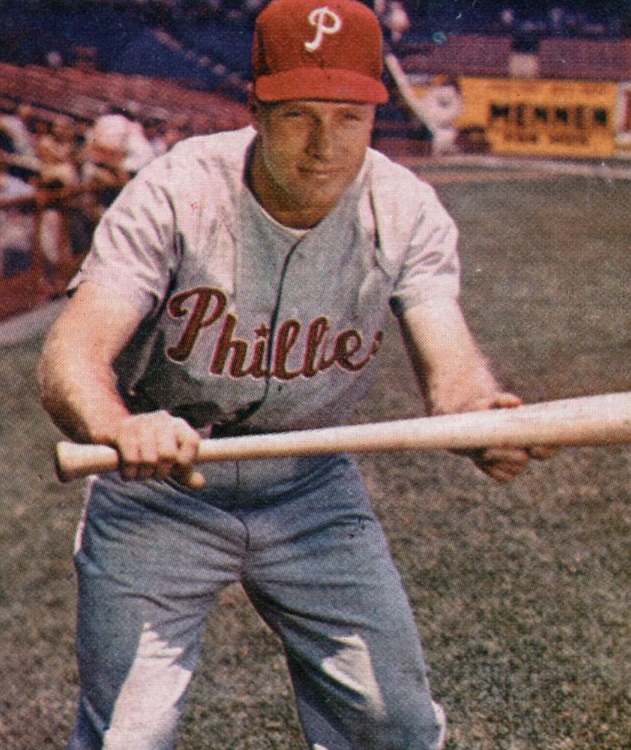
Ashburn was an exceptional hitter, amassing 2,574 career hits, a .308 lifetime batting average and a career .396 on-base percentage. In his rookie season (1948) he finished second to Stan Musial in the race for the batting title with a .333 average. He won the batting title in 1955 with a .338 average, and won it again in 1958 with a .350 average for the last-place Phillies. In between, he hit .344 in 1951 and .330 in 1953, and batted .300 or better nine times. Ashburn led the league in hits three times (1951, 1953, 1958), collecting more than 200 hits in each of those seasons, led in triples twice (1950, 1958), and in walks three times (1954, 1958, 1960), tying for the lead in 1957. He led the league in on-base percentage four times (1954, 1955, 1958, 1960), and his combined totals of walks and hits twice surpassed the 300 mark. He also led the league in stolen bases his rookie season with 32 steals.
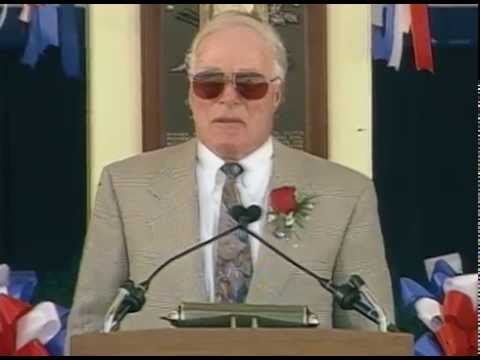
What Ashburn wasn’t was a slugger. In 8,365 at bats, he hit only 29 home runs, about what
you’d expect from Mays or Mantle by the All-Star break in any given season. It’s what so
visibly differentiated Ashburn from fellow centerfielders like Mantle, Mays and Snider, and other outfielders like Musial, Williams and Aaron. That difference is even more pronounced when you consider that eight of Ashburn’s home runs were inside-the-park, and four of his home runs were hit in his final season of 1962. Though he wasn’t the power-hitting slugger his contemporaries were, there’s no doubt Ashburn could hit with the best of them, and through the decade of the 1950s he totaled more hits (1,875) than any other major league player.
If there are those who question his offense, his defensive skills were unimpeachable. Without overstating, Ashburn was not only one of the best defensive centerfielders of his day, but one of the best defensive outfielders of all time. He ranks third all-time in career putouts as a centerfielder with 5,813 (behind only Tris Speaker and Willie Mays), and sixth all-time for all outfielders with 6,089, leading the league in both categories nine times. He is the only center fielder to have 500+ career putouts in four different seasons. No other center fielder has done this more than once. Ashburn also led the league in outfielder assists three times, and in double plays turned as an outfielder three times. Using Bill James’s Range Factor metric, Ashburn has the highest career range factor per game (3.02) of any center fielder in history.
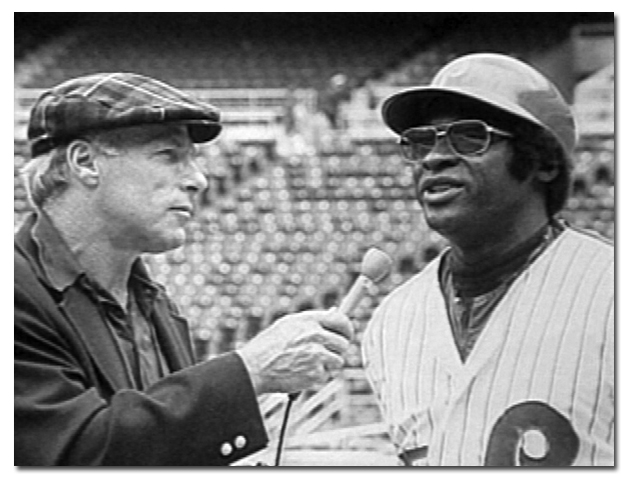
The Phillies traded Ashburn to the Cubs at the end of the 1959 season. He played for the Cubs in 1960 and 1961 before his contract was purchased by the expansion New York Mets for their inaugural 1962 season. The often colorful and more often hapless ’62 Mets are widely considered one of baseball’s worst ever teams, finishing with a 40-120 record. Ashburn, for his part, batted a team-high .306, was the Mets’ first All-Star, and was voted team MVP.
The 1962 season would be Ashburn’s last. He began a broadcasting career the following season as color commentator for Phillies games, a position he held until his untimely passing in 1997. Ashburn was inducted into the Baseball Hall of Fame in 1995. He was inducted into the Broadcast Pioneers of Philadelphia Hall of Fame in 1997, and inducted posthumously into the Philadelphia Sports Hall of Fame as part of its inaugural class in 2004. The broadcast booth at Citizens Bank Park, the Phillies’ home ballpark, is named for Ashburn, as is the entertainment alley (Ashburn Alley) in the centerfield section of the stands.
Where else would Ashburn Alley be but in center field?
Ron Christensen
Notes:
1. Wikipedia: Richie Ashburn
2. SABR: Richie Ashburn – by Seamus Kearney
3. SABR: Richie Ashburn: The Sultan of Slap and Run – by Francis Kinlaw
4. Baseball Reference: Richie Ashburn
5. National Baseball Hall of Fame: Richie Ashburn
6. Baseball Almanac – Richie Ashburn Biography
7. Faith and Fear in Flushing: The Man Who Walked Away – by Jason Fry
8. Peanuts and Crackerjack: Richie Ashburn Interview – by Norman L. Macht
9. Phillies Nation: 100 Greatest Phillies: #6 Richie Ashburn – by Tim Malcolm
10. Phillies Nation: Richie Ashburn’s Foul Balls Live On In Roth Family – by Hunter Doyle
11. Bumps in the Night: Foul Ball! – by Alan E. Hunter
Photo Credits: All found on Google search
Subscribe to Baseball History Comes Alive. FREE BONUS for subscribing: Gary’s Handy Dandy World Series Reference Guide. https://wp.me/P7a04E-2he
Visit the Baseball History Comes Alive Home Page