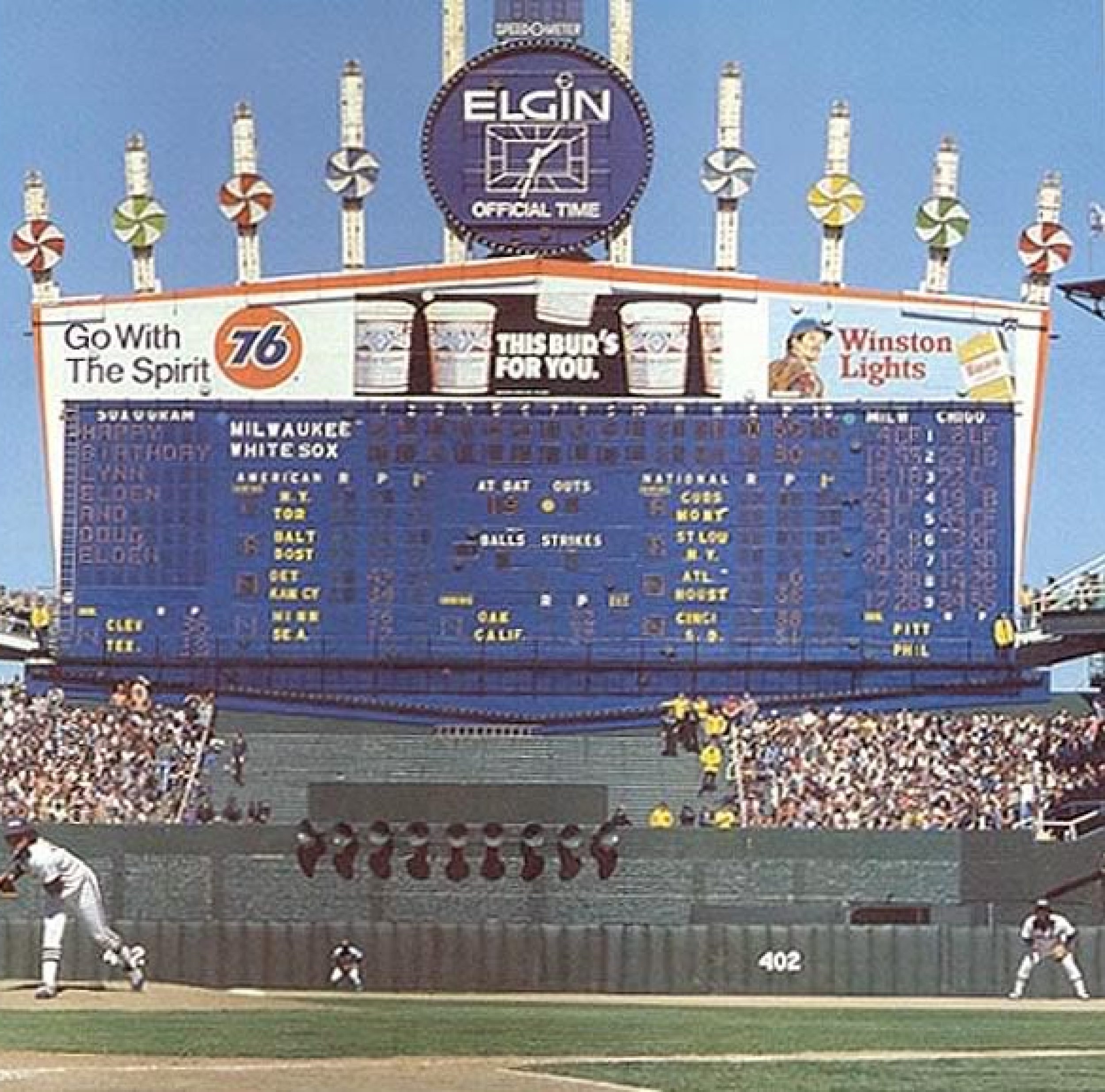
Panoramic Photo Above:
Comiskey Park, 1981
Baseball History Comes Alive Now Ranked As a Top Five Website by Feedspot Among All Baseball History Websites and Blogs!
(Check out Feedspot's list of the Top 35 Baseball History websites and blogs)
Visit the Baseball History Comes Alive Home Page
Subscribe to Baseball History Comes Alive
Free Bonus for Subscribing:
Gary’s Handy Dandy World Series Reference Guide
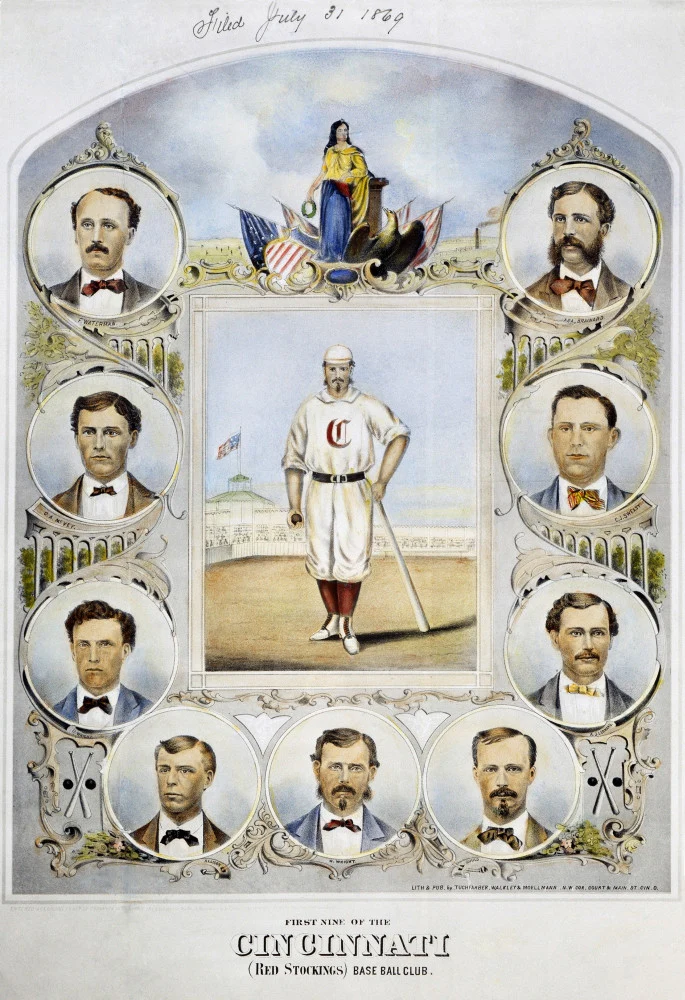
Anyone who has studied baseball’s origins in the nineteenth century can’t help but notice the influence of Irish Americans on the game’s early development. Today, we welcome a guest essay from Tim Carr, Board Member of the Irish American Baseball Society, detailing just how extensive that Irish influence was. In the featured photo above, we see a beautifully colorized roster of the Irish-dominated Cincinnati Red Stockings, baseball’s first professional team. I think you’ll enjoy what Tim shares with us today. – GL
The Irish Impact in Baseball History
If you watch a major league baseball game today, you will see a myriad of surnames that come from many parts of Central and South America, the Caribbean nations, and even many parts of Asia. In addition to that, you will find surnames from most European countries that immigrated to America several decades ago. But in the beginning of baseball, starting with the mid-1800’s, one nation’s people dominated the sport more than any other – the Irish. How and why did this occur?
The Acts of Union in 1801 incorporated Ireland into the United Kingdom. The British struggled with managing Ireland during the first 40 years of this union. Many British reported that most native Irish were dealing with a lack of jobs and food supply and extremely poor living conditions. The situation was only made worse in 1845 when the Potato Famine started. The failure of this most important crop was amplified by inhumane politics from London. The results were disastrous. A nation of eight million people lost half of their population to death and immigration. Between 1845 and 1855, over 1.5 million people desperately made their way to the shores of America, mainly in New York and Boston. Baseball was becoming more popular, primarily in the northeast part of the country. But that would change due to another cataclysmic event, the American Civil War.
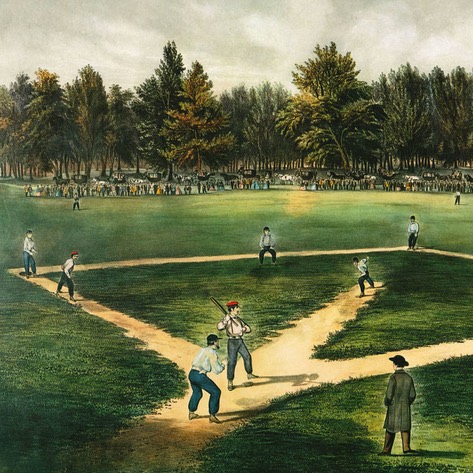
The war ravaged our country, and over 1.5 million Americans died. Many recent Irish immigrants found difficulty in securing employment in their new country. Many decided that entering the Union Army was a better option for them to provide for themselves and their families. A little-known fact during the war was the increase in knowledge and popularity of baseball. Prior to the war, the game was limited to professional people of means in big cities like New York, Boston, and Philadelphia. During the war, the game became a needed distraction during free times in between battles. As the battlefields moved south, these games were introduced to people who hadn’t seen the game before. It was even reported that both the Union and Confederate soldiers would lay down their weapons and engage in baseball games.
In the early 1860s, the first widely accepted superstar of baseball was a first-generation Irishman named Jim Creighton. Jim was a superb batter and fielder, but pitching is where he made his name. Prior to him, the pitchers were of little consequence as their role was to pitch the ball to the batter and not challenge him. Jim changed that with a unique, radically different pitching motion which included a severe twist in his arm and body as he delivered the ball. He was unhittable. Fans came to the ballpark to see him pitch. Sadly, it was his pitching motion that ended his career and, sadly, his life. He died of internal injuries to his intestines due in part to his pitching style. He died in 1862 at the tender age of 22.
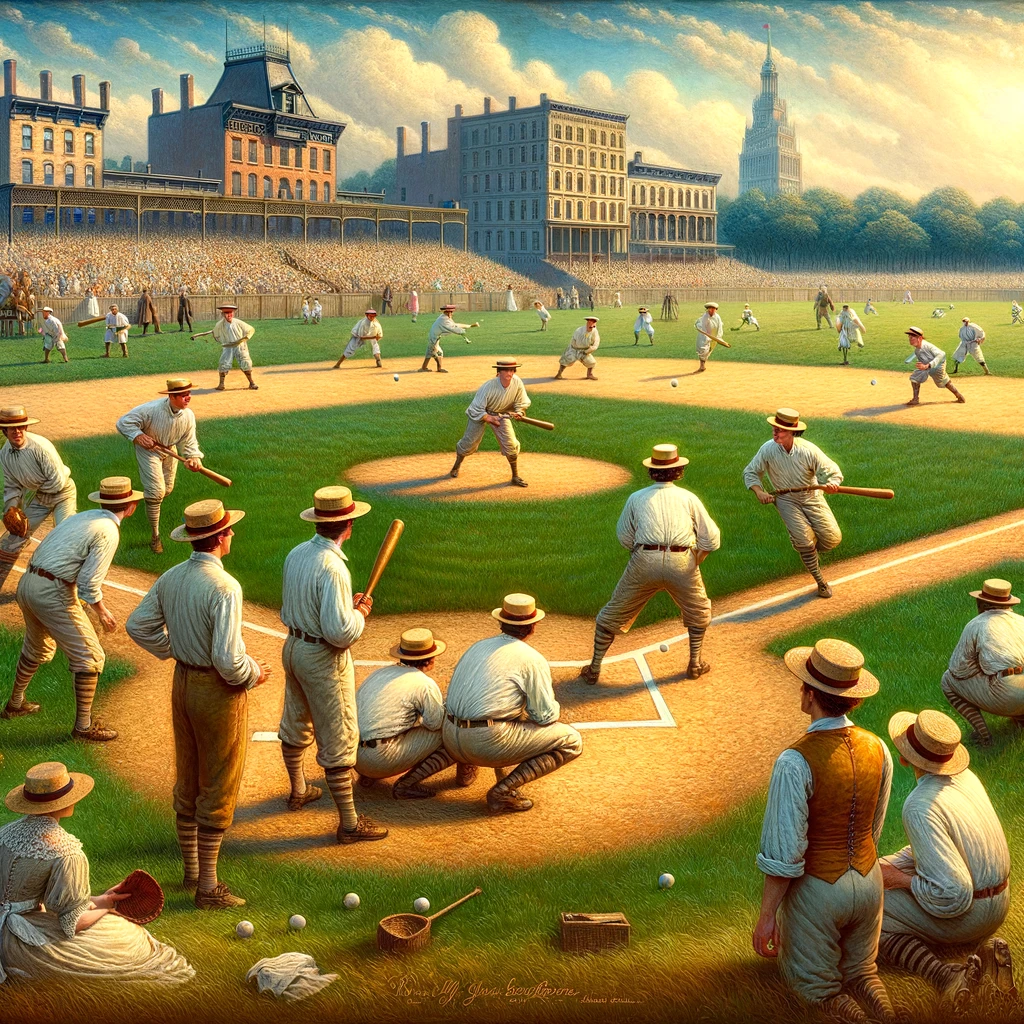
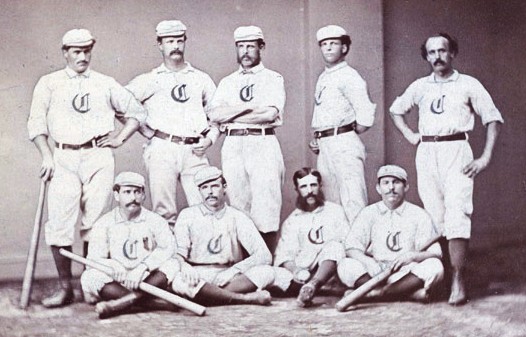
In 1869, the National Association of Professional Baseball Players allowed professional teams for the first time. The Cincinnati Red Stockings became that first team. Led by first-generation Irishman Harry Wright, they put together a great roster that included the best player of the time, George Wright, Harry’s brother. Incredibly, they became the first undefeated team in baseball history, winning 57 games and losing none. Harry and George then went on to the newly created National Association in 1871. Their team, the Boston Red Stockings, won six of the first seven championships in that league.
The current National League’s origin goes all the way back to 1876, 150 years ago. One of the teams was the Boston Reds (this team is currently called the Atlanta Braves). Again, Harry and George Wright were on this team. Seventy percent of the roster were Irish-born or first-generation Irish. Names like O’Rourke, Manning, Murnane, Morrill, McGinley, Leonard, Bradley. Overall, well over forty percent of the entire league was of Irish descent.
For the next quarter century (1876-1900), the Irish dominated the game of baseball. From a pitching perspective, there were players such as Tim Keefe, Pud Galvin, John Clarkson, Matt Kilroy, Amos Rusie, Mickey Welch, Wil White, and John Ward. Pud Galvin was the first 300-game winner in baseball history. Matt Kilroy set the baseball record for strikeouts in a season in 1886 with 513. Keefe, Clarkson, and Welch all achieved 300 wins before they retired.
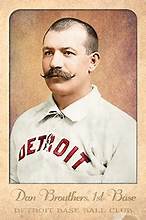
On the hitting side, the Irish standouts included: Dan Brouthers, Hugh Duffy, Willie Keeler, King Kelly, Jim O’Rourke, Sam Thompson and Billy Hamilton. Brouthers was a dangerous slugger who hit for average. He ranks eighth all-time in batting average with a .342 clip. Hugh Duffy still holds the record for the highest single-season batting average of .440. Keeler hit .424 in 1897 and .341 for his career. King Kelly was the first professional superstar player, once being sold for the unheard sum of $10,000. Sam Thompson once had 166 RBIs in only 127 games. Billy Hamilton held the all-time stolen base record for 90 years until Rickey Henderson broke the record in 1991.
Overall, the nineteenth-century baseball statistical leaders are overwhelmingly players with Irish heritage.
Hits – 4 out of the top 5 have Irish heritage
Homeruns – 4 out of the top 5 have Irish heritage
Batting Average – 5 out of the top 5 have Irish heritage
Slugging Percentage – 5 out of the top 5 have Irish heritage
Pitching Wins – 4 out of the top 5 have Irish heritage
Pitching ERA – 4 out of the top 5 have Irish heritage
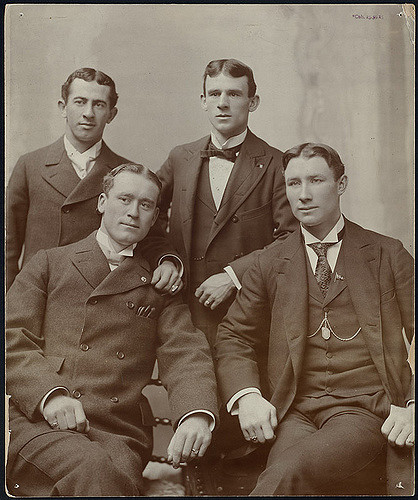
The impact of the Irish continued into the twentieth century. The percentage of players who were Irish reduced but was still significant. Two players from the nineteenth century became incredibly successful managers in the early 1900s. Connie Mack of the Philadelphia Athletics and John McGraw of the New York Giants. They held the top two spots for wins by a manager for over 100 years, when finally, Tony La Russa passed McGraw in 2021. Mack and McGraw were both proud, first-generation Irishmen.
The following is a limited list of players from the twentieth and twenty-first centuries who have Irish heritage. There are many more. George Brett, Mickey Mantle, Wade Boggs, Adam Dunn, Lefty O’Doul, Whitey Ford, Jimmie Foxx, Steve Garvey, Lefty Grove, Gil Hodges, Rogers Hornsby, Jim Palmer, Dale Murphy, Cal Ripken, Nolan Ryan, Joe Cronin, Derek Jeter, Freddie Freeman, Jacob DeGrom, Clayton Kershaw, Joe Mauer, Mark McGwire, Kyle Schwarber, Paul Skens, Justin Verlander, Giancarlo Stanton and Mike Yastrzemski.
The major leagues have seen waves of different ethnic groups entering and excelling in major league baseball. But the first major group was the Irish. The reasons were partly economic and partly opportunistic. But excel they did and still do today.
Tim Carr, Birmingham, Michigan
(Tim Carr is a SABR Member, a Board Member of the Irish American Baseball Society, and Emerald Diamond International. Check out his latest book, Timing Is Everything.)
Photo Credits: All found on Google search
Subscribe to Baseball History Comes Alive. FREE BONUS for subscribing: Gary’s Handy Dandy World Series Reference Guide. https://wp.me/P7a04E-2he
Visit the Baseball History Comes Alive Home Page




Nice post Tim.