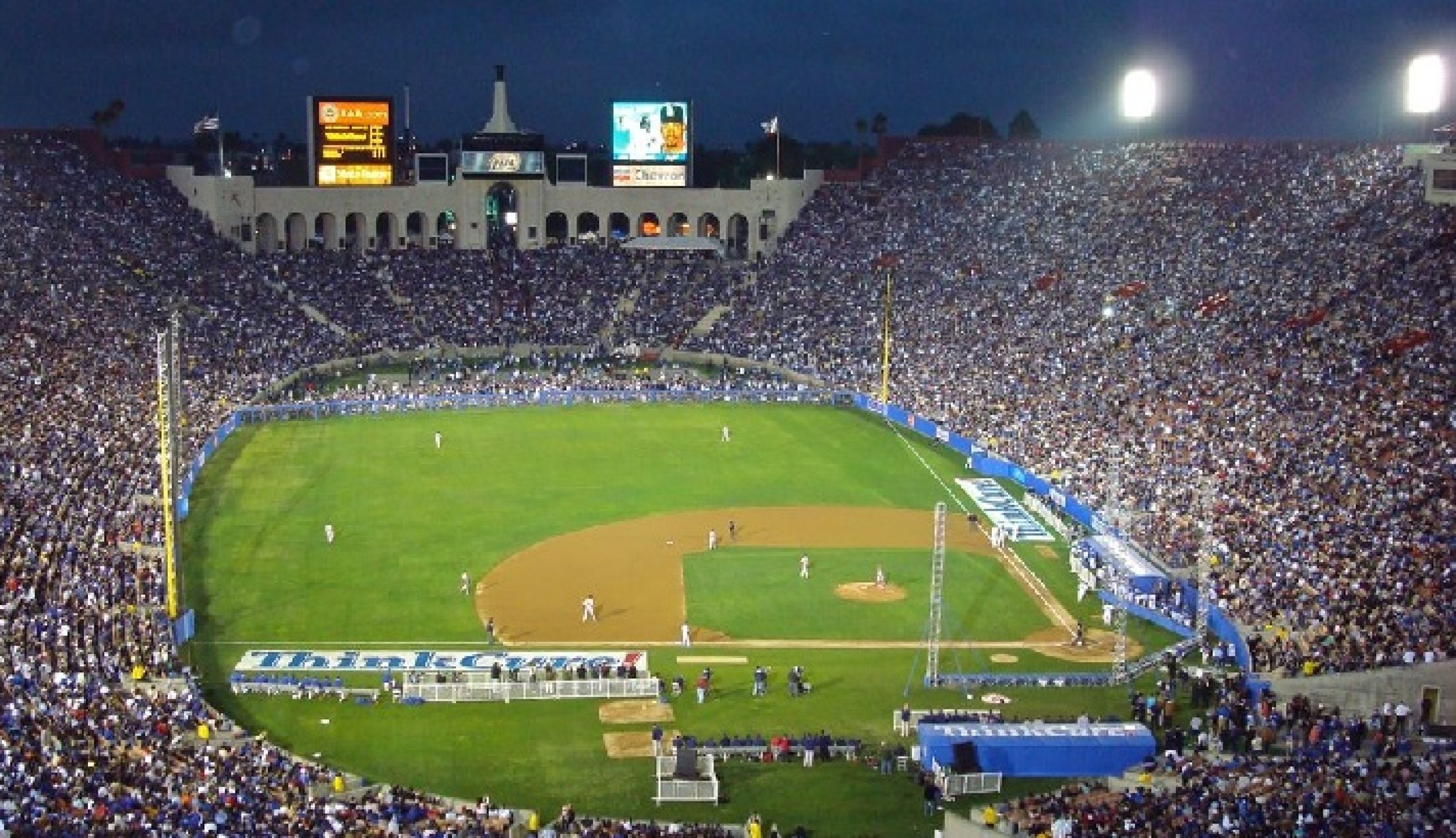
Panoramic Photo Above:
Los Angeles Coliseum
Baseball History Comes Alive Now Ranked As a Top Five Website by Feedspot Among All Baseball History Websites and Blogs!

(Check out Feedspot's list of the Top 35 Baseball History websites and blogs)
Visit the Baseball History Comes Alive Home Page
Subscribe to Baseball History Comes Alive
Free Bonus for Subscribing:
Gary’s Handy Dandy World Series Reference Guide
Some of our senior readers will remember the name Dick Radatz, certainly one of the “scariest” hard throwers of his era. Today Vince Jankowski returns with a nice assessment of the 6′ 6″, 230-pound fireballer’s career. As you’ll discover, his stats from his prime years stand up very well against some of the game’s best pitchers. I think you’ll enjoy what Vince has for us today, as we gladly turn our baseball spotlight on one of the game’s overlooked stars. -GL
“The Monster”
Dick Radatz:
The Prototypical “Scary” Hurler!
On June 12, 2026, the Brewers’ Jacob Misiorowski threw a fastball in a regular-season major league game that was clocked at 104.5 MPH. It was the fastest pitch by a starter ever recorded in a major league game, breaking Miz’s own record of 103.7 MPH set five days earlier. Reliever Aroldis Chapman holds the overall record at 105.8 MPH.
At 6’7”, 201 lbs., Misiorowski is typical of today’s pitchers size-wise. Gone are the days when guys maybe slightly bigger than average would be the dominant hard throwers. Bob Feller (6’0”, 185 lbs.) led the league in strikeouts seven times; Lefty Grove (6’3”, 190) led in seven consecutive seasons; Rube Waddell (6’1”, 196) six consecutive seasons; Dazzy Vance (6’2”, 200) seven consecutive seasons; Grover Cleveland Alexander (6’1” 185) six seasons; Christy Mathewson (6’1”, 195) five seasons; Walter Johnson (6’1”, 200) twelve seasons; Dizzy Dean (6’2’, 182) four consecutive seasons. There was the occasional oversized strikeout leader such as Sam McDowell (6’5”, 190) who led his league for five seasons, but as a rule hard throwers were within a standard deviation of normal size-wise. There was even the occasional undersized strikeout champ: Camilo Pascual (5’11”, 170) and Billy Pierce at 5’10”, 160.
No longer. Unlike earlier decades, the league strikeout leaders of today are large human beings. To put matters in perspective, Pierce led the American League in Ks in 1953. Last year’s American League strikeout champ was Garrett Crochet (6’6”, 245). The 1948 National League strikeout leader was Harry Brecheen at 5’10” and 160 lbs. Last year’s National League leader in punch-outs was Logan Webb at 6’2” and 221 lbs.
Today, we are in the land of giants. Today’s pitchers are more than hard throwers. They are scary, and not simply because of their ability to throw hard. These guys are physically imposing. I often thought that Randy Johnson (6’10”, 225) was so tall and had such long arms that he could dispense with actually releasing the ball. Instead, he could reach out and hand the ball to his catcher in the strike zone.
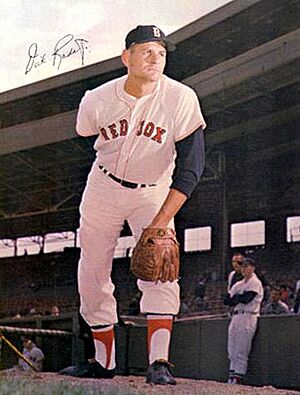
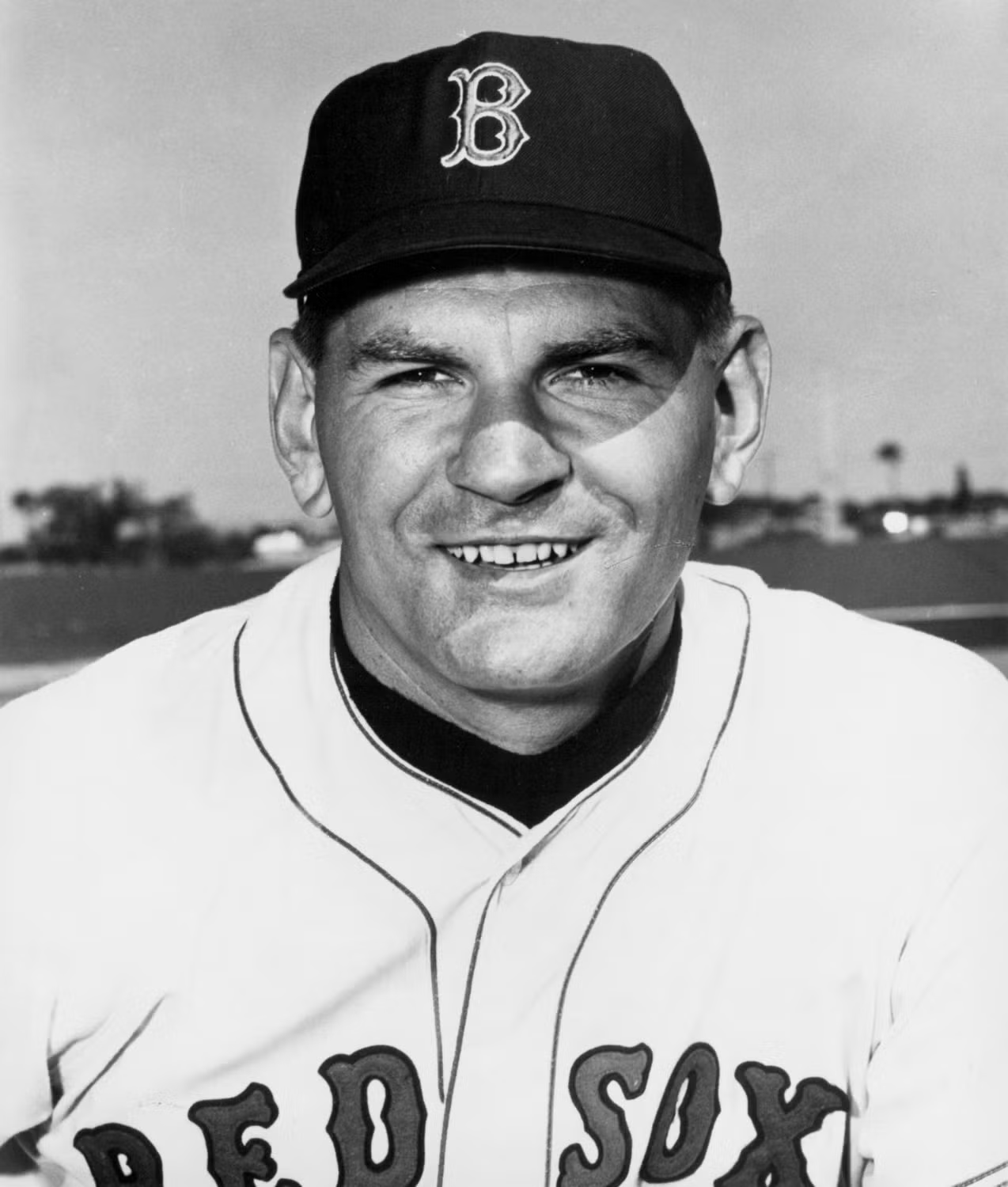
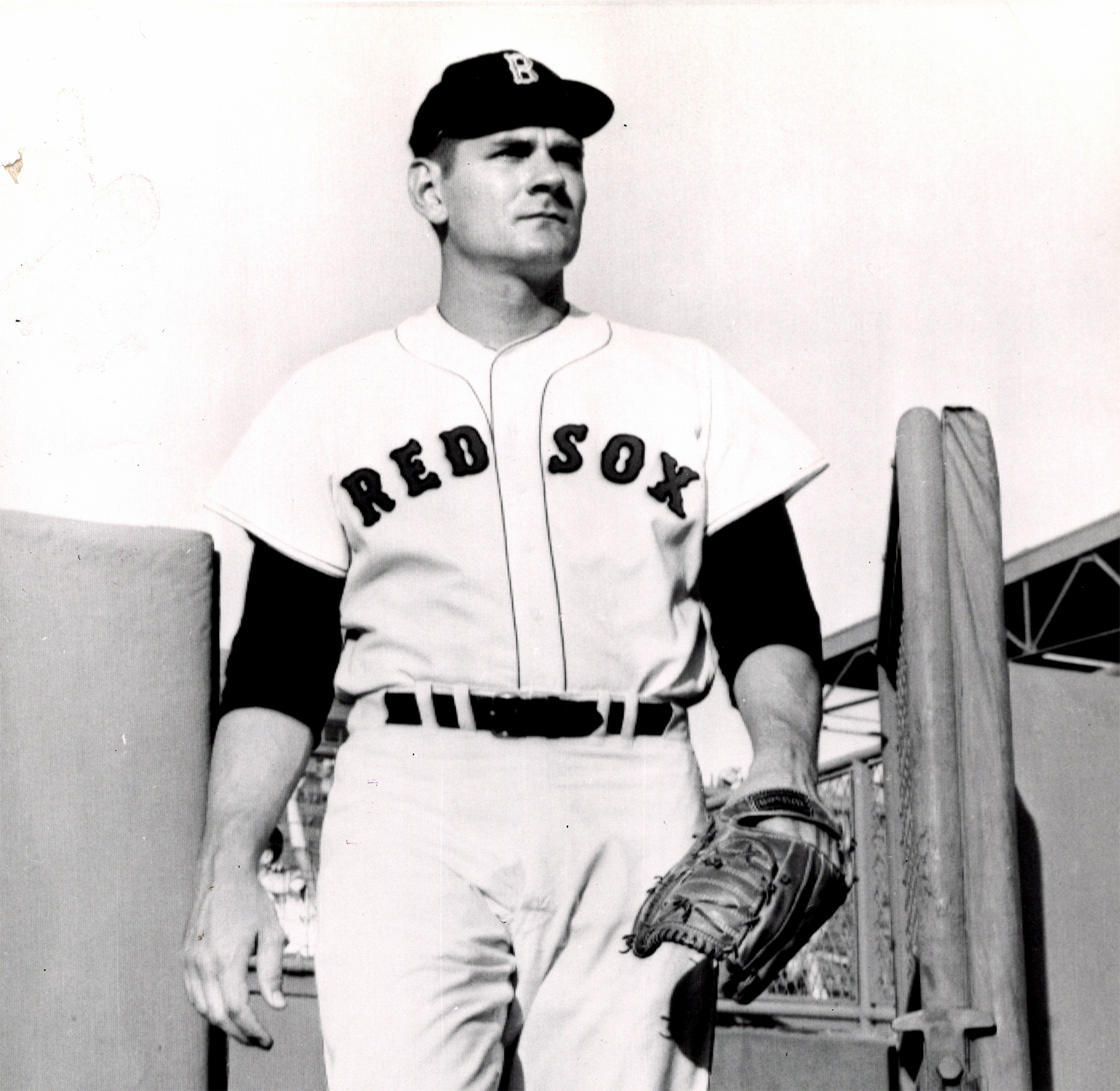
This brings me to Dick Radatz, who broke in with the Boston Red Sox in 1962. As far as I can figure, Radatz was the first hurler who physically intimidated hitters. Batters feared facing Radatz not simply because he was effective at getting them out and not only because he threw so hard, but because the man was huge. He was the prototype of today’s imposing moundsmen.
Radatz stood 6’6” and weighed in at 230 pounds. Yet, he was not the tallest member of the Red Sox pitching staff in his rookie year. Gene Conley, who doubled as an NBA player, was 6’8’, and 225. The Sox staff that year also included Don Schwall 6’6”, 200 and Don Wilson 6’3”, 216. So, Radatz was not always looking down, literally, at his teammates. While Conley, Schwall, and Wilson were tall, they were not scary like Radatz. Mickey Mantle nicknamed him “The Monster”. The Monster he was.
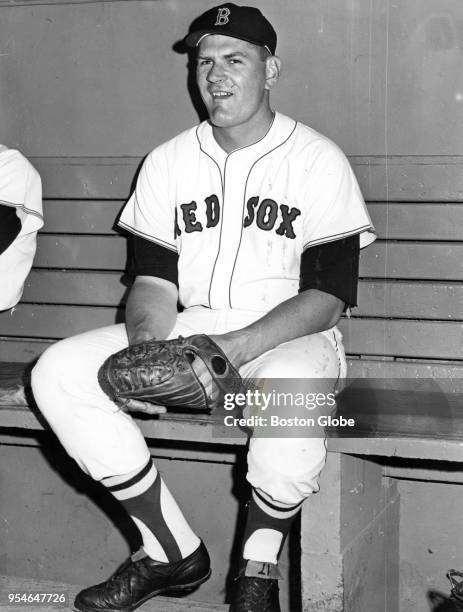
Radatz could bring the heater. In his three prime seasons, 1962-64, he averaged 10.4, 11.0, and 10.4 strikeouts per nine innings. By comparison, his contemporary, Sandy Koufax, then in his prime, averaged 10.5, 8.9, and 9.0 Ks/nine innings over the same three seasons. Koufax never averaged more than 10.5 punch outs per nine innings and exceeded 10.0 only three times in his career. Radatz lacked the control of Koufax (all the better to scare opposing batsmen), but his hits per nine innings are comparable to the Dodger great. And nobody ever called Koufax “The Monster”.
Radatz’s records in those prime years were: 1962, 9-6, 2.24 ERA with a league-leading 24 saves; 1963, 15-6, 1.97, with 23 saves, and 1964, 16-9, 2.29 with a league-leading 29 saves. While his save totals are modest by today’s standards, his combined wins-plus-saves compares him favorably with the best of today’s closers. For example, his 16 wins plus 29 saves in 1964 gave him a total of 45 games in which he contributed to his team’s victories. This favorably compares him to last season’s save leaders Robert Suarez in the National League (40 saves plus four wins) and Carlos Estevez in the American League (42 saves plus four wins). It also compares favorably to the Red Sox’s all-time save leader Jonathan Papelbon whose save-plus-win totals in seven years with the Sox were, respectively, 35, 42, 39, 46, 38, 39, and 3.
As was common in that era, Radatz often pitched multiple innings – a lot of them. On back-to-back days July 12-13, 1962, he threw five and seven innings in relief against the Athletics, winning both games. On September 9 of that year, he pitched nine innings in relief, picking up a win against the Yankees. On June 9, 1963, he went six innings in relief, winning against Baltimore. In his three prime years, he averaged about two innings per appearance.
Even more amazing is that Radatz achieved his save totals with a losing squad. From 1962 to 1964, the Sox finished no higher than seventh and never had a winning record. Your team has got to win games in order to get saves, right? His 29 saves in 1964 accounted for more than 40% of his team’s victories. His 29 saves plus his 16 wins that year accounted for 62.5% of his team’s wins. In comparison, the current record for saves in a season is 62 by the Angels’ Francisco Rodriguez in 2008. He won two games that year. His total of 64 wins plus saves was 64% of his team’s 100 victories.
Radatz made two All-Star teams, finished in the top ten of the MVP voting twice, and was third in the Rookie-of-the-Year balloting. He had a 33-inning scoreless streak in 1963, and in that season’s All-Star game he struck out Willie Mays, Willie McCovey, Dick Groat, Julian Javier, and Duke Snider. He twice won the Fireman of the Year Award.
Radatz also received accolades from his peers. In addition to “The Monster” label attached to him by Mickey Mantle, Ralph Houk said that for two seasons he had never seen a better pitcher. It is no wonder that the Yankees particularly praised him. Against the Yanks he went 6-1 for his career, his best won-loss record against any team except the Athletics. His 14 saves against the Yankees were more than against any other team except the Athletics and Senators.
Alas, his success was not to continue. During spring training in 1965, The Monster tried to develop a sinker. The guy couldn’t leave well enough alone. He blamed his attempt to develop the new pitch as the cause of his decline. In the 1965 season, his won-loss record fell to 9-11, his ERA jumped to 3.91, and his save total fell to 22. In the three remaining years of his career – spent with five different teams – he went 3-11 with only 22 saves.
Radatz died from a fall on March 16, 2005, at age 67. He was the first of a kind, the truly scary hurler, the first who can claim the moniker of “The Monster.”
Vince Jankoski
Photo Credits: All found on Google search
Stats from Baseball Reference.com
Subscribe to Baseball History Comes Alive. FREE BONUS for subscribing: Gary’s Handy Dandy World Series Reference Guide. https://wp.me/P7a04E-2he
Visit the Baseball History Comes Alive Home Page




I’ve heard that about Radatz, that he felt he needed more than one pitch but boy did that attempt backfire. Similarly I read where mgr Charlie Dressen insisted that Joe Black needed a new pitch after his great year, was it ’52? and he never was the same either. If it ain’t broke…