Panoramic Photo Above:
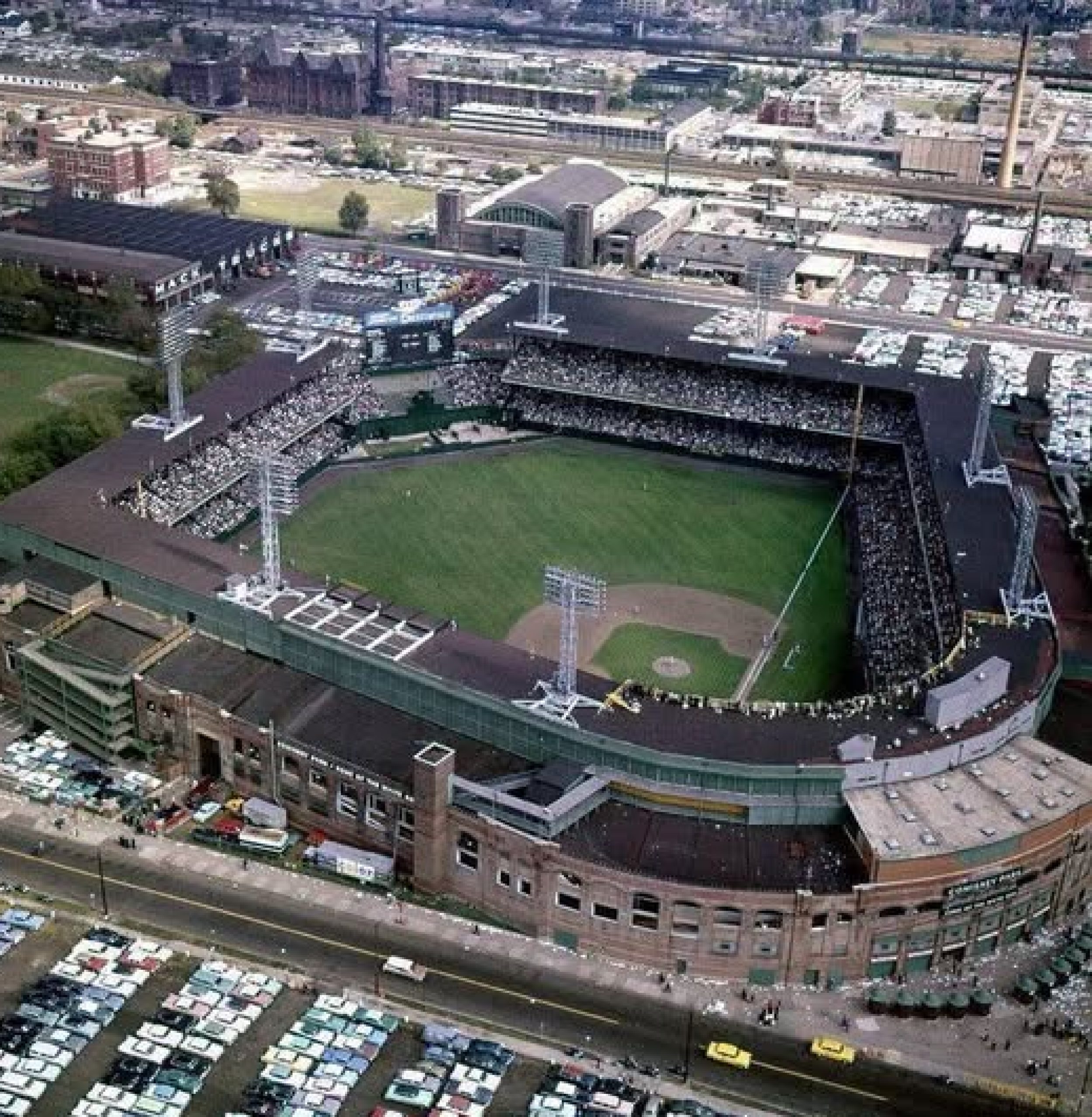
Comiskey Park, Chicago
Baseball History Comes Alive Now Ranked As a Top Five Website by Feedspot Among All Baseball History Websites and Blogs!

(Check out Feedspot's list of the Top 35 Baseball History websites and blogs)
Visit the Baseball History Comes Alive Home Page
Subscribe to Baseball History Comes Alive
Free Bonus for Subscribing:
Gary’s Handy Dandy World Series Reference Guide
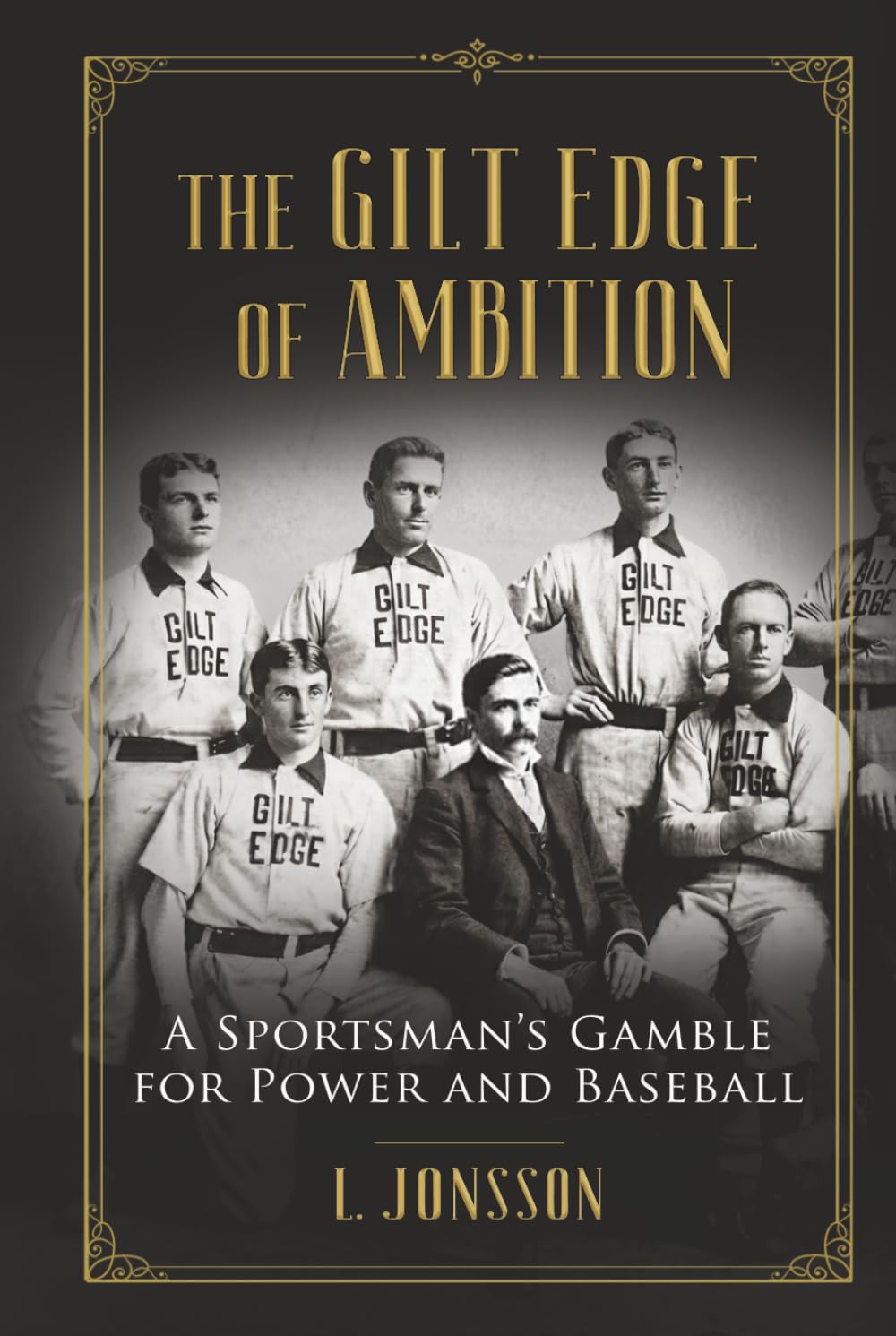
Today we welcome a guest essay from Lisa Jonsson about the Sacramento Gilt Edges. They won four consecutive championships in the now-forgotten California League, which existed before the Pacific Coast League came into existence in 1903. Lisa has a personal connection to the Gilt Edges, as her great-grandfather was an owner and manager of the team. I enjoyed Lisa’s easy, and I think you will too. It’s always good to learn about the early years of professional baseball! Her book, The Gilt Edge of Ambition, A Sportsman’s Gamble for Power and Baseball., is available on Amazon-GL
Baseball’s Forgotten Dynasty:
The Sacramento Gilt Edges!
Four Straight Championships, 1897–1900
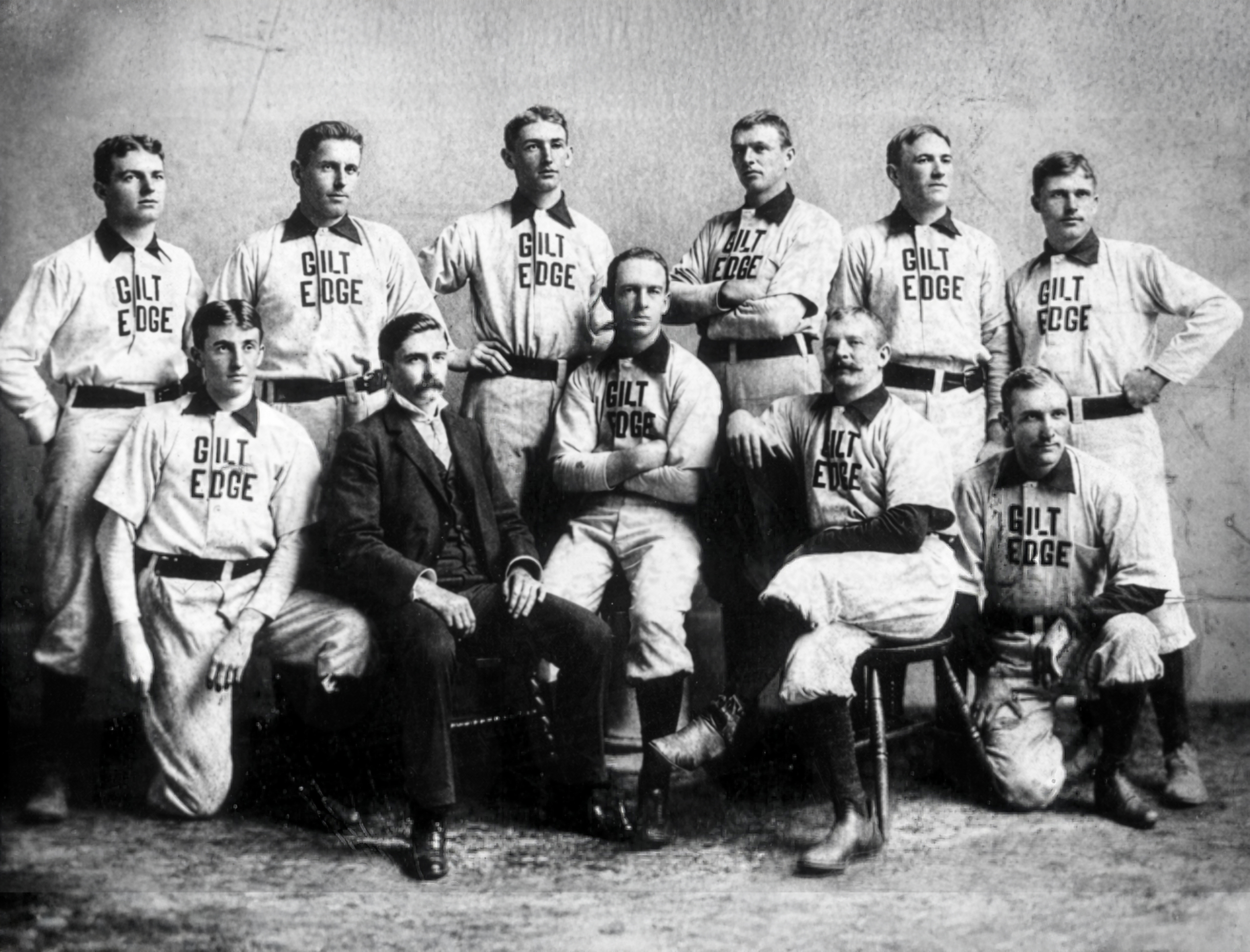
Sacramento once had a professional baseball team that won four consecutive California League championships.
If you have never heard of the Gilt Edges, you’re hardly alone. From 1897 through 1900, Sacramento put together one of the great runs in early California baseball. The club beat teams from San Francisco, Oakland, Santa Cruz, San Jose, and Stockton, developed players good enough to attract major-league clubs in the East, and even defeated one of the most famous teams in baseball. And they did it with a gambler as their owner and manager.
Meet the Gilt Edges
The man behind the team was Ed Kripp, my great-great-grandfather. By the time he became a baseball magnate in the 1890s, Kripp was already well known around Sacramento as a sporting man. He had been a police officer, operated illegal gambling rooms, and followed the horse-racing circuit. Baseball gave him a more public outlet for the same competitive instincts.
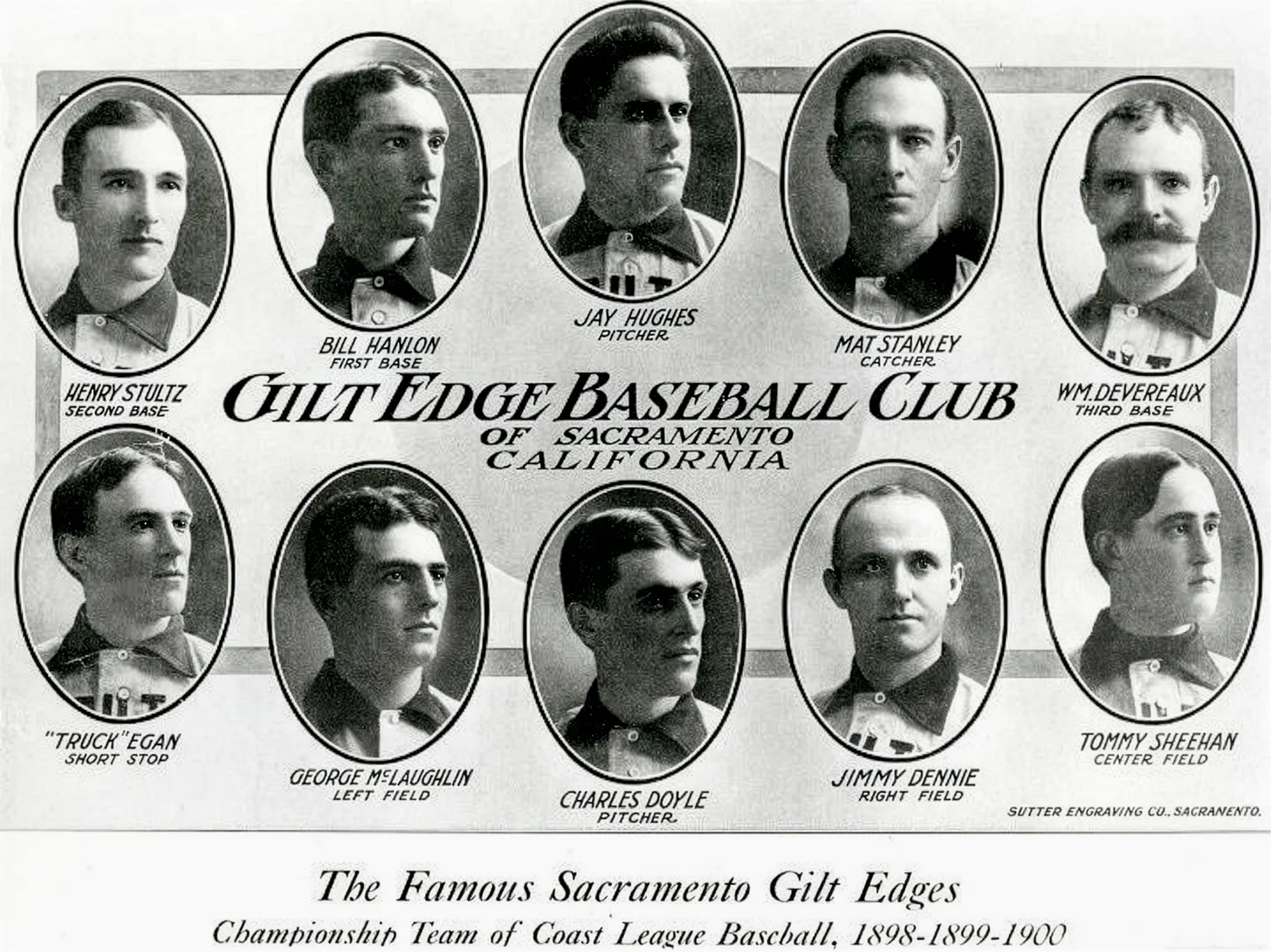
The team name itself came from a sponsor. Gilt Edge was a premium beer made by Sacramento’s Buffalo Brewing Company, and newspapers sometimes simply called the team the “Brewers.”
Their first championship season was played at Snowflake Park, between 28th and 30th Streets. The name had nothing to do with snow. “Snowflake” came from a bourbon brand marketed by Sacramento grocer and whiskey dealer Thomas B. Hall. Kripp spent about $3,000 improving the grounds in 1897, including a grandstand that seated roughly 3,000.
But Sacramento was changing quickly.
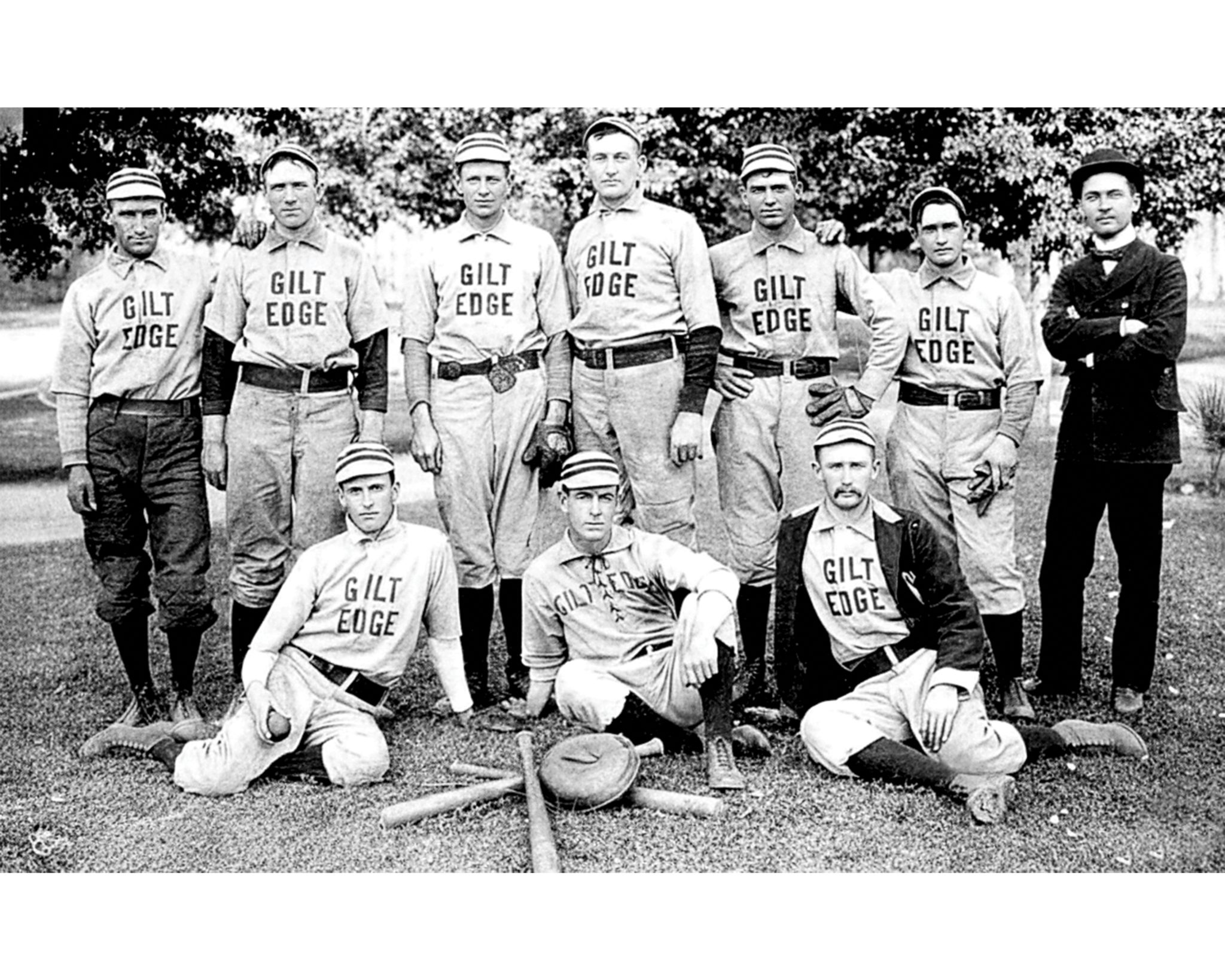
Snowflake had worked when distance was measured in hooves. By 1899, electric streetcars were reshaping the city, and the Gilt Edges moved to Oak Park Recreation Grounds, where the streetcar line could carry fans from downtown to the ballpark. Before that move, however, the Gilt Edges had already done something that made people around California take notice.
The Day Sacramento Beat the Baltimore Orioles!
In November 1897, the Baltimore Orioles came west on a postseason tour. This was no ordinary visiting club. Baltimore had just won the Temple Cup and featured future Hall of Famers Hughie Jennings and John McGraw. Before reaching Sacramento, the Orioles had beaten Oakland 9–4, crushed Napa 17–1, and defeated San Francisco 9–4.
On Thanksgiving Day, about 4,000 people crowded into Snowflake Park to see Sacramento take its turn. At first, things seemed to be going as expected. Baltimore scored twice in the second inning. Then Sacramento began hitting Orioles pitcher Joe Corbett hard enough that he was removed in the fourth. Meanwhile, Sacramento pitcher Jay Hughes was having a great afternoon. The Gilt Edges came back and won 4–3.
The next day, the Sacramento Bee celebrated with a distinctly nineteenth-century headline: “OH, WE DON’T KNOW, YOU’RE NOT SO WARM”
Unfortunately for Sacramento, Baltimore had also discovered Jay Hughes. Within days, Hughes signed with the Orioles for the 1898 season. Sacramento had beaten the East and immediately lost one of the men who had made it possible. That would become a recurring problem.
Winning Could Be Dangerous!
The better the Gilt Edges played, the more attention their players attracted from eastern clubs. A report in The Sporting News eventually made the rather bleak observation that if a manager truly wanted to keep his nine together, it did not pay to win championships. But somehow Sacramento kept winning anyway.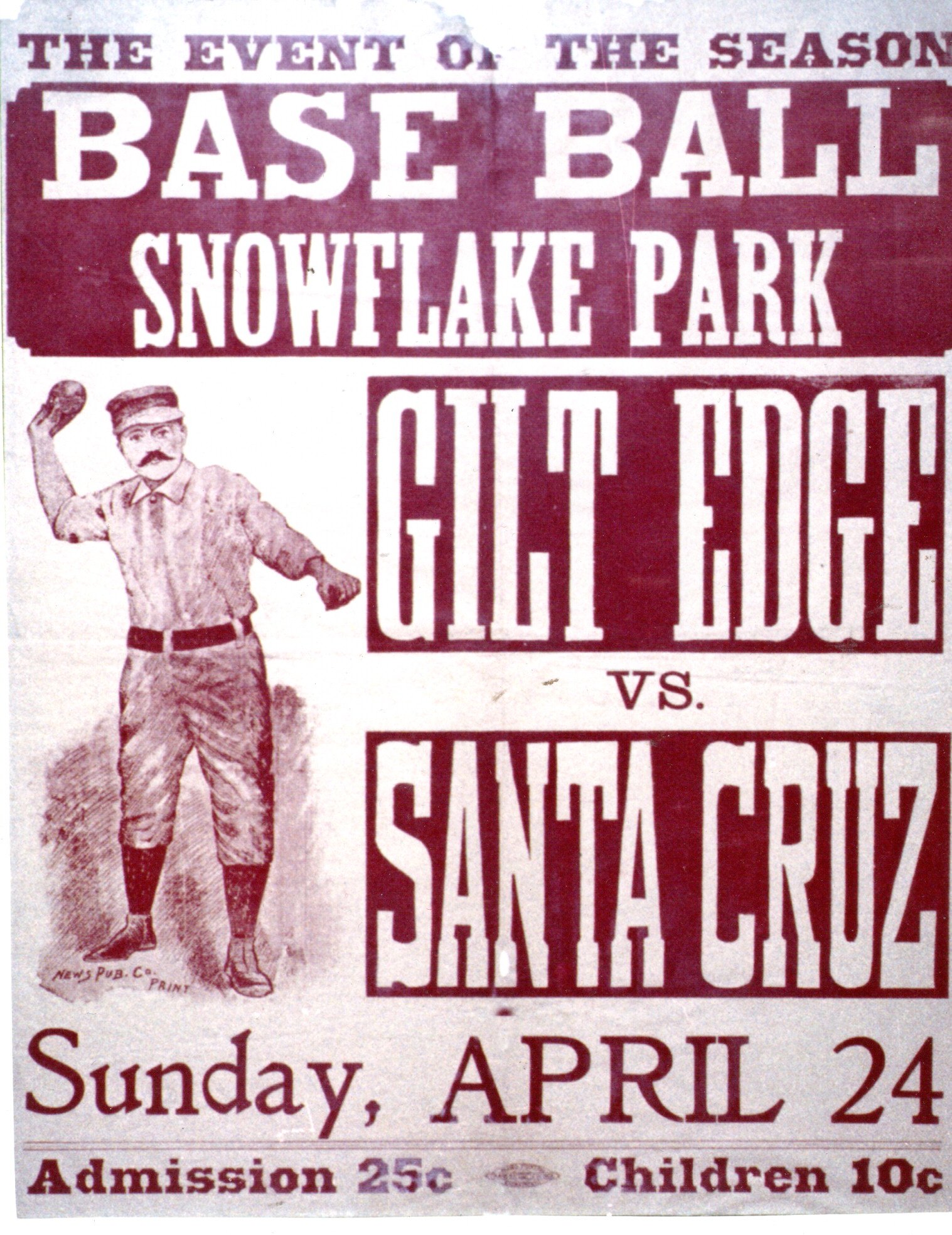
Keeping a championship team together was only one of the challenges. The game around them could be just as unruly. Late-nineteenth-century California baseball was not exactly calm. During an 1898 game, a disputed play sent spectators spilling onto the diamond. Men and women crowded into foul territory while the umpire tried to push them back so play could continue. Later that season, another umpire required police protection after a Sacramento game because angry fans continued harassing him on his way home.
Then there was Kripp himself
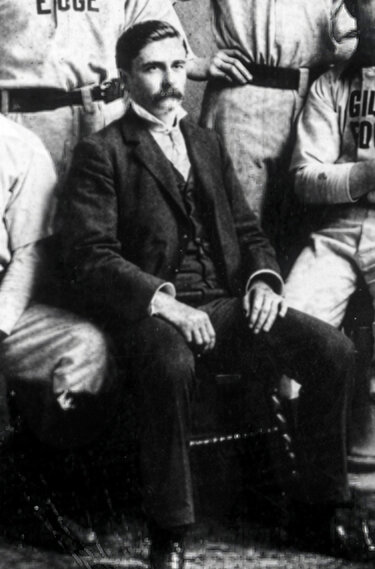
In July 1898, Stockton manager Campbell became suspicious about the gate receipts and wanted representatives stationed at the turnstiles to count admissions. The disagreement eventually moved beyond bookkeeping. Campbell challenged Kripp to settle the matter with his fists. Kripp accepted.
According to the Sacramento Record-Union, Kripp hit Campbell in the eye and “painted that object a beautiful blue.” The league was less amused. Sacramento’s victory from that day was removed from the standings, and Kripp was ordered to apologize. He refused. “The trouble is that the other teams in the State are jealous,” he told reporters. Despite all of this, Sacramento finished 24–14 and won the 1898 pennant.
And Then They Did It Again!
The 1899 season brought another serious challenge, particularly from San Francisco. Sacramento, however, had two outstanding pitchers in Ervin “Silent” Harvey and Charles “Demon” Doyle. Even the Santa Cruz Daily Sentinel conceded late in the season that “Sacramento deserves the pennant,” pointing specifically to the superior pitching of Harvey and Doyle. The Gilt Edges finished 46–31 and won championship number three.
Naturally, the eastern clubs came calling again…
The Sacramento Union greeted news of Chicago’s interest in Harvey with the headline “And Next We Lose Harvey!” Doyle also drew eastern interest, while newspapers remarked that Sacramento continued to furnish “national league timber.”
MORE BASEBALL ORIGINS ESSAYS FROM BHCA
By the 1900 season, enough Gilt Edge players had been claimed or pursued that the core of the club appeared ready to disappear. Yet Sacramento survived the raid. By November, the outcome was almost settled. The San Francisco Chronicle declared the Gilt Edges too far ahead to be caught. On December 3, 1900, Sacramento finished 50–35 and secured its fourth consecutive championship. The next morning the Bee said it all: “GILT EDGES — THE FOUR TIME WINNERS.”
The paper noted that Sacramento had possessed the best baseball team in California for four straight seasons. So Why Don’t We Remember Them? Part of the answer is timing. The Gilt Edges flourished in a brief, unsettled period when professional baseball in California was already serious business, but before the PCL era that would come to dominate the history of the game on the West Coast.
The Pacific Coast League arrived in 1903 and grew into the dominant professional circuit in the West. In its strongest decades, long before the Giants and Dodgers arrived in California, the PCL occupied a place in western baseball culture that could feel very close to major-league status. The Gilt Edges belonged to the world just before it.
That left them in an unusual historical gap. They were too early to be remembered as part of the PCL tradition, yet they were not simply town teams or semi-professional clubs. The California League was professional baseball in the state, and for four consecutive seasons the Gilt Edges stood at the top of it. Their players moved on. Ownership changed. The Gilt Edge name faded. But for four seasons at the end of the nineteenth century, Sacramento was the team everyone in California was trying to beat.
I first came across pieces of this story while researching Ed Kripp. What began as an effort to understand my great-great-grandfather eventually became my book, The Gilt Edge of Ambition. Along the way, what surprised me most was realizing that his story contained a largely forgotten chapter of baseball history.
Sacramento had a dynasty. It just happened before most people started remembering that part of the story.
Lisa Jonsson
Lisa Jonsson is the great-great-granddaughter of Sacramento baseball owner and manager Ed Kripp and the author of The Gilt Edge of Ambition: A Sportsman’s Gamble for Power and Baseball. Her research focuses on early California baseball.
Visit her website: The Gilt Edge of Ambition
Subscribe to Baseball History Comes Alive. FREE BONUS for subscribing: Gary’s Handy Dandy World Series Reference Guide. https://wp.me/P7a04E-2he
Visit the Baseball History Comes Alive Home Page




Great essay. I love stories about the minor leagues in the early days. The story mentions how big league teams poached players after games they played against them.
Locally, a non descript pitcher named Phenomenal Smith kept track of a pitcher from the local Taunton (MA) nine in the late 1890’s and touted him so major league teams paid attention and he was subsequently signed by the NY Giants..
Perhaps you heard of him. Fellow by the name Christy Matthewson.
Plus, you gotta love a team that has a star pitcher named “Demon” Doyle..😊